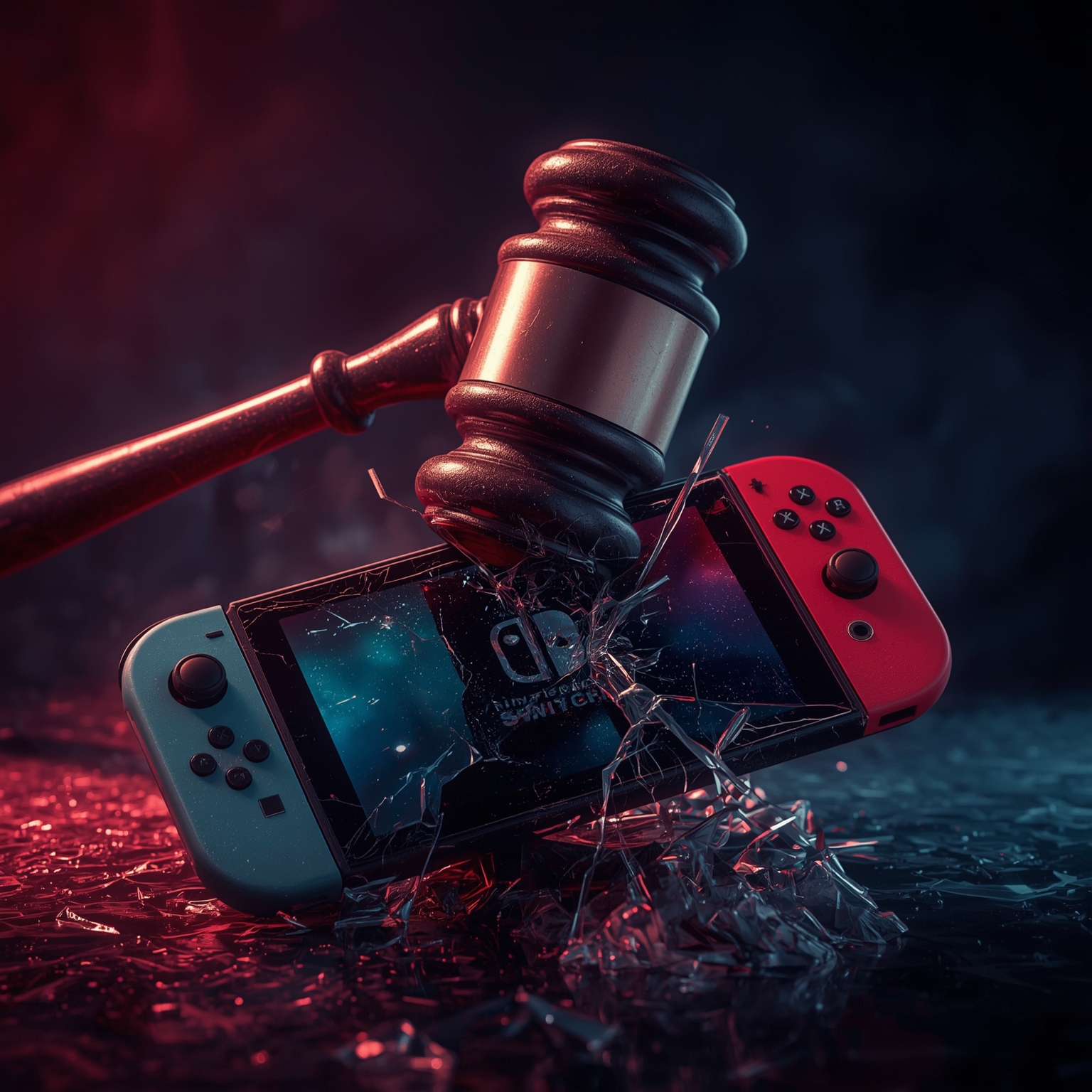
Nintendo has scored yet another decisive triumph in its relentless campaign against the widespread phenomenon of software and hardware piracy. In a significant legal development last week, a judge presiding over the United States District Court in Washington handed down a stern ruling against Ryan Daley, a man accused of facilitating large-scale copyright infringement. The court ordered Daley not only to pay substantial monetary damages amounting to two million dollars, but also to immediately cease all commercial activities connected to the sale of modified Nintendo Switch consoles over the internet. This outcome, first detailed in earlier reports by Engadget, underscores both the seriousness of Nintendo’s approach to intellectual property enforcement and the increasing frequency with which major gaming companies pursue judicial remedies to protect their products.
The dispute originated with a lawsuit filed by Nintendo in the previous year, in which the corporation accused Daley of operating an online storefront under the name “Modded Hardware.” According to Nintendo’s allegations, the site functioned as a marketplace where visitors could purchase not only Switch consoles that had been altered with unauthorized modifications, but also technological components such as modchips specifically designed to circumvent the device’s built‑in protections. Furthermore, the store sold MIG flash cartridges—hardware that enables users to load and play unlicensed, illegally copied software titles. In its filing, Nintendo argued that these practices inflicted “significant and irreparable harm” by directly undermining the company’s creative output, business model, and the legitimate distribution of its games.
After carefully evaluating the case, the presiding judge ultimately affirmed Nintendo’s claims. In the official ruling, the court highlighted how the use of these devices—ranging from modchips to hacked consoles and circumvention services—effectively allows members of the public to generate, circulate, and enjoy pirated versions of Nintendo’s catalog on a massive and uncontrolled scale. This judicial acknowledgment of the scale of damage reinforced Nintendo’s contention that unregulated modification and piracy present not just minor inconveniences, but existential threats to the economic framework sustaining legitimate game development. Importantly, Daley himself consistently denied any wrongdoing, although without the benefit of legal representation, he pursued his defense without counsel, a strategy that may have contributed to the unfavorable verdict.
This case forms part of a broader pattern in Nintendo’s ongoing legal strategy. In recent years, lawsuits targeting piracy have become increasingly commonplace for the company, which remains steadfast in its determination to eliminate threats to its intellectual property. Earlier in the same year, Nintendo successfully concluded litigation against a file‑sharing platform that had been accused of hosting and distributing illicit copies of its games. That case illustrated not only Nintendo’s zero‑tolerance position, but also the judiciary’s willingness to uphold copyright protection in the digital age. Furthermore, the company’s legal pressure has precipitated the closure of two of the most prominent Nintendo Switch emulators—Yuzu and Ryujinx— therewith cutting off widespread avenues through which enthusiasts could previously access unauthorized versions of Switch titles. To reinforce the strength of its stance, Nintendo has even indicated publicly that it may implement protective measures, potentially going as far as disabling or “bricking” upcoming Switch 2 consoles if users attempt to alter them through unauthorized modifications.
As for the immediate consequences for Daley, the judgment imposes several strict prohibitions on his future activities. He has been permanently barred from engaging in the modification of Switch hardware, as well as from possessing, distributing, or even using devices intended to bypass Nintendo’s sophisticated security protections. The court further ordered that all hardware, chips, or related equipment owned by Daley—particularly those that could contain or facilitate dealings in unauthorized, infringing software—must be seized, impounded, or destroyed. In essence, the ruling erases his ability to continue participating in any form of console modification or piracy, cementing the far‑reaching impact of Nintendo’s aggressive and highly coordinated legal maneuvers.
Sourse: https://www.theverge.com/news/774077/nintendo-switch-modder-ryan-daley-lawsuit