It is astonishing that such a reminder even needs to be voiced in this era of advanced automotive technology, yet it appears essential to emphasize the obvious: under no circumstances should Tesla drivers begin texting while operating their vehicles, regardless of any suggestions or implications made by Elon Musk himself. The message bears repeating because misplaced trust in authority or celebrity can have dire consequences. Drivers should not allow the words of a billionaire technology executive—no matter how visionary or influential—to override basic traffic laws and foundational principles of personal responsibility. Should an accident occur, Musk will not bear the legal or moral liability; that responsibility will rest squarely upon the driver, whose actions jeopardize both their own safety and that of others sharing the road.
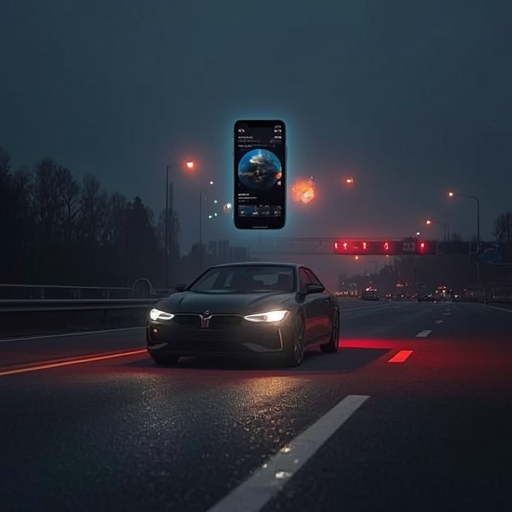
Yesterday, Musk briefly diverted his attention from his usual habit of posting inflammatory, racially charged, and xenophobic content online to make a startling admission. He confirmed that the newest update to Tesla’s Full Self-Driving (FSD) software includes allowances for limited texting while driving—a behavior that remains not only incredibly reckless but also explicitly illegal in forty-nine U.S. states, as well as in Washington, D.C., and all U.S. territories. (Montana’s silence on the matter, it seems, remains a rare exception.) When a follower directly asked Musk whether version 14.2.1 of FSD would permit such unlawful conduct, his response—“Depending on context of surrounding traffic, yes”—suggested an unsettling leniency toward one of the most dangerous forms of driver distraction imaginable. Despite this, let it be said again clearly and unequivocally: do not engage in this behavior. Anyone who texts while driving risks not just their own wellbeing but the safety of passengers, pedestrians, and every other road user.
For several months, Musk has been promoting the imminent arrival of an “unsupervised” iteration of Tesla’s Full Self-Driving system. In his characteristic style of overpromising groundbreaking advancements, he has described a future in which Tesla owners might feel free to perform peripheral tasks—such as using their mobile phones—while their cars ostensibly handle the complexities of driving autonomously. However, reality paints a very different picture. The FSD currently available on the market qualifies only as a Level 2 driver-assistance system. This designation explicitly means that although the vehicle can handle certain steering, acceleration, and braking tasks, full driver supervision remains mandatory at all times. Operators are required to remain vigilant, attentive, and ready to assume manual control the moment the system signals them to do so. In other words, “Full Self-Driving” is a marketing term, not a literal one—these vehicles are far from being truly autonomous machines.
At Tesla’s annual shareholder meeting just last month, Musk once again hyped the forthcoming Version 14 of FSD as the long-anticipated breakthrough that might finally usher in an era of unsupervised driving. With evident pride, he stated, “And now with version 14, we’re actually getting to the point where we almost feel comfortable allowing people to text and drive,” a remark that he followed by describing this capability as “the killer app,” because, in his view, it aligns with what people purportedly desire most. The statement underscored his willingness to equate convenience with progress, even when convenience might come at the cost of public safety.
Presently, Tesla’s vehicles include inward-facing cameras designed to monitor driver engagement through visual cues such as eye movement and facial orientation. These systems continuously assess whether the driver remains attentive to the road. If the driver’s gaze wanders or their behavior shows signs of distraction while FSD is active, the cameras generate an alert instructing them to re‑focus. Failure to comply can prompt the vehicle to disengage the autonomous features altogether. Accumulating five such infractions results in temporary suspension of access to FSD. Although these so‑called “nags” are implemented as a crucial safety precaution, many Tesla owners have expressed irritation over their frequency, urging Musk to scale back the reminders—a request to which he appears increasingly sympathetic. His most recent remarks hint that Tesla may consider easing these vigilance requirements in scenarios like heavy, stop‑and‑go traffic. Yet any perceived relaxation of these rules does not alter the unavoidable legal truth: under existing law, texting while driving remains strictly forbidden across nearly the entire United States.
Consider, for example, a typical roadside encounter. If a law enforcement officer pulls you over for texting behind the wheel of a Tesla, your insistence that “Elon Musk said it was okay” will carry no legal weight. Traffic citations, and worse, criminal charges following a crash, cannot be excused by citing statements from a corporate executive. And in the event of an accident—should injuries or fatalities occur—no Tesla representative or Musk himself will bear the consequences. The blame, both moral and financial, lies entirely with the person who chose to divert their attention from driving.
To be fair, there is little doubt that Tesla’s technology showcases impressive technical capabilities. Enthusiasts are often mesmerized by the car’s sophisticated handling of complex traffic patterns, lane changes, and predictive maneuvers. Many sincerely believe Musk’s promises that genuine, fully autonomous mobility is merely a few updates away. But one fact must remain central in any discussion: the driver, and only the driver, is ultimately accountable for the vehicle’s actions while Autopilot or FSD is engaged. Unlike companies such as Waymo, which design and test vehicles specifically for driverless operation and accept liability for system‑related incidents, Tesla deliberately avoids responsibility by maintaining that its system still requires human supervision. It cannot, therefore, be held to the same legal or ethical standard applied to true autonomous systems. In multiple court cases, Tesla has defended this position vigorously and, quite frequently, has prevailed.
In closing, let prudence prevail over blind admiration or misplaced confidence in corporate assurances. No post or text message, however urgent or trivial, is worth endangering human life. Disregard Musk’s suggestion, ignore the hype surrounding so‑called “Full Self‑Driving,” and place your trust instead in common sense. Keep your eyes on the road, your hands on the wheel, and your mind fully present. Your life—and the lives of those around you—depend on it.
Sourse: https://www.theverge.com/transportation/838901/elon-musk-tesla-fsd-text-while-drive