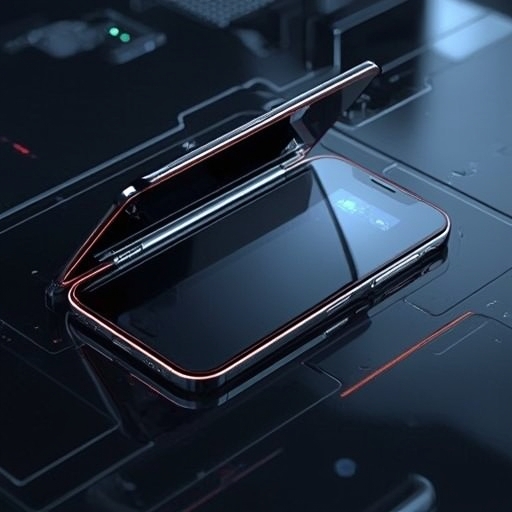
It’s perfectly understandable that everyone is buzzing with anticipation about Apple’s rumored iPhone Fold, a device that, if real, would mark one of the company’s biggest steps forward in smartphone design. However, before we get carried away by that excitement, it’s crucial to exercise skepticism—especially regarding so-called “leaks” circulating online, such as the currently viral unboxing video that claims to reveal the foldable iPhone in all its glory. At first glance, such footage can appear convincing, but a closer look reveals that it bears the hallmarks of fabrication.
Speculation and premature leaks are practically inevitable whenever a major smartphone release approaches, particularly when it involves Apple. The brand’s reputation for innovation ensures that even the faintest rumor quickly catches fire. With whispers suggesting that Apple’s foldable device could debut alongside the traditional iPhone lineup during the company’s typical September release cycle, this period becomes especially fertile ground for misinformation. Unverified content, doctored videos, and speculative images proliferate, preying on audiences eager for any hint of Apple’s next move. The current unboxing clip is a perfect example—a seemingly detailed demonstration that, on inspection, crumbles under scrutiny.
In the age of advanced generative AI, creating such deceptive media has become easier than ever. Modern AI systems can generate videos from text prompts, merge varied data inputs, and polish every visible flaw until only the most discerning viewer might spot the irregularities. The latest tools can render realistic hand movements, natural lighting, and proper proportions—gone are the days of six-fingered anomalies or uncanny shadows. This sophistication means that a video can look perfectly legitimate even to experienced eyes, drawing millions of views and fueling false narratives faster than factual information can catch up.
Yet despite the refinements of generative models, telltale inconsistencies still remain—small visual hiccups or logical discrepancies that betray an artificial or staged origin. Examining this particular “iPhone Fold” unboxing video exposes several such red flags. The clip shows a person clad in a gray sweatshirt carefully rotating a box emblazoned with the words “iPhone Fold,” lifting its lid to reveal a neatly packed device. At first glance, everything seems in place: the familiar minimalist packaging, the snugly fitted product displayed screen-side-up, and the inclusion of accessories such as a charging cable and paper inserts. Each detail is meticulously designed to mimic Apple’s unboxing aesthetic, which is itself part of the company’s brand identity. Yet authenticity requires more than visual familiarity.
Subtle but significant inconsistencies reveal the truth. For instance, the protective film being removed is applied to the device’s inner display rather than its outer surface—a strange choice given Apple’s usual emphasis on presentation. Another oddity is a colorful insert that lists full IP68 dust and water-resistance certification, a specification still extremely rare among foldable phones. Only a few competitors, such as Google’s Pixel 10 Pro Fold and Honor’s Magic V6, have managed such durability. The claim, therefore, feels suspiciously out of alignment with current engineering realities.
Even more questionable is the device itself. If not assembled virtually through AI, it’s almost certainly a physical 3D-printed mock-up rather than a functioning prototype. The rear casing, described as cream-colored, produces an unnatural noise when scratched—nothing like the subtle resistance of ceramic or the smooth, high-pitched tone of glass. The hinge mechanism appears clumsy too: the two halves fail to close flush against each other, a design imperfection Apple’s obsessive product engineers would never tolerate. When the phone unfolds completely, a visible gap remains between the two halves near the hinge—a problem that competing manufacturers have largely solved through complex hinge innovations. These flaws aren’t random; they’re clear signs that this object is speculative at best.
Design proportions also cast doubt on the video’s validity. Although Apple’s patents have hinted at a wider foldable form factor reminiscent of the first-generation Google Pixel Fold, the model showcased here deviates dramatically. Its short, almost square dimensions would produce an oddly squat internal display with an unconventional aspect ratio. Such a configuration wouldn’t comfortably accommodate existing app interfaces or standard iOS layouts—and certainly not those optimized for iPadOS, to which the rumor mill occasionally links Apple’s flexible device development.
Name speculation adds another layer of uncertainty. While the internet has repeatedly referred to the potential product as the “iPhone Fold,” Apple’s naming conventions are notoriously fluid, and various reports have claimed that an “iPhone Ultra” could instead take its place. If that rebranding were accurate, it would signal a higher-end, experimental line rather than a straightforward addition to the standard iPhone series. Nevertheless, regardless of naming, until we see a real startup screen or a functioning interface, any such device must remain unconfirmed. The absence of any sequence showing the phone powering on or displaying software is telling—it strongly implies that the video’s creators never had genuine hardware in hand.
It’s also essential to consider the wider context of Apple leaks. While pre-release information occasionally escapes through CAD schematics, accessory molds, or case manufacturer images, it’s exceedingly rare for a fully functional Apple device to appear online months before launch. Each legitimate leak tends to share a consistent visual language and technical detail across multiple sources. In contrast, this video’s supposed handset diverges markedly even from recent CAD renders that are thought to be based on authentic internal data, further undercutting its credibility.
To be fair, the video’s production quality deserves acknowledgment precisely because it is so persuasive. The creator has clearly invested significant effort into aligning with Apple’s design cues—from the minimalist packaging and crisp product labeling to the almost ceremonial pacing of the unboxing itself. This painstaking replication of aesthetics is what makes it such a compelling piece of misinformation. In a way, its believability underlines the effectiveness of Apple’s branding strategy: the company’s product rituals are so iconic that even an imitation feels strangely convincing.
Ultimately, the viral “iPhone Fold” clip offers a fascinating glimpse into today’s digital ecosystem, where advanced AI tools and skilled hobbyists can blur the boundary between speculation and apparent truth. If nothing else, it serves as an educated guess at how Apple’s eventual foldable might appear when the day finally comes. We shall likely know more toward September—the month when Apple traditionally unveils its flagship lineup—should the company decide that the time is right to actualize years of experimentation into a market-ready product. Until then, viewers would do well to approach every supposed “leak” with both curiosity and caution, aware that many more will surface before the real announcement ever does.
Sourse: https://www.cnet.com/tech/mobile/no-the-viral-iphone-fold-video-isnt-real-heres-why-its-fake/