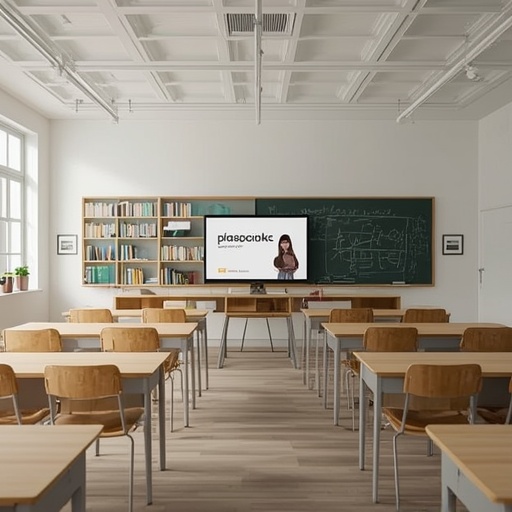
In a significant and thought-provoking decision that has captured global attention, Norway has chosen to dramatically scale back its reliance on digital tools and artificial intelligence in the classroom. This deliberate pause is more than a simple policy shift—it represents a profound moment of reflection about the broader role that technology should play in human learning. For years, the global education sector has embraced advanced technology as an inevitable hallmark of progress: tablets have replaced textbooks, virtual assistants have supplemented teachers, and AI-driven assessment has promised a new age of adaptive learning. Yet, in a world increasingly saturated with screens and automated systems, Norway’s move introduces a striking counterpoint—a call to reconsider whether such innovation truly enriches or inadvertently diminishes the human experience of education.
Rather than fully rejecting progress, Norway’s strategy acknowledges that technology should serve as a tool to support, not supplant, the deeply relational and cognitive processes that define learning. By reintroducing more traditional classroom practices—those centered on discussion, creativity, and direct human interaction—the nation seeks to restore balance between the efficiency of algorithms and the empathy of teaching. This recalibration aligns with growing international concerns that overreliance on digital learning may hinder critical thinking, reduce attention span, and weaken interpersonal skills that are fundamental to personal and societal development.
The implications of this decision extend far beyond Norway’s borders. Policymakers, educators, and technologists around the world are now compelled to ask: should innovation always advance without pause, or should humanity occasionally step back to evaluate what it may be losing along the way? Norway’s choice becomes an invitation to reimagine education as a space where technology and human guidance coexist deliberately—where the quickness of artificial intelligence complements but never overshadows the depth of authentic understanding.
In essence, this initiative signals a broader philosophical shift from technological enthusiasm toward mindful integration. It encourages the idea that progress in education should not be measured solely by the presence of the latest devices but by the quality of learning they enable. The Norwegian example thus stands as both a caution and an inspiration: a reminder that genuine innovation sometimes involves restraint, reflection, and the courage to redefine what it truly means to learn in the digital age.
Sourse: https://gizmodo.com/norway-says-ai-aint-for-education-2000774320