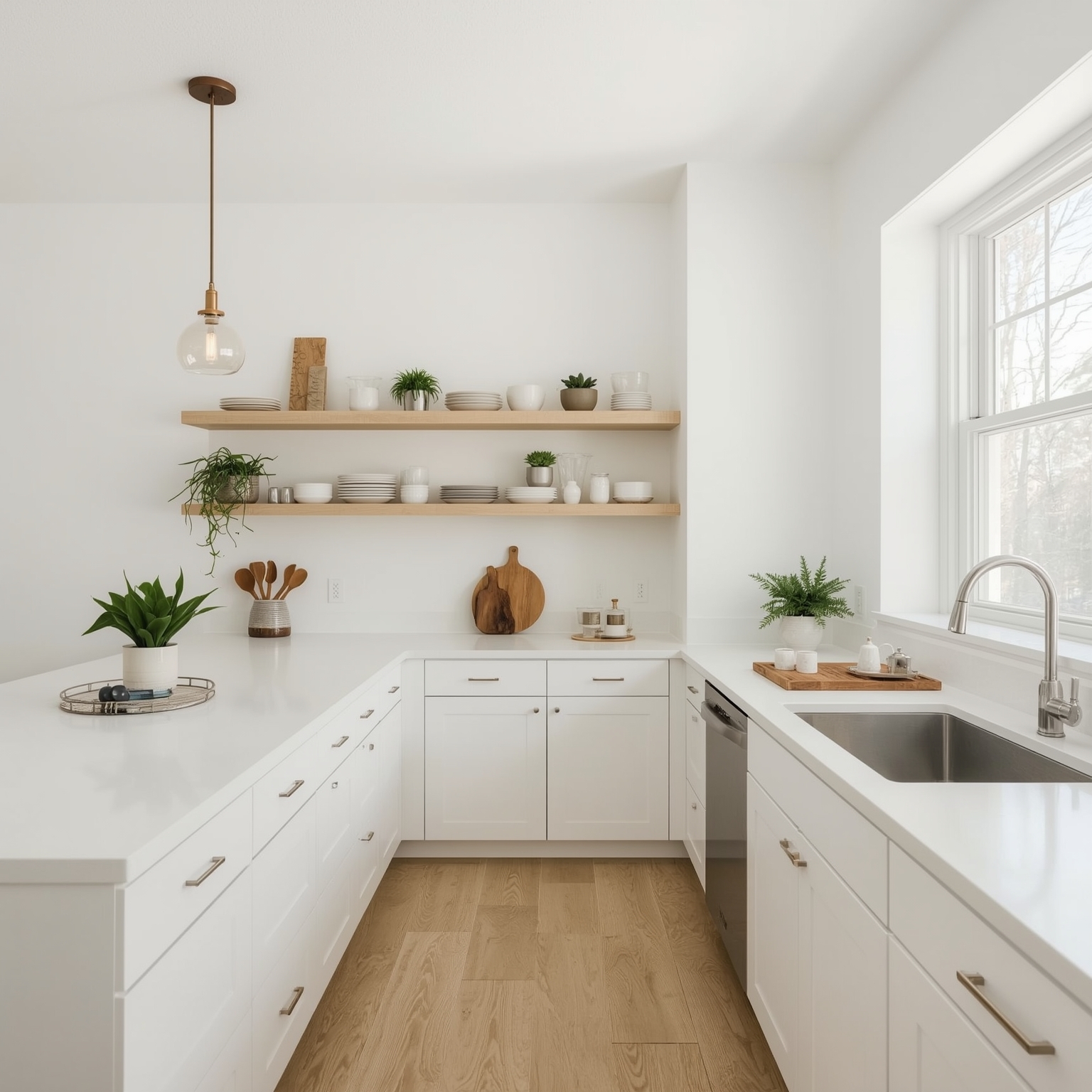
Arguably the most debated and unconventional decision we reached during the redesign of our kitchen involved the installation of a refrigerator that was noticeably smaller than the standard models typically found in most homes. Every renovation of a mid-century kitchen—especially one originally constructed in the 1950s—presents its own unique set of architectural puzzles and aesthetic compromises. Yet among all the difficulties we encountered, the most significant obstacle proved to be the spatial configuration of the room itself. The original placement of windows and doorways, both of which we were eager to preserve for the sake of natural light and historical charm, left us with very limited options for situating essential appliances such as the oven, refrigerator, and dishwasher.
The physical constraints quickly became clear: there was simply no suitable location that could comfortably accommodate a conventional refrigerator, the kind that generally measures between twenty-nine and thirty-six inches in width. Professional kitchen designers whom we consulted offered what they considered practical solutions: they advised that we modify the architecture by relocating either the windows or the doors. However, each of these proposals would have required extensive structural work, and the associated costs would have soared far beyond our carefully planned renovation budget. Faced with this reality, we made a deliberate choice to adapt to the existing space rather than force the space to conform to us.
After evaluating multiple alternatives, we ultimately selected a compact refrigerator from Ikea, notable for its sleek design and an exceptionally narrow profile measuring just over twenty-one inches in width. To ensure a cohesive appearance, we integrated it seamlessly into a custom cabinet front designed to match the rest of our cabinetry, creating the illusion of continuity and balance within the kitchen’s overall design aesthetic.
Predictably, this decision was met with considerable skepticism. Friends, family members, and even design professionals voiced concern—some going so far as to declare that we were making a serious error in judgment. Many could not imagine how a refrigerator of such small proportions could possibly handle the demands of daily life, particularly when storing perishable goods or accommodating a week’s worth of groceries.
Yet, after living in the renovated home for several months, our real-world experience has proven those doubts largely unfounded. The smaller refrigerator, far from being an inconvenience, has integrated seamlessly into our day-to-day routines. In practice, we have discovered that the proximity of a grocery store—located a mere ten-minute walk from our front door—makes it unnecessary for us to buy food in bulk or store large quantities at once. Instead, our lifestyle now revolves around making shorter and more frequent trips to purchase fresh ingredients, which not only encourages healthier eating habits but also ensures that every shelf of our slim refrigerator remains efficiently utilized without ever feeling overcrowded. In hindsight, the very design decision that seemed most impractical at first has turned out to align perfectly with the rhythms of how we actually live, demonstrating that thoughtful adaptation can triumph over convention in even the smallest of spaces.
Sourse: https://www.businessinsider.com/best-choices-remodeling-old-kitchen-bigger-better-budget-renovation-2025-11