Marriage often transforms even the most ordinary aspects of life, and holidays are no exception. What once revolved around personal rituals or family customs becomes a delicate balancing act between two entire sets of expectations. When my husband and I got married, we quickly learned that the joyful season of twinkling lights and family dinners could also be fraught with logistical complications and emotional strain. We lived in Florida, nestled comfortably in the subtropical warmth, while his parents were only a four-hour drive away—close enough for weekend visits, yet far enough to require planning. My own family, by contrast, lived all the way in Ohio, which meant multiple flights, time-zone adjustments, and the perennial question of whose home we would visit first. Our first holiday season as newlyweds introduced us to this dilemma in full force. Both sides of the family were enthusiastic, insisting we preserve the beloved traditions of our childhoods as though nothing had changed. In our eagerness to please, we attempted to divide our time, resources, and energy equally among everyone. The result, however, was far from the harmonious holiday we envisioned. We were left exhausted, our wallets noticeably thinner from costly airfare, our families only partially satisfied, and the two of us yearning for our own sense of celebration—a personal set of traditions that reflected our new life together.
With that experience etched firmly in our memory, we vowed that once children entered the picture, our approach would be entirely different. The first major decision was simple but transformative: we would hit pause on the practice of holiday travel altogether. Instead of packing suitcases, rushing through airports, or trying to time long road trips between family celebrations, we would stay put and let the holidays come to us. The second decision carried a more imaginative twist—we would elevate Halloween, a holiday often treated as playful and secondary, into the centerpiece of our family’s annual festivities. Rather than competing with the grandeur and social demands of Thanksgiving or Christmas, we embraced Halloween as our defining celebration, indulging in its mischievous charm and eerie atmosphere.
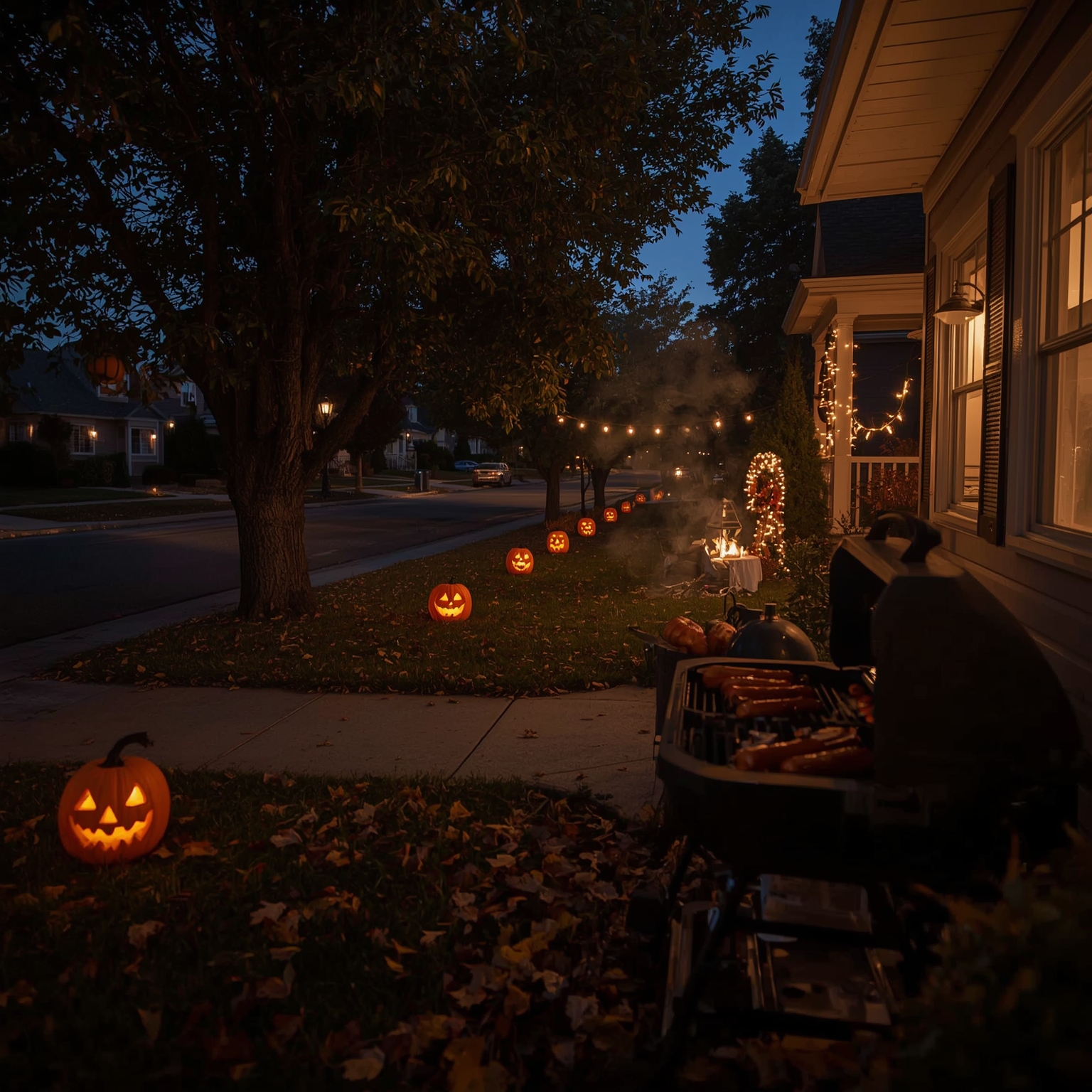
Now, as October approaches each year, our home transforms into a whimsical wonderland of cobwebs, grinning jack-o’-lanterns, and towering decorations. The crown jewel of our setup is a twelve-foot skeleton that looms over the yard, acting as a guardian to the countless pumpkins and inflatable ghosts that flank our front door. Neighbors stop by just to marvel at the display, and the excitement radiates through our community long before the trick-or-treaters arrive. Our celebration is never a solitary affair; it’s a neighborhood event in the truest sense. We invite friends and their children for a lively gathering—complete with several boxes of pizza for easy dining before the evening’s main event. My husband, ever the extrovert and grill enthusiast, takes charge of serving up hot dogs for everyone who passes by. Yes, it’s as chaotic and joyful as it sounds—children in costumes running about, parents chatting on the lawn, and the smell of grilled food filling the crisp autumn air.
Choosing Halloween as our central family celebration did more than introduce ghosts and pumpkins into our yearly ritual; it fundamentally redefined what holiday happiness meant for us. One of the most liberating aspects of this decision is the lowered level of expectation. Unlike Thanksgiving or Christmas—holidays that often carry emotional weight, extensive travel, and elaborate scheduling—Halloween arrives with a refreshingly casual attitude. There are no complicated meal plans or lengthy guest lists. Since the kids still have school that day, travel simply isn’t on the table, which means we can focus on being present rather than preparing to go elsewhere. Dinner is an unfussy, stress-free affair—four or five pizzas shared among giggling children impatient to don their costumes and head out into the night. It’s a celebration based on joy and spontaneity rather than formality and obligation.
Decorating for Halloween, one of my personal joys, has also become a true family effort. Many of our decorations resurface year after year, developing a sentimental value of their own. Even the simplest items—a string of orange lights or a well-worn scarecrow—hold memories of past Octobers. My children eagerly participate, insisting on arranging fake cobwebs or carefully positioning plastic spiders in unexpected corners. Their enthusiasm turns the process into a creative collaboration, relieving me from the responsibility of orchestrating every detail and transforming the task into shared fun rather than solo labor.
Another benefit, one especially relevant in today’s world, is the reduced financial pressure. Unlike major winter holidays that often spiral into an endless cycle of gift-buying and lavish hosting, Halloween is pleasantly modest in cost. Apart from candy to distribute and costumes for the kids, our expenditures are limited. We established a one-costume rule—each child selects one outfit for the entire season, no matter how many school parties, trunk-or-treats, or community events they attend. This simple guideline curbs spending without dampening their excitement. Our decor, too, is a thoughtful mix of affordability and occasional indulgence: most of our collection comes from Dollar Store finds or affordable pieces from Target, complemented by one extravagant item—the aforementioned twelve-foot skeleton—that has turned into both an annual showpiece and a shared source of neighborhood delight.
Perhaps the greatest gift that our Halloween-centered approach has brought is the space to cultivate new, meaningful traditions. Holidays such as Thanksgiving and Christmas tend to come prepackaged with longstanding customs—lavish family dinners, marathon cooking sessions, ornate gift exchanges, and meticulously coordinated decorations. After fulfilling all those expectations, there is often little room for originality or additional bonding moments. In contrast, Halloween offers us creative freedom. We can shape it as we wish, introducing rituals that reflect our personalities and values. One such tradition has become both a personal point of pride and a communal favorite: my husband’s annual hot dog grilling.
This particular practice isn’t arbitrary—it’s rooted in nostalgia. When my husband was a boy, there was a dad in his neighborhood who would fire up the grill on Halloween night, offering free hot dogs to trick-or-treaters and parents alike. That simple act of generosity left a lasting impression. When we began hosting our own Halloween celebration, my husband decided to revive that tradition in our community. It has since taken on a life of its own. Every year, he prepares hundreds of hot dogs—150 last year, and this year we’re anticipating 200. Children, too excited by candy and costumes to sit down for dinner, devour the grilled treats with delight, while parents are equally grateful to see their kids eat something savory before the sugar rush begins. The spectacle has earned my husband the affectionate nickname of “the hot dog man,” a moniker he wears with good humor and pride.
Of course, not everyone shares the same enthusiasm for Halloween. Some families prefer the cozy familiarity of Thanksgiving feasts or the spiritual reflection of the winter holidays. Others find the spooky themes, abundant candy, and costume chaos less appealing. But for our household, selecting a relatively low-pressure holiday and making it our own has lifted an enormous emotional and financial weight. It has allowed us to celebrate in a way that feels authentic, joyful, and sustainable. By exchanging stress for silliness, and obligation for creativity, we discovered that our sweetest family traditions—ironically enough—came wrapped in cobwebs and pumpkin lights rather than tinsel and bows.
Sourse: https://www.businessinsider.com/family-gives-out-hot-dogs-trick-or-treaters-halloween-2025-10


