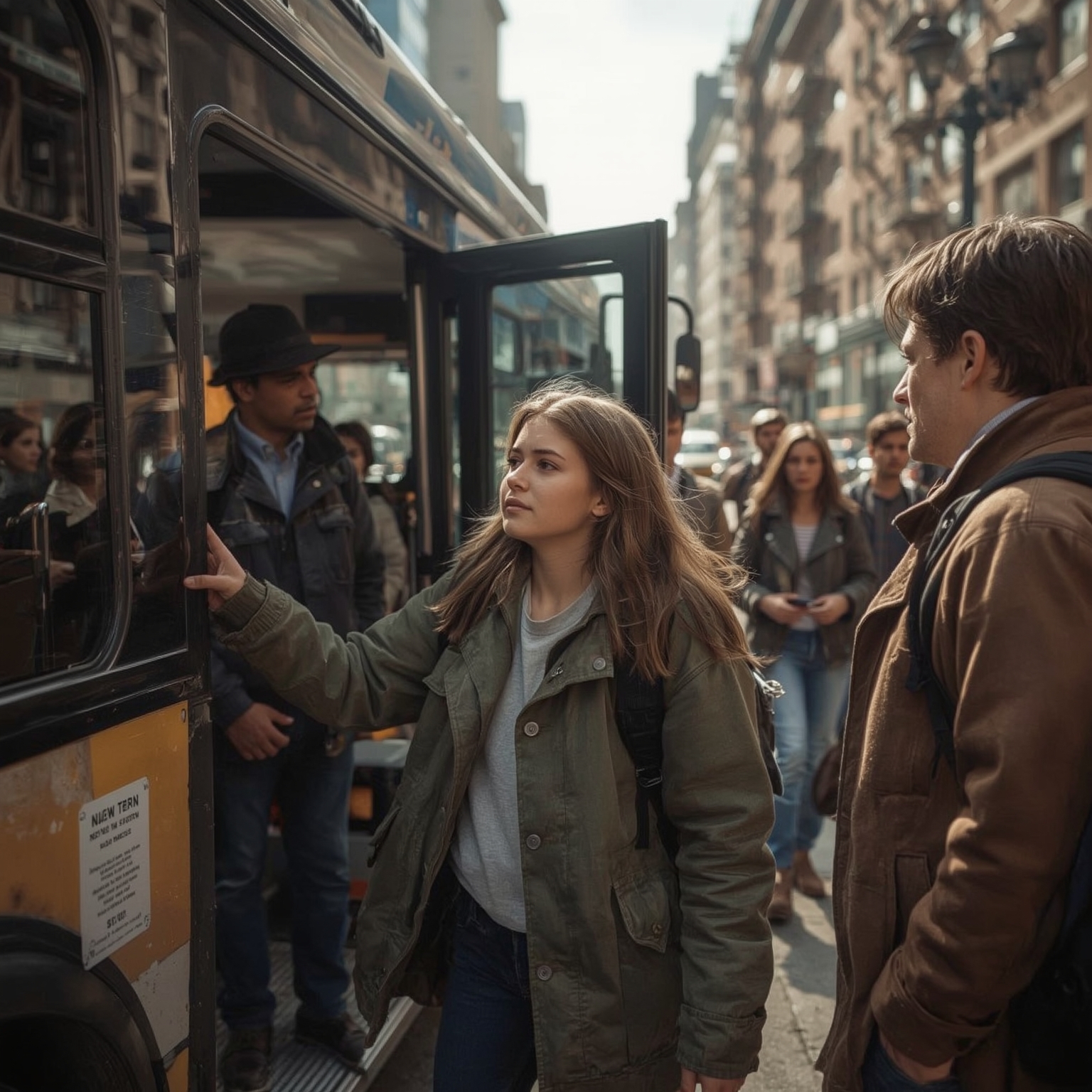
As I stood at the curb, watching the bus bound for New York City ease away from the stop, I forced a smile and raised my hand in an enthusiastic wave. Outwardly, I was striving to project warmth and reassurance, offering my 15‑year‑old daughter a portrait of calm composure. She had just climbed aboard, alone, embarking on a journey that represented both freedom and challenge. Inside, however, the bravado masked a storm of conflicting emotions—an undercurrent of panic mixed with awe. Questions spun in my mind at dizzying speed: Was she genuinely prepared for this experience? Would she know exactly how to respond in the unlikely event that the bus broke down or that another passenger made her uncomfortable? And perhaps most torturously, could I endure the relentless anxiety that would gnaw at me throughout the week of her absence?
As the bus grew smaller in the distance, carrying my child toward one of the largest and most complex cities in the world, I confronted the undeniable truth that, at some point, faith had to outweigh fear. I needed to trust the lessons she had absorbed and the resilience she had built under my care. Yet, that trust did not dull the sting of watching her step so boldly beyond the circle of my protection. Parenthood, after all, demands the paradox of nurturing closeness while preparing for inevitable distance.
From the very instant of her arrival into the world—fragile, dependent, and utterly reliant on me for sustenance and safety—I had understood my fundamental responsibility: to guide her toward independence. In those early days, I was her lifeline, the one who cradled her against the cold, who nourished her tiny body, and who protected her as she first began to explore her surroundings. Through toddlerhood, my role expanded to that of vigilant guardian—grasping her small hand as she approached the edge of a swimming pool, soothing her tears with a kiss when she fell, and instilling both courage and caution as she ventured step by wobbly step further from my immediate reach.
Later, during her elementary school years, I began to recognize the steady rhythm of incremental growth. She mastered small but meaningful feats of independence—walking unaccompanied to nearby friends’ houses, or taking responsibility for buying a carton of milk from the corner market. Each of these seemingly minor acts was, in truth, a building block in her confidence. By middle school, the stakes rose. She was boarding the school bus without me and, soon after, unraveling the more complex system of the city’s metro. We rehearsed together the scenarios that might unsettle her—how to reorient herself if lost, what to do if approached by someone with harmful intentions, or how to respond if anyone attempted to take advantage of her vulnerability. I was gifting her not only permission but also skills: the tools she would someday need to stand self‑assured in a world that can sometimes be unpredictable.
As adolescence deepened, my role shifted again. Gradually, my active doing transformed into supportive refraining. It was no longer always about stepping in to fix or protect, but about stepping back to allow her to try, to stumble, and to learn. She developed essential practical abilities—laundry folded by her own hands, meals cooked with her own experiments in spice, budgeting decisions made with her own discernment. Alongside these came the less tangible yet equally vital forms of intelligence: the ability to sense danger, to discern trustworthiness, and to navigate unfamiliar environments with clear judgment. Each new accomplishment was not merely a convenient skill but a gradual step toward her readiness for a self‑sufficient life.
Thus, as I watched my daughter climb onto that bus, I felt not only fear but also immense pride. Sitting among strangers on the road toward the Big Apple, she carried with her a composite of lessons learned and strengths earned. While I recognize that the majority of her maturity stems from her own choices and character, I could not help but reflect with quiet satisfaction on my role in shaping the foundation that supports her.
Ultimately, the scene crystallized for me the most poignant aspect of parenting: my true vocation as a mother is to teach, to prepare, and to equip my child for the eventual day when she no longer needs me in a practical, everyday sense. The goal toward which I have labored—sometimes consciously, sometimes instinctively—since cradling her as a newborn is, paradoxically, also the moment I most dread. Independence requires separation; flight requires leaving the nest. That bus ride became a rehearsal, a preview of the inevitable farewell that looms ever closer.
The experience awakened me to just how startlingly fast that final moment approaches. The image of her walking away, not to return for a week, echoed in my imagination as a foreshadowing of watching her one day depart permanently—for college, perhaps for her first job, or eventually for a new home, possibly in a city much farther away than New York. Since her return, I have felt the acceleration of time more keenly: every shared meal, every casual conversation, every ordinary moment has acquired the preciousness of scarcity. It is as though her bus journey compressed the timeline of her growth, forcing me to acknowledge how little time remains before she forges her own life apart from mine.
Although many parents find solace in the knowledge that their children are fully capable of navigating the world, the realization still lands with weight, tinged with melancholy. My daughter has demonstrated clearly that she is indeed prepared. While pride fills me, I cannot silence the ache of gradual separation. Until the day she truly leaves to shape her own path, I will treasure with heightened awareness every moment she continues to share with me—the fleeting present that becomes all the more luminous because it will one day transform into memory.
Sourse: https://www.businessinsider.com/mom-let-teen-daughter-bus-alone-new-york-city-2025-9