After Pokémon Legends: Arceus dramatically reinvented the core identity of the long-running series, its successor, Pokémon Legends: Z-A, moves forward with even greater audacity—delivering a sophisticated evolution that feels both refreshing and radical. Whereas Arceus offered the first convincing glimpse at how dynamic and imaginative the franchise could become when freed from its traditional formula, Z-A steps confidently into that reimagined space, heightening every element and translating innovation into tangible, exhilarating gameplay. This progression not only marks a shift in design philosophy for Nintendo and Game Freak but also signals to players that Pokémon, a series sometimes accused of creative stagnation, is again ready to redefine itself. The sense of experimentation that made Arceus so invigorating has matured here into a full-fledged design ethos, and Z-A fully embraces its role as a bold new frontier.
Arceus distinguished itself through its unique setting in a mythic, preindustrial era—an approach that invited players to perceive the familiar mechanics of battling, capturing, and exploring through an entirely new lens. The result was a world that felt vast, untamed, and alive, with every encounter echoing the thrill of discovery. After years in which mainline Pokémon installments had begun to feel like minor variations on a well-worn template, Arceus served as an electrifying reminder of what true reinvention can achieve. However, while the subsequent Pokémon Scarlet and Violet initially seemed poised to expand upon that rejuvenated framework, their numerous technical shortcomings and uneven storytelling undercut the ambition behind their open-world concept. That disparity left fans uncertain about the franchise’s future trajectory.
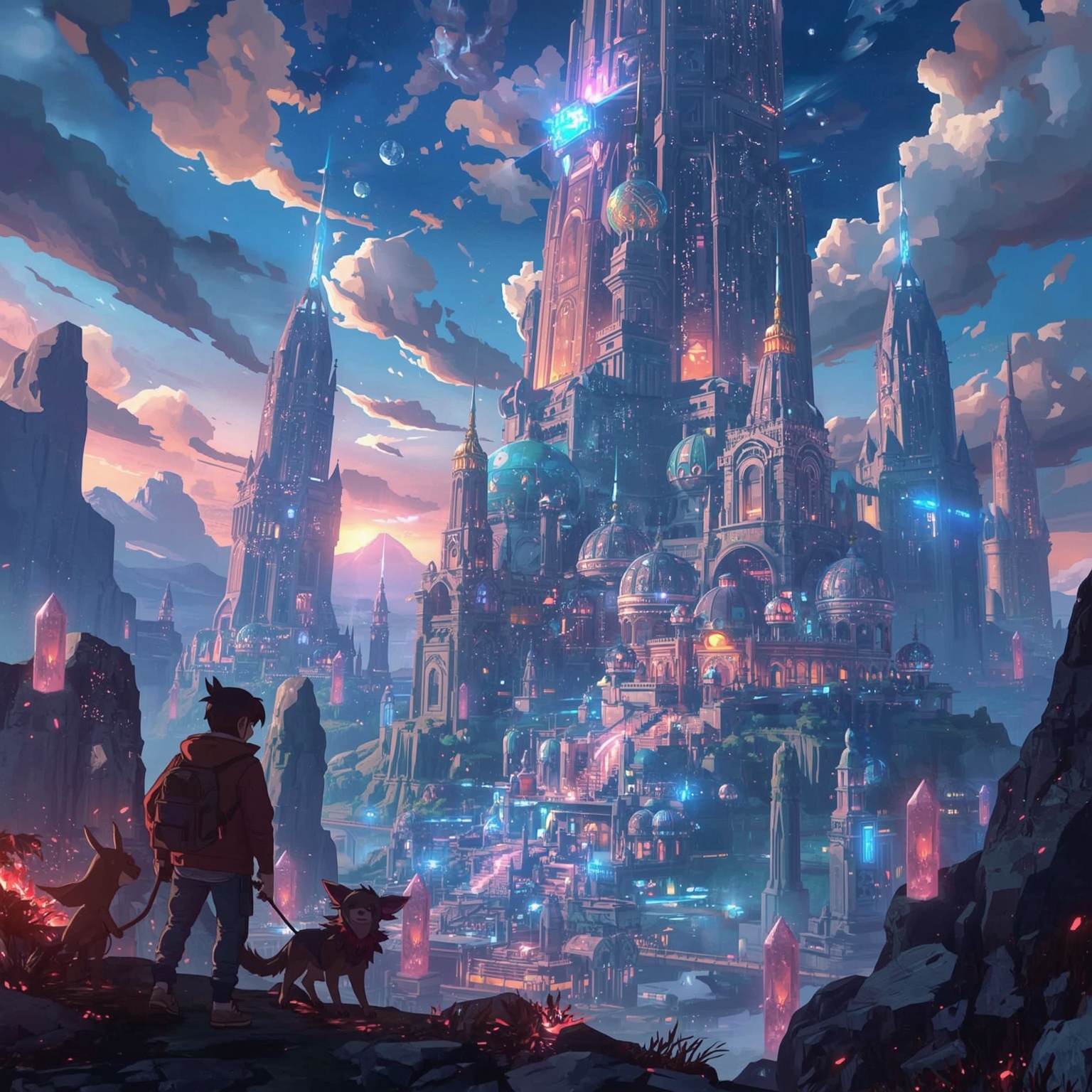
Pokémon Legends: Z-A, however, dispels these doubts with a resounding return to form. Set immediately following the events of Pokémon X and Y, the new title relocates players to the bustling heart of the Kalos region—Lumiose City—a metropolis still recovering from a near-apocalyptic assault by a misguided idealist who once sought to purify the world through devastation. Through the eyes of a newcomer exploring the city as it undergoes reconstruction, players witness a narrative of rebirth and optimism. Lumiose, modeled after Paris, is presented as an urban tapestry of ambition and resilience. Its grand redevelopment initiative, led by the Quasartico corporation, seeks to create a utopia where humans and Pokémon coexist harmoniously. Residential districts brim with new life, while dedicated Wild Zones—vibrant, contained ecosystems within the city—serve as sanctuaries for untamed Pokémon. Yet beneath this hopeful veneer simmer growing anxieties about inexplicable appearances of dangerously unstable Mega-Evolved creatures. The player soon finds themselves entangled in the mystery, aligning with a specialized investigative unit tasked with uncovering the cause of these rogue phenomena.
The structural similarities between Arceus and Z-A are unmistakable, but the latter refines and elevates every experimental concept. Just as Arceus integrated stealth mechanics that redefined the act of capturing Pokémon in relation to its historical wilderness, Z-A uses its modern, metropolitan environment to create tension through the threat posed by unpredictable Mega Evolutions. Wild encounters remain perilous: even in the relative safety of Lumiose’s Wild Zones, exceptionally strong Pokémon can incapacitate the player within moments. Stealth remains a crucial tool as trainers navigate through tall grass or urban debris, patiently waiting to strike with a well-timed throw of a Poké Ball. Early in the game, such tactics prove sufficient against weaker opponents, but as encounters escalate to alpha-level threats, strategic deployment of battle partners becomes indispensable.
The battle system itself represents one of the most dramatic overhauls in franchise history. The familiar turn-based rhythm gives way to an action-oriented, real-time format in which attacks are mapped to the console’s face buttons and constrained by cooldown timers. Initially overwhelming, the system compels players to manage positioning, range, and timing on both their Pokémon’s and their own behalf. Using items requires careful awareness of cooldowns, transforming even routine skirmishes into tests of adaptability. Over time, as players internalize the fluid tempo—perhaps realizing how a Tepig can chain Ember into Tackle with graceful precision—the new flow reveals its strategic depth. Z-A demands that players think dynamically, embracing the inherent chaos of live combat rather than retreating behind rigid calculation. Yet strategy remains key: mastery of type matchups, statistical strengths, and spatial awareness continues to determine victory, albeit in a more kinetic context.
This evolution reaches its apex when the iconic Mega Evolution mechanic returns, revamped through the introduction of an energy gauge that allows repeated transformations during prolonged battles. Far from the single-use limitation of Pokémon X and Y, this adaptation makes Mega Evolution integral to the game’s design rather than a mere novelty. These spectacular metamorphoses prove essential when confronting the formidable Rogue Mega Pokémon that serve as Z-A’s climactic encounters, blending narrative significance with mechanical intensity.
Z-A intertwines its battle systems tightly with story progression. Lumiose City is not merely a backdrop but an ecosystem pulsing with context and contrast. By day, its avenues teem with leisure—citizens and Pokémon frequent cafés, admire art exhibits, and trade in well-lit marketplaces. By night, however, the city undergoes a spirited metamorphosis as the Z-A Royale, a daring reinterpretation of the traditional gym challenge, transforms random districts into impromptu battle arenas. Each evening, participants vie within designated Battle Zones to earn enough points to ascend ranking tiers, culminating in special duels that test the trainer’s skill. Unlike previous gym-based formats that limited opponents to uniform Pokémon types, Z-A Royale contestants employ eclectic, unpredictable rosters, forcing combatants to think spontaneously and adapt on the fly. Simultaneously, these competitions humanize Lumiose itself, revealing its cultural diversity through encounters with socialites, laborers, and dreamers united by their shared pursuit of victory.
In exploring Lumiose, players will notice how the city achieves a sense of immersion that earlier Switch-era Pokémon installments only aspired toward. Its scope invites endless wandering: conversations unfold dynamically, music permeates the streets with smooth jazz inflected by horns and accordions, and countless customization options encourage expression through fashion. While certain textures retain a minimalist style, the city’s organic liveliness far surpasses the sparse towns of Scarlet and Violet or the rustic simplicity of Arceus’s frontier landscapes. Quality-of-life refinements further reflect Game Freak’s growing sensitivity to player experience. A helpful non-player character now retrieves lost Poké Balls, reducing tedious resource management. Environmental obstacles—rubble, sludge, or shattered masonry—demand logical use of Pokémon abilities rather than reliance on obsolete traversal moves like Cut. Such realism lends a tactile authenticity to exploration: for instance, using an Emboar’s Rock Smash will work only when the obstructing stones are within reachable height, prompting thoughtful interaction with the world rather than mechanical repetition.
Every corner of Z-A is carefully engineered to sustain immersion. Though voice acting remains absent, nuanced auditory cues—like the exerted breaths of your avatar scaling a wall or the hum of electricity from a Pikachu resurrecting a defunct elevator—contribute to a palpable sense of presence. The distinction between player and environment dissolves as Pokémon serve not just as battle tools but as living partners shaping the rhythm of exploration. In this way, Z-A achieves what the series has long promised yet seldom delivered: a vivid, interconnected adventure where human, monster, and world exist in dynamic harmony.
While Z-A retains the experimental vitality that defined Arceus, it manifests a greater polish and technical completeness befitting its role as a generational showcase. The title debuts with fully realized online battle functionality and already has a downloadable content expansion announced—evidence of developer confidence and post-launch ambition. Technically, it operates with impressive smoothness on the Nintendo Switch 2, exemplifying what Pokémon can achieve when aligned with new hardware potential. Although performance on the original Switch remains uncertain, the visual fidelity and stability on the newer console affirm Z-A as the ideal flagship for a new hardware era.
Ultimately, Pokémon Legends: Z-A stands as a testament to the franchise’s evolution from tradition-bound repetition toward daring reinvention. It honors the experimental groundwork laid by Arceus while confidently charting a course toward the future—a future where innovation, immersion, and emotion coexist. When Pokémon embraces experimentation, as Z-A so convincingly demonstrates, it not only revitalizes itself but redefines what fans can dream the series to be. Pokémon Legends: Z-A launches for both the Nintendo Switch and Switch 2 on October 16th, heralding an era where the spirit of discovery once again defines the core of the Pokémon journey.
Sourse: https://www.theverge.com/games/798848/pokemon-legends-za-review-nintendo-switch-2