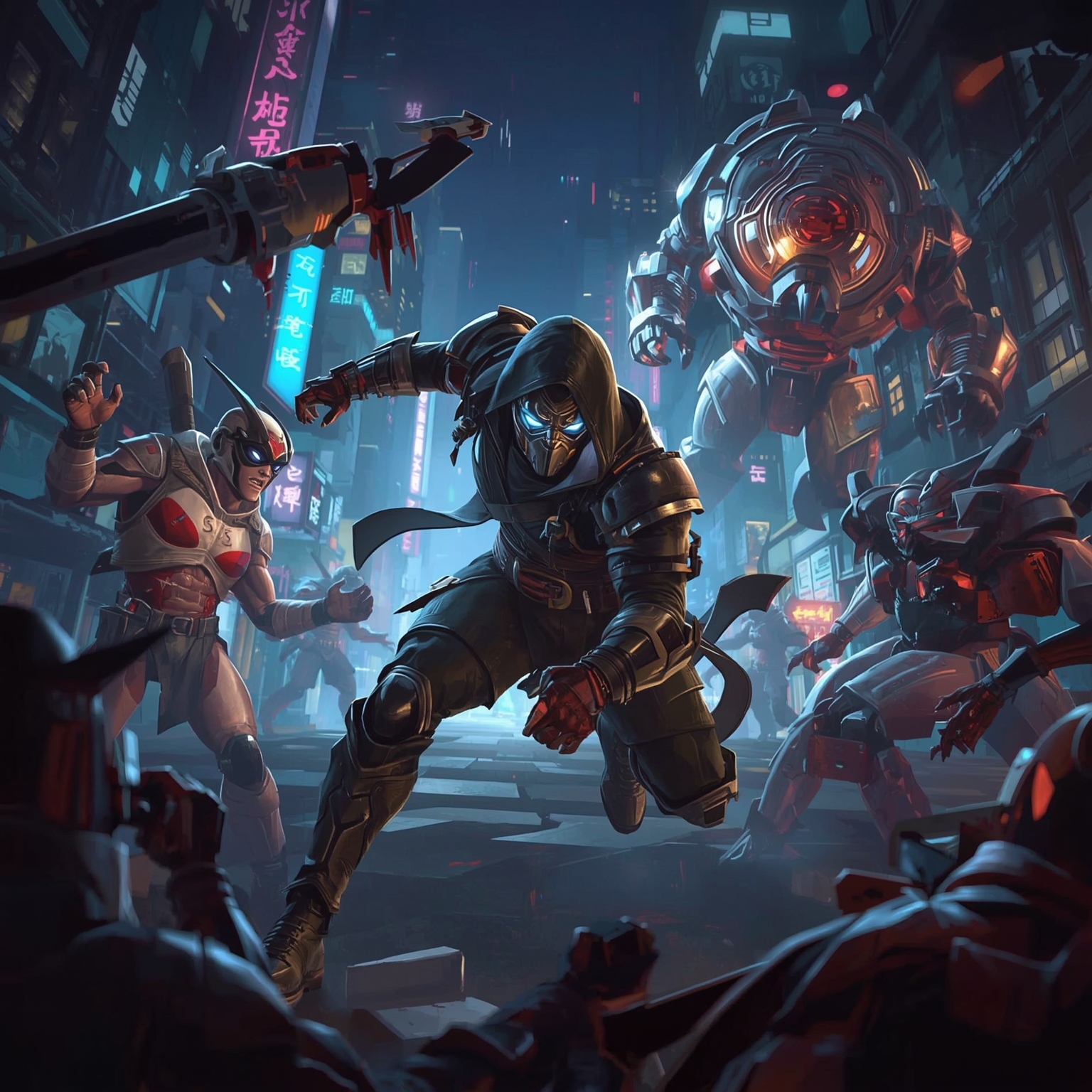
I can still vividly recall the sense of astonishment I felt when I first watched the 2024 reveal trailer for *Possessor(s)*, the latest creation from Heart Machine, the acclaimed developer behind *Hyper Light Drifter*. The preview left an unforgettable impression thanks to its extraordinary visual artistry and atmospheric intensity. It presented a mesmerizing combination of animation and dynamic world design—an agile 2D protagonist moving seamlessly through richly detailed side-scrolling environments, all set against the backdrop of breathtaking 3D landscapes that appeared both surreal and tangible. The trailer’s visuals were further amplified by a hauntingly evocative soundtrack—music that was at once moody, resonant, and emotionally stirring. When the full game finally launched earlier this month, my initial expectations were sky-high. Although the experience did not entirely recapture the overwhelming sense of wonder I had felt from that original trailer—and I even came close to abandoning it out of frustration—I’m genuinely grateful that I persevered and saw the journey through to its conclusion.
In *Possessor(s)*, players inhabit the character of Luca, a young woman whose body becomes host to Rehm, a demon originating from an otherworldly dimension. Early in the story, a devastating catastrophe nearly claims Luca’s life, but Rehm intervenes, reconstructing her legs to save her. From that moment forward, their fates intertwine: Luca’s body becomes the vessel for Rehm’s presence, and the two are bound together in constant, involuntary companionship. The narrative explores this uneasy coexistence, as Luca and Rehm are forced into an endless dialogue, able to exchange words and occasionally peer into each other’s memories, blurring the boundaries between mortal and supernatural consciousness. Their interactions are far from harmonious—they argue frequently, clashing in temperament and motivation, creating a tension that initially made it difficult for me to feel genuine empathy toward either. Yet, as the game progresses, these frequent conflicts gradually give way to moments of shared insight and reluctant understanding. Through hardship and confrontation, Luca and Rehm evolve from antagonists to reluctant allies, gaining deeper comprehension of one another’s inner worlds and histories.
According to Heart Machine, *Possessor(s)* is designed as a “fast-paced action side scroller.” In practice, however, it is unmistakably a love letter to the *Metroid* and *Castlevania* lineage—a carefully constructed *Metroidvania* experience that emphasizes exploration, progression, and discovery. Players traverse an intricately interconnected map comprising diverse biomes, each with its own visual identity, environmental hazards, and hidden secrets waiting to be unearthed. Navigation demands both patience and curiosity; much of one’s time is spent poring over the map, trying to discern new routes or retrace old ones in search of previously inaccessible spaces. Throughout the adventure, you acquire numerous traversal upgrades—mobility enhancements such as a graceful wall run that allow you to reach new heights and uncover fresh paths. One of the earliest and most defining tools you obtain is a whip, cleverly designed to function both as a platforming utility, enabling you to swing across perilous gaps, and as a versatile weapon capable of punishing foes.
Combat in *Possessor(s)* draws heavy inspiration from platform fighters like *Super Smash Bros.*, blending speed and impact in encounters that feel tactile and kinetic. The game’s arsenal is refreshingly imaginative: rather than relying on conventional swords or guns, many of the weapons are inspired by everyday household objects, reimagined with demonic flair. My personal approach favored an aggressive style—relentlessly battering enemies with a massive baseball bat at close range, discharging bursts of electricity from a modified cellphone to stun and create distance, and hurling cursed silverware across rooms to strike adversaries beyond reach. Equally significant is the ability to parry, a crucial mechanic that turns defense into opportunity, rewarding precise timing with powerful counterattacks.
Despite its fluid combat and creative mechanics, *Possessor(s)* proves formidable from the outset. Ordinary enemies eliminate carelessness without mercy; even a momentary lapse of attention or an unfortunate sequence of hits can result in abrupt death. When this happens, the game transports you back to a checkpoint system analogous to *Dark Souls*’s iconic bonfires—safe havens from which your progress resumes, albeit at the cost of retracing your steps through hazardous territory to reclaim lost ground. Healing relies on a *Souls*-inspired flask mechanic, here cleverly reinterpreted as pills—painkillers that must be consumed strategically to restore health. Normally, I revel in this kind of demanding challenge, but *Possessor(s)* often felt harsher than satisfying during its early hours. Certain enemy placements and level layouts tested my patience rather than my skill, and the resulting difficulty spikes made progression feel like attrition instead of mastery. Compounding the frustration, I found myself repeatedly lost after several hours of exploration, scouring large sections of the map in vain because I hadn’t yet discovered how to breach mysterious glowing walls obstructing critical pathways. The temptation to abandon the adventure at that point was strong.
However, once I finally learned the solution—using the whip to crack open those enigmatic barriers—the experience began to transform. With improved health upgrades, additional healing reserves, and a renewed appreciation for the growing complexity of Luca and Rehm’s dynamic, the game opened up beautifully. I settled into the familiar yet endlessly satisfying rhythm that defines the *Metroidvania* genre: probing unexplored areas, uncovering new abilities, defeating challenging bosses, acquiring the next vital artifact, and then using those tools to reach previously unreachable zones. This cyclical progression of discovery and mastery became immensely rewarding once I fully attuned to the game’s flow.
In the midst of all the intensity, there are charming touches that lighten the atmosphere—for instance, purchasing weapons and items from endearing, animal-like merchants whose quirky animations provide brief but delightful respite from the larger struggle. Such moments of levity underscore Heart Machine’s attention to tonal balance, ensuring the game doesn’t drown entirely in its darkness.
Ultimately, *Possessor(s)* did not captivate me in exactly the way I had first anticipated. From that breathtaking initial reveal, I had imagined a game perfectly calibrated to my personal tastes, as though engineered in a lab for players like me. Instead, it demanded patience—a slower acclimation to its rhythm before it could fully reveal its brilliance. Yet by its closing chapters, as I fought through a climactic final level that rigorously tested every skill I had developed and faced an awe-inspiring last boss set within a visually stunning arena, I realized the game had finally rekindled the very emotions that first drew me to it. Watching the closing credits scroll across the screen felt like a quiet affirmation that the promise glimpsed in that trailer had, in its own way, been fulfilled.
*Possessor(s)* is now available on both PC and PlayStation 5, inviting players to lose themselves in its intricate mix of artistry, challenge, and emotional resonance. Following the story of Luca and Rehm to its bittersweet end, I was left reminded of how the best games often reward endurance with revelation, and how patience can turn an initially frustrating journey into something truly unforgettable.
Sourse: https://www.theverge.com/games/821117/possessors-review-pc-ps5


