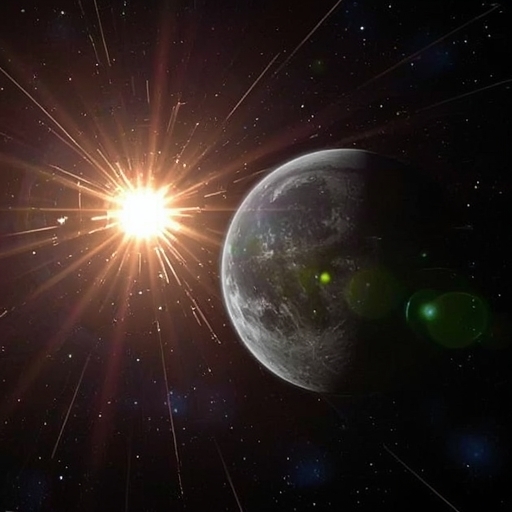
Astronomers across the globe are closely monitoring an extraordinary celestial development — a newly detected space rock that carries an estimated 4.3 percent probability of colliding with the surface of the Moon in the year 2032. While that figure may seem small when expressed in percentages, in the context of astronomical forecasts it represents a notably high likelihood, sufficient to prompt serious scientific attention and analysis. Experts explain that the object’s projected path, currently being refined through ongoing observations, places it on a possible intercept trajectory with our planet’s natural satellite within less than a decade.
Should this rare astronomical event indeed occur, the collision is expected to release an immense amount of energy at the point of impact. Scientists project that the resulting explosion would generate a blinding flash of light visible even from Earth — potentially rivaling the brilliance of Venus, the brightest planet in our night sky. Such a luminous display, though brief, would represent a powerful reminder of the dynamic and unpredictable forces constantly shaping our solar system.
Beyond the initial moment of impact, the aftermath would offer an equally captivating spectacle. Debris ejected from the lunar surface could disperse through space and eventually cross Earth’s orbital path, creating a sequence of dazzling meteor showers streaking across our skies for several consecutive nights. For observers on Earth, these showers would transform the darkness of the heavens into a vivid, continually shifting display of cosmic illumination — an event that could inspire both awe and scientific curiosity.
Researchers emphasize that this prospect, though uncertain, highlights the ever-changing nature of our cosmic environment. It serves as a vivid illustration of how celestial bodies — from small asteroids and meteoroids to planets and moons — interact within the gravitational ballet of the solar system. Each of these encounters, no matter how remote or improbable, deepens our understanding of planetary defense, the mechanics of orbital motion, and the fragile balance sustaining the celestial harmony around us.
In essence, while the probability of a 2032 lunar impact remains small, the potential implications reach far beyond a mere astronomical curiosity. The event would represent a unique opportunity for global observers, both professionals armed with telescopes and casual stargazers alike, to witness cosmic dynamics unfolding in real time — reminding humanity once more of its place within a vibrant, ever-evolving universe.
Sourse: https://gizmodo.com/a-possible-lunar-impact-in-2032-could-spark-days-of-meteor-showers-on-earth-2000718658