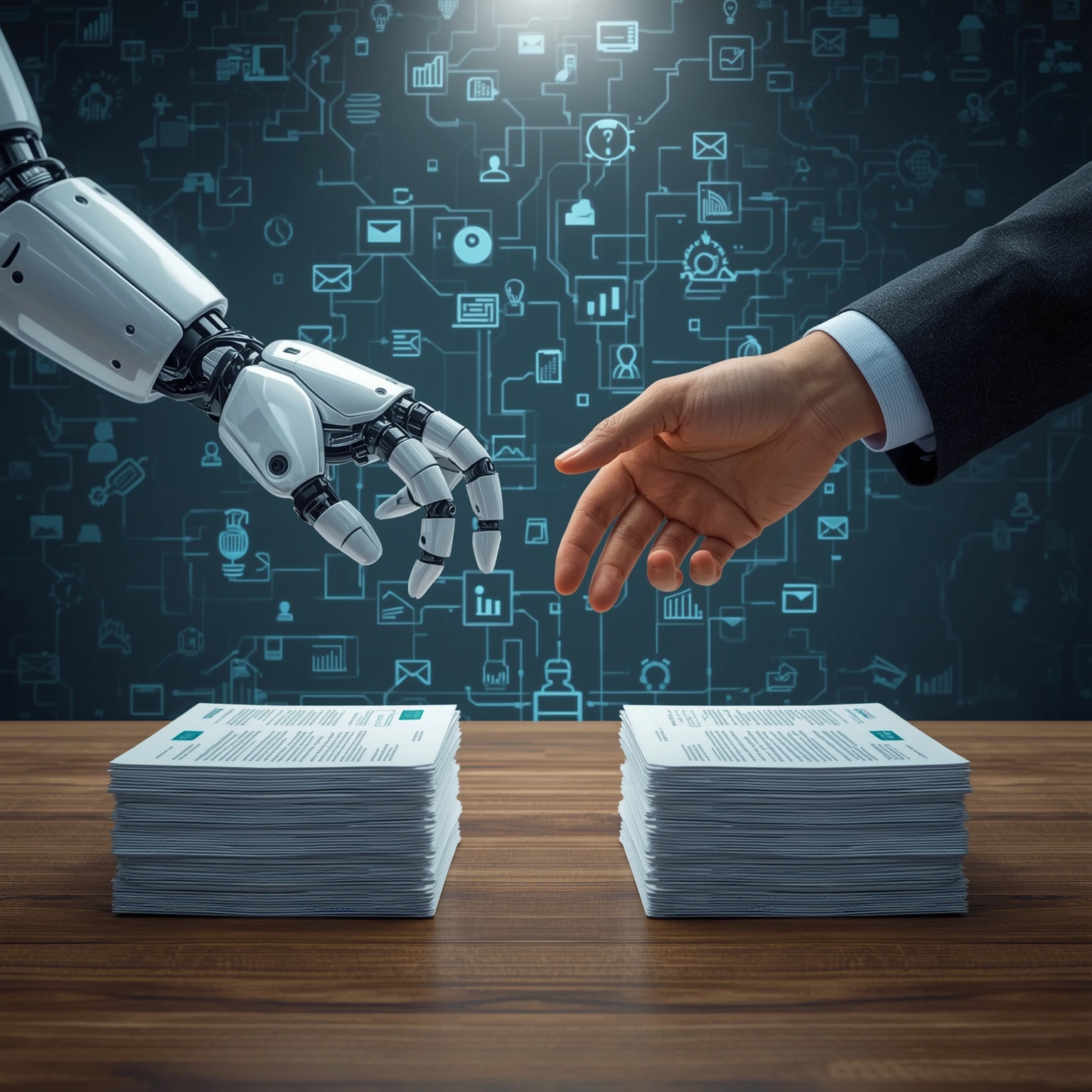
Federal Reserve Chair Jerome Powell has publicly acknowledged that artificial intelligence is already exerting noticeable influence over the composition and dynamics of the U.S. workforce. Speaking candidly during a press conference concluding the Federal Reserve’s September policy meeting, Powell remarked that while the precise nature of the phenomenon remains difficult to measure, there is mounting evidence that the integration of AI technologies is beginning to displace or fundamentally transform certain roles. He described his own perspective as an informed guess shared by many experts, emphasizing that, although these shifts are visible, they are not yet the primary force driving employment patterns compared with other macroeconomic trends.
Powell elaborated further, clarifying that the most acute effects appear to be concentrated among individuals who have only recently entered the workforce, particularly those graduating from college and seeking their first professional positions. According to his assessment, AI appears to be functioning as one contributing factor shaping hiring decisions for new entrants, but he stressed that the exact magnitude of this influence remains highly ambiguous. For example, he suggested that organizations accustomed to recruiting younger workers may now see an opportunity to substitute or supplement those roles with AI-powered systems, an adjustment that would allow them to pursue efficiency gains or cost savings. While this possibility plays a role in the story, Powell also underscored the broader point that the nationwide slowdown in job creation is not exclusively tied to technological innovation; larger structural and cyclical slowdowns must also be taken into account.
By offering this perspective, Powell has become one of the most prominent figures in global economic policy to engage with the ongoing debate on workforce disruption—a subject that has sharply divided executives across Silicon Valley and beyond. The conversation was reinvigorated earlier in the summer when Dario Amodei, the chief executive of Anthropic, asserted in an interview that recent advancements in AI could potentially erase up to half of all entry-level white-collar positions within a remarkably short time horizon of just one to five years. This stark prediction added urgency to the discussion and prompted responses from leaders of several other major corporations. For instance, Ford CEO Jim Farley voiced comparable worries about the destabilizing potential of automation. In contrast, figures such as OpenAI’s Sam Altman—who participated in a Federal Reserve conference over the summer—contested Amodei’s more dramatic projections, pointing instead to uncertainties and variations in how rapidly such technologies will be adopted. In the meantime, anecdotal reports have begun to surface from companies like JPMorgan and Klarna, both of which have admitted that their integration of AI tools has already led them to significantly trim parts of their workforce.
Powell himself has previously addressed Congress on the far-reaching potential of artificial intelligence. In testimony to the Senate Banking Committee in June, he characterized AI as possessing extraordinary capacity to alter both the broader U.S. economy and the structure of the labor market. He described a dual-edged effect: on the one hand, AI could serve as a powerful complement that enhances human productivity, allowing workers to accomplish more with greater precision and efficiency; on the other hand, it could become a direct replacement for human labor in various roles, reducing the need for certain occupations altogether. More plausibly, Powell added, its long-term influence is likely to represent a mixture of augmentation and displacement—a blend of opportunities and risks that will inevitably reshape economic and social realities. In his words, although the precise trajectory is difficult to forecast, one conclusion is unavoidable: artificial intelligence is unquestionably going to be “something” significant, an unavoidable and transformative force that policymakers, businesses, and workers alike must learn to navigate.
Sourse: https://www.businessinsider.com/powell-ai-entry-level-jobs-market-2025-9