Artificial intelligence is fundamentally transforming every facet of modern professional life, but perhaps its most profound influence is found within the realm of education—how we teach, how we learn, and how we prepare the next generation for a rapidly changing world. While many discussions around AI focus on automation and the potential disappearance of certain jobs, the more important conversation centers on the kinds of skills that will not only remain valuable but become indispensable in this evolving landscape. The future clearly belongs to those who can seamlessly merge technical proficiency in science, technology, engineering, and mathematics (STEM) with imagination, empathy, and critical thinking.
Former Microsoft executive Craig Mundie has long emphasized that the emergence of advanced technologies demands an equally advanced approach to education—one that personalizes the learning experience and bridges the traditional divide between science and the humanities. His perspective challenges the outdated notion that technical and creative disciplines exist in isolation. In the age of intelligent machines, innovation thrives precisely at their intersection: where logical reasoning meets artistic exploration, and where data-driven insight fuels creative problem-solving.
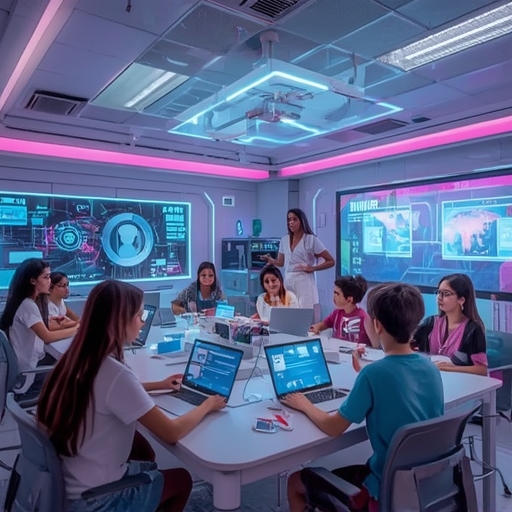
In practical terms, this shift necessitates reimagining classrooms as ecosystems of curiosity, experimentation, and personalized discovery. AI can serve as a powerful ally in that effort, tailoring instruction to individual learners and enabling students to progress at their own pace. Students who are encouraged to collaborate with intelligent tools rather than compete against them will be far better equipped to design new solutions and generate original ideas that extend beyond what technology alone can achieve.
Equally important are the so-called soft skills—adaptability, curiosity, and the commitment to continuous learning—that Mundie and many experts identify as the true differentiators in an automated world. These attributes ensure that learners remain flexible in the face of constant change and able to reinterpret information in creative, human-centered ways. The world of work is no longer static; the ability to pivot graciously, to explore new domains without fear, and to translate complex knowledge into meaningful results defines tomorrow’s leaders.
As AI continues to drive both opportunity and disruption, the educational imperative is clear: we must cultivate well-rounded thinkers capable of synthesis, not just specialization. The most resilient minds of the future will be those that can write an algorithm in the morning, compose a piece of music by afternoon, and still find time to ask profound questions about ethics, purpose, and the human condition. By blending STEM education with the arts and nurturing creativity alongside computation, society can develop a generation that not only adapts to artificial intelligence—but learns to work with it, guiding technology toward outcomes that reflect our collective intelligence, compassion, and imagination.
#AI #Education #FutureSkills #Creativity #STEM #Innovation
Sourse: https://www.businessinsider.com/ex-microsoft-exec-ai-expert-says-colleges-need-new-curriculum-2026-2