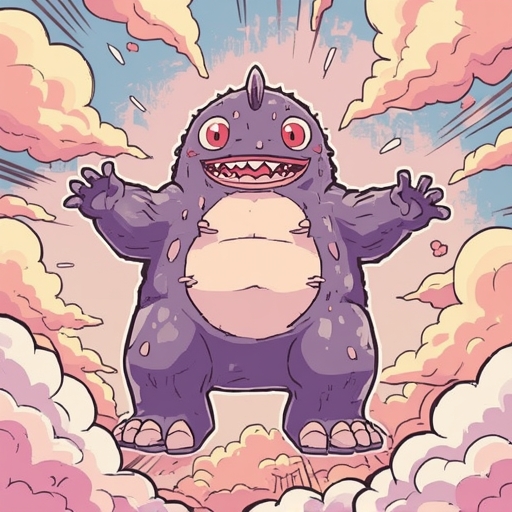
Giant monsters, or kaiju, have always possessed an almost magnetic appeal within the realm of Japanese pop culture, and when intertwined with the vivid, expressive storytelling medium of manga, the combination becomes an artistic powerhouse nearly impossible to resist. Over time, this pairing has not merely endured but has grown into a defining hallmark of the genre, capturing audiences across generations with its unique blend of spectacle, emotion, and stylized imagination. Much of the modern enthusiasm for this genre owes its vitality to groundbreaking works such as *Kaiju No. 8*, a trailblazing series that raised the stakes by centering around an adult protagonist—a refreshing deviation from the long-established formula of adolescent heroes dominating shōnen narratives. In doing so, it challenged fundamental genre conventions while invigorating readers who craved maturity and depth alongside adrenaline-fueled combat.
Yet, just as the cultural conversation seemed ready to settle around that success, another title emerged to echo and evolve this victorious formula: *Rai Rai Rai*, a criminally underappreciated gem from Viz Media. This bold and imaginative manga hides a surprising narrative complexity beneath its charming facade of slapstick humor and irresistible cuteness. At first glance, it presents itself as a whimsical comedy crafted around a delightfully designed heroine whose kaiju-like appearance could easily be mistaken for plush-toy adorableness. However, creator Yoshiaki imbues her creation with a deceptive gravity that swiftly reveals itself upon closer inspection. The title, which translates evocatively to “Lightning Lightning Lightning,” signals the fierce energy pulsing through every page. Set in a post-apocalyptic vision of the year 2052—half a century after a catastrophic alien invasion—the world Yoshiaki constructs depicts humanity’s painstaking climb toward recovery. Specialized organizations now shoulder the responsibility of eradicating the monstrous alien remnants, or ‘varmints,’ still haunting the Earth.
The narrative orbits around its endearingly flawed heroine, Sumire Ichigaya, an 18-year-old woman who, following a harrowing abduction by extraterrestrials, earns the extraordinary and burdened ability to transform into a kaiju herself. At first blush, readers might find themselves drawing an immediate parallel to *Kaiju No. 8*. Indeed, the setup resembles a gender-inverted reflection of that story, with cosmic invaders in place of homegrown monsters. But as the tale unfurls, *Rai Rai Rai* confidently distinguishes itself, moving from mere homage toward genuine innovation. The evolution of its world and characters invites early readers to invest now—before the series inevitably becomes either a breakout hit or a promising casualty of the industry’s ruthless pace.
Crucially, the series transcends its initial resemblance to the “next best thing after *Kaiju No. 8*” trope. Instead, it transforms into a creative fusion of familiar influences and unexpected originality. While clearly inspired by the lighthearted rhythms of early *Dragon Ball*, the cheeky fluidity of *Ranma 1/2*, and the gritty atmosphere of *Chainsaw Man*, it also borrows visual and tonal elements from *Gunbuster*, infusing a sense of operatic heroism beneath its comic surface. Yoshiaki’s work is at once referential and rebellious—it sits comfortably within the lineage of its predecessors yet asserts itself with confident individuality.
From a visual standpoint, *Rai Rai Rai* celebrates the rounded, expressive character aesthetics reminiscent of classic manga artistry. Sumire’s ponytail and airy design nod lovingly to Rumiko Takahashi’s *Ranma 1/2*, an influence modern titles like *Gokurakugai* and *Dandadan* have also wisely embraced in homage to her enduring craft. Still, beneath this nostalgic exterior lies a sharper, more dynamic edge, clearly influenced not only by *Kaiju No. 8*’s precision but by the relentless energy and bloodthirsty charm characteristic of *Chainsaw Man*. This duality allows the series to oscillate beautifully between endearing whimsy and visceral spectacle.
That tonal balance is exemplified in the militaristic unit known as Raiden—an elite, high-tech varmint extermination organization whose members don sleek, skin-tight combat suits that amplify their physical capabilities in battle. Within this outfit, Sumire’s role is both comical and tragic. She is portrayed as a crying, clumsy dreamer—an unlikely heroine thrust into a militarized dystopia. Her perseverance despite fear and fragility makes her a heartfelt anchor in a narrative swirling with explosions and monstrous chaos. This juxtaposition of personal vulnerability and outward power cascades through the story, granting it an emotional resonance rarely found in straightforward action series.
Beneath *Rai Rai Rai*’s polished, cute exterior lies a surprisingly weighty exploration of trauma and survival. The manga confronts difficult subjects with empathy and candor: Sumire’s childhood marred by physical abuse from her mother, her family’s suffocating debt, and the exploitative labor she accepts in desperate attempts to help them stay afloat. These struggles frame her as a Denji-like figure—someone willing to hurl herself into danger for compensation while being simultaneously used and celebrated by those around her. Her supposed empowerment becomes a layered commentary on societal exploitation and personal sacrifice.
Contrary to expectations, when Sumire undergoes her kaiju transformation, she does not become a nightmare creature born from cosmic horror, as one might anticipate from something out of Q Hayashida’s *Dai Dark*. Instead, the metamorphosis is delightfully subversive: her monstrous form manifests not as a terrifying beast but as an oversized, huggable plush resembling collectible vinyl figures like Labubu. This ironic contrast—an avatar of destruction appearing as something irresistibly cute—reinforces the story’s playful interrogation of what makes monsters lovable, terrifying, or symbolic. Watching Sumire struggle to contain her Godzilla-like atomic breath before reclaiming her strength as a beacon of hope feels more akin to a Superman moment of triumphant optimism than to the gritty angst that permeates conventional shōnen archetypes.
Even with only about forty chapters released so far, *Rai Rai Rai* has already achieved a remarkably poised equilibrium between slapstick humor and apocalyptic action. This blend recalls the tonal experimentations of series like *Magilumiere Co. Ltd.*, which playfully reconfigured the tropes of *My Hero Academia* and *Sailor Moon* to assert that female-led heroism can thrive without slipping into self-parody. Similarly, *Rai Rai Rai* reshapes familiar genre expectations—a cute girl in a kaiju suit battling existential threats—into something refreshingly authentic rather than derivative. The pacing brims with breathless, high-energy physical comedy and thrilling kaiju clashes, framed by a subtle critique of militaristic conformity and blind nationalism. Through this, Yoshiaki ensures that the series’ whimsy isn’t merely charming but thematically integral, operating as both satire and celebration.
The manga industry, however, remains unforgiving. Dozens of inventive series disappear abruptly, often before their creators can fully realize their visions. Works centering on women, in particular, face disproportionate challenges, often relying on passionate word-of-mouth campaigns to survive long enough to gain momentum. Recent examples, such as *Love Bullet*, illustrate how precarious this creative ecosystem can be. For that reason, one can only hope that *Rai Rai Rai* ignites a similar groundswell of advocacy and enthusiasm. After all, Yoshiaki’s inventive worldbuilding and emotional honesty deserve to flourish. The introduction of a new rival—a battle-hardened “muscle grandma” whose character design and energy evoke the unabashed bombast of *Metal Gear Rising*—only underscores how much uncharted potential lies ahead. It would be a genuine tragedy for such imaginative storytelling to fade prematurely into obscurity, destined to be discussed as another promising series that never received its due.
In a landscape overflowing with ideas yet prone to abrupt endings, *Rai Rai Rai* stands as both a celebration of its genre and a cry for its preservation. Its mix of laughter, action, and heartfelt resonance captures exactly why kaiju and manga make such an enduring, even transcendent, partnership in contemporary culture.
Sourse: https://gizmodo.com/rai-rai-rai-is-a-pastiche-of-manga-greats-rolled-into-a-cutesy-kaiju-package-2000701470