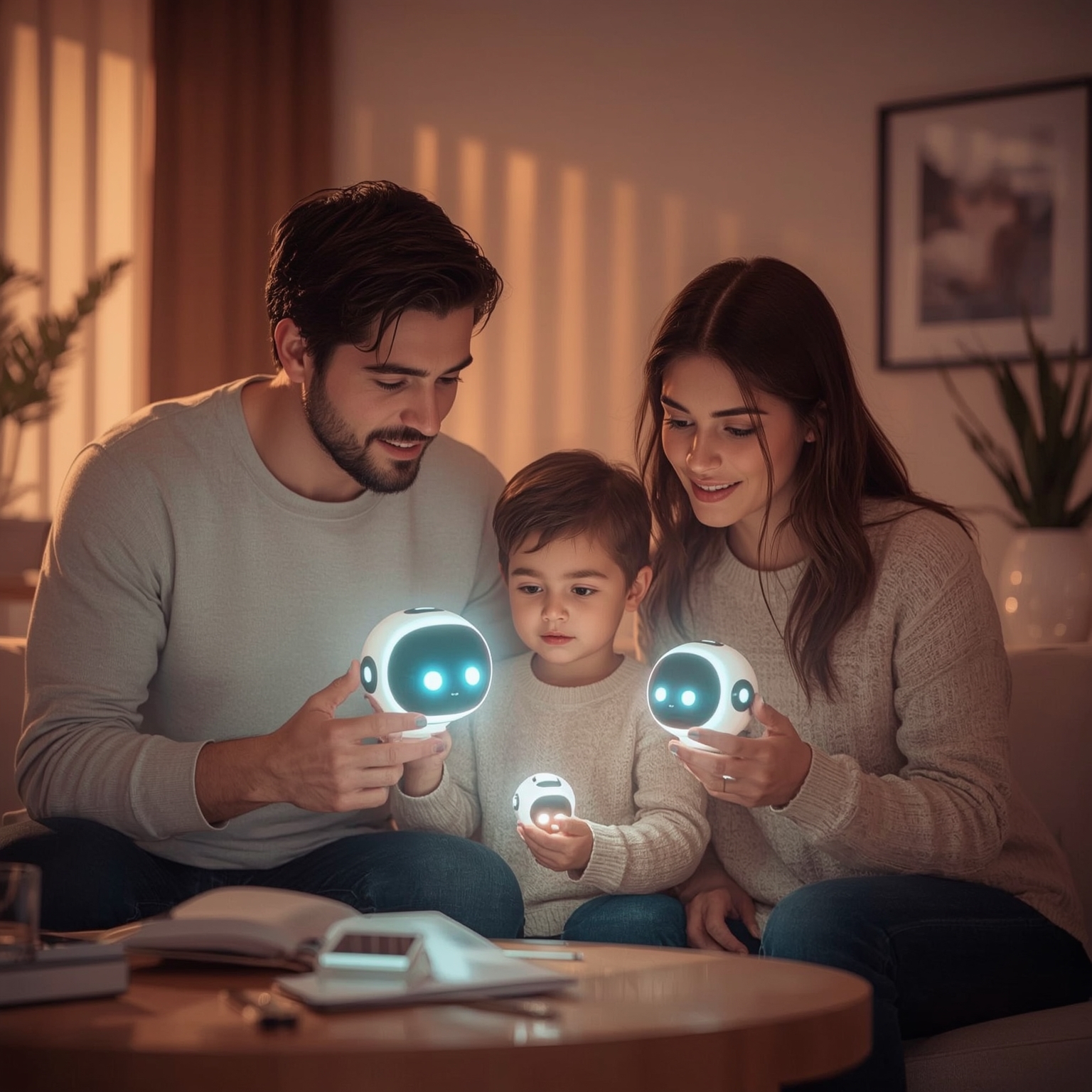
For many modern parents, one overwhelming question persistently echoes in their minds: does the growing influence of artificial intelligence narrow the horizon of possibilities available to their children, or does it, in fact, broaden it in unprecedented ways? To seek answers and insight into this dilemma, I spent two immersive hours in a modest auditorium packed with roughly thirty adults. The gathering was part of Pulse NYC AI Week, organized by Build First — a company known for its dynamic AI-focused workshops. Within the small but lively hall on the Upper East Side, a complicated mixture of emotions coursed through the air: apprehension, fascination, confusion, and an unmistakable sense of excitement. These parents were not merely spectators of technological change; they were participants trying to understand how raising a child hand-in-hand with artificial intelligence might reshape family life as they know it.
Throughout the session, I conversed with parents of children spanning a wide range of ages, from toddlers barely three years old to preteens. Their views varied strikingly. Some parents spoke of AI as a tool that fostered new forms of family connection — imaginative, educational, and surprisingly interpersonal. Others, however, viewed it as a potential threat, fearing that a reliance on AI could erode their children’s ability to develop social, creative, or practical real-world skills. A few attendees even saw the event through a professional lens, hoping to meet potential partners for AI-driven start-ups. My purpose, however, was not to advocate or criticize, but to observe: to understand how today’s parents integrate this rapidly evolving technology into the intimate sphere of child-rearing.
After exploring the diverse thrills and anxieties surrounding what one could term “AI parenting,” it became clear that we are witnessing the birth of the first generation of children raised in coexistence with intelligent systems — the so-called AI-native generation. Amid this transition, parents, especially those already immersed in the tech industry, are experimenting with inventive ways to connect with their kids.
Many parents at the event were engineers, designers, or founders who see AI as a creative amplifier rather than a distraction. One such parent, Tarun Sachdeva, founder of a startup and father of seven-year-old twin girls, shared that AI has transformed how he engages with his daughters. To him, artificial intelligence is less a cold algorithmic tool and more a partner in imaginative exploration. During weekends, the trio engage in what he affectionately calls “vibe coding” sessions using platforms like Cursor. Together they have developed playful projects — from a cheerful puppy-running game to K‑Pop Demon Hunters–inspired puzzles, as well as math-based challenges, all made possible through AI’s ability to generate and iterate ideas at lightning speed. For Sachdeva, these experiences represent a new form of collaboration where technology becomes a gateway to bonding and co-creation rather than a wedge that drives family members apart.
Yet, underlying these innovative practices lies an enduring concern: the question of screen time. In nearly every Q&A session during the workshop, anxious parents revisited this familiar debate. However, when asked whether he worries about how much time his daughters spend in front of screens while using AI, Sachdeva responded with unexpected serenity. He confessed he harbors no anxiety about it. In his view, artificial intelligence has already altered the character of digital interaction itself, transforming passive consumption into something fundamentally creative. Instead of children watching, scrolling, or tapping absently, he sees them ideating, experimenting, and producing. As he put it, AI enables screens to act as canvases for imagination rather than as mere conduits for distraction. In his estimation, the whole notion of “screen time” has been oversimplified and, consequently, misunderstood.
Other parents echoed similar discoveries. John Tidd, the father of three young children, described how his kids have taken to AI’s storytelling tools with an enthusiasm that surpassed all expectations. Their favorite is Gemini’s newly introduced storybook feature, which allows families to co-create vividly illustrated, personalized tales. For Tidd, crafting customized narratives with his four- and six-year-old sons has become both an educational activity and a treasured ritual. The boys affectionately call the AI assistant “computer lady,” a figure who now plays the role of a friendly participant in their conversations rather than an intruding machine voice. Tidd emphasized that AI, when used thoughtfully, does not replace the parent-child dialogue but enriches it with a new creative dimension.
However, even amid these success stories, skepticism remains widespread. During the workshop’s 45‑minute breakout sessions, groups of parents engaged in candid conversations about when — and how — to expose children to AI technologies. One parent voiced a profound hesitation: she feared introducing AI too early might stifle her child’s curiosity at a stage when human imagination naturally flourishes. Interestingly, she admitted to using AI daily herself, including querying ChatGPT for answers to her daughter’s spontaneous questions. Yet she still concealed her use of the tool, uncertain whether revealing its existence might teach her child to seek shortcuts rather than engage deeply with problems. This discussion mirrored a broader parental debate: is it wiser to delay children’s direct access to AI or to teach them to navigate it responsibly from the outset?
The question of age-appropriate use of AI tools has drawn attention far beyond family living rooms. Prominent tech firms have recently faced scrutiny for their policies concerning minors. Meta, for instance, permits users aged thirteen and above to access its AI chatbot across its platforms, prompting concern about safeguards. Google’s Gemini enforces a stricter rule, limiting access to those over eighteen, while OpenAI’s ChatGPT allows users aged thirteen and older, supplemented by new parental controls designed to link a teenager’s account to that of their guardian. This patchwork of corporate guidelines reveals an unresolved global conversation about digital maturity, accountability, and the evolving definition of online safety.
Among the attendees, one voice stood out — Paola Delgado, a former biotech executive and the mother of a curious three-year-old. Her perspective captured the anxious momentum that many modern parents feel. Delgado confessed she worries that if she and her daughter fail to engage with AI early, they risk being left behind in what she perceives as an unstoppable technological tide. Her attendance at the event stemmed from another source of discomfort: in her usual parenting circles, discussions about AI were practically nonexistent. She came seeking knowledge, connection, and guidance. Though her daughter is still very young, Delgado wants to learn how to gradually introduce her to AI safely, without undermining her developing moral compass. Her chief concern is fundamental: how to allow a large language model — a system capable of mimicking empathy and reasoning — to interact with a child still forming her sense of right and wrong, cautiousness, and personal boundaries.
If there was one conclusion to draw from this intimate, thought‑provoking gathering, it was that the conversation about parenting in the age of artificial intelligence has only just begun. Those in attendance left with more nuanced perspectives, acknowledging both the promise and peril entwined within this new frontier. At its core, AI parenting forces families to confront timeless questions — about education, imagination, ethics, and love — but reframed through the shimmering lens of twenty‑first‑century technology. As the first generation of AI‑native children grows, the challenge will be to ensure that the tools designed to augment human creativity never eclipse the humanity they are meant to serve.
Sourse: https://www.businessinsider.com/ai-workshop-parenting-new-generation-kids-technology-chatgpt-gemini-exposure-2025-10