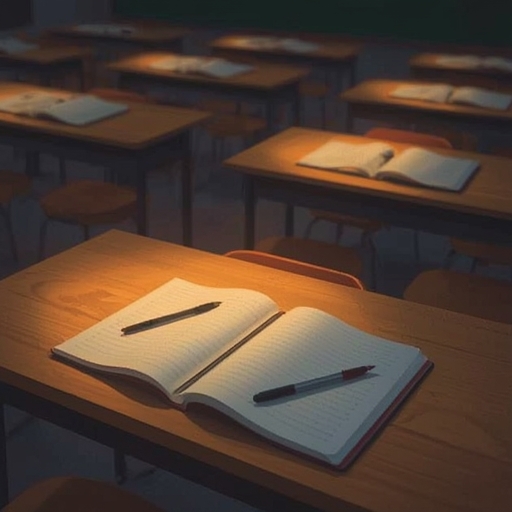
In recent years, artificial intelligence has dramatically transformed how students create and present their academic work. With AI-powered writing tools readily available and often remarkably persuasive, questions surrounding authenticity and authorship have begun to challenge educators worldwide. In response to this shifting landscape, one teacher made a bold and thought-provoking decision to set aside technology entirely for a time and reintroduce an analog practice: handwritten journals. This deliberate return to pen and paper was not an act of nostalgia or resistance to change, but rather a conscious effort to restore a sense of honesty, personal responsibility, and authentic engagement in the learning process.
By requiring handwritten submissions, the educator sought to reestablish a direct, tactile connection between a student’s mind, hand, and words—a connection that digital composition can sometimes dilute. The slower rhythm of writing by hand naturally encourages deeper reflection, careful phrasing, and more intentional thought. Students become aware of each idea as it forms on the page, allowing authenticity to emerge through a more mindful creative process. Whereas typed essays may be polished by algorithms or generated by automated systems, handwritten work bears the unmistakable imprint of the individual—their personality, their process, and even their imperfections.
This shift also carried a powerful symbolic message about trust. In an era where academic integrity is increasingly under scrutiny, the choice to rely on handwriting reintroduced an element of vulnerability and transparency. It signaled to students that learning is not simply about producing flawless results, but about engaging earnestly, expressing one’s original thinking, and embracing the human imperfections that accompany growth. The act of writing by hand thus became more than just a method of assessment—it evolved into a shared gesture of accountability between teacher and student.
Beyond questions of integrity, this analog approach encouraged a renewed emotional intimacy within the classroom. Students who might otherwise feel disconnected behind screens began to rediscover the sensory satisfaction of paper and ink, the quiet rhythm of turning pages, and the tangible record of their own intellectual progress. The handwritten journal turned into a personal archive of thought, capturing moments of doubt, insight, and revelation that no AI program could replicate or simulate.
While this experiment may seem unconventional in a digital age, it serves as a timely reminder that educational innovation is not always synonymous with technological advancement. Sometimes, the most forward-thinking solution involves reexamining the past—reviving practices that have long cultivated authenticity, creativity, and trust. By returning to handwriting, this teacher did not merely reject digital tools; instead, they proposed a rebalancing: an invitation to remember that the essence of learning lies not in automation or efficiency, but in human connection, reflection, and integrity.
Ultimately, this approach invites us to ask a profound question: how can educators preserve truthfulness and originality in an era increasingly defined by intelligent machines? Perhaps the answer begins with something as simple, and yet as profoundly human, as the written trace of one’s own hand.
Sourse: https://www.businessinsider.com/nyu-professor-no-tech-classroom-ai-2026-3