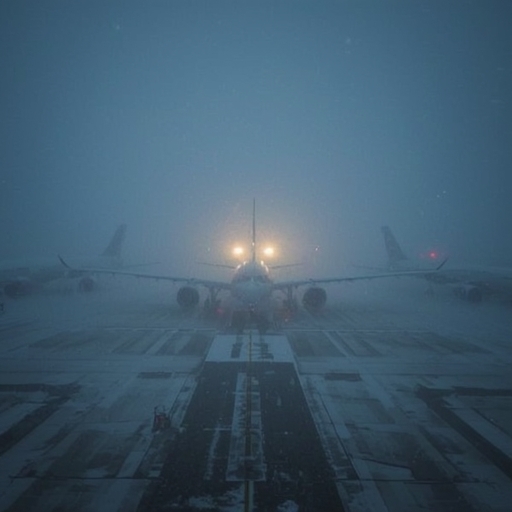
A vast and formidable Arctic storm system has swept across North America, ushering in a wave of record-breaking flight cancellations and widespread travel disruptions. What began as a cold front has evolved into a full-scale meteorological event, disrupting nearly every facet of transportation and testing the resilience of infrastructure across multiple regions. Major airports from Canada to the southern United States have been forced to suspend operations, while airlines scramble to reschedule flights, reallocate crews, and manage an overwhelming volume of stranded passengers.
At the core of the crisis lies a confluence of extreme weather conditions — heavy, persistent snowfall, thick layers of ice forming on runways and aircraft, and dangerously low wind chills that impede safe ground operations. Ground crews face severe challenges in de-icing and towing procedures, often working through near-zero visibility and brutal cold. The cascading effects of these interruptions have rippled through logistics networks, delaying cargo shipments and supply deliveries at a time when industries are already vulnerable to seasonal demand fluctuations.
Passengers have found themselves contending with uncertainty and inconvenience: extended layovers, canceled connections, and lengthy waits for rebooking assistance. In scenes repeated across countless terminals, weary travelers crowd around departure boards covered in red notifications of cancellation. Social media has become a vital lifeline for real-time information, as airlines post rolling updates and travel authorities issue advisories urging patience and caution.
Beyond the immediate impact, this storm also serves as a sobering indicator of the challenges ahead. Meteorologists note that the increasing prevalence of such intense weather events reflects shifting climate patterns, emphasizing the urgent need for more adaptive and resilient systems. Aviation authorities and infrastructure planners alike are being called upon to anticipate future extremes by reinforcing critical facilities, investing in advanced forecasting technologies, and ensuring stronger coordination among carriers, airports, and public agencies.
As the storm continues to batter wide swaths of the continent, communities are reminded of the importance of preparedness and information. Travelers are encouraged to monitor official weather updates, confirm flight statuses well in advance, and prioritize personal safety before attempting any journey. The resilience of North America’s transportation networks — and the patience of those who rely on them — will once again be tested under the extraordinary power of nature’s frozen hand. ❄️🛫 #WinterStorm #TravelAlert #Aviation #Resilience
Sourse: https://gizmodo.com/?p=2000713792