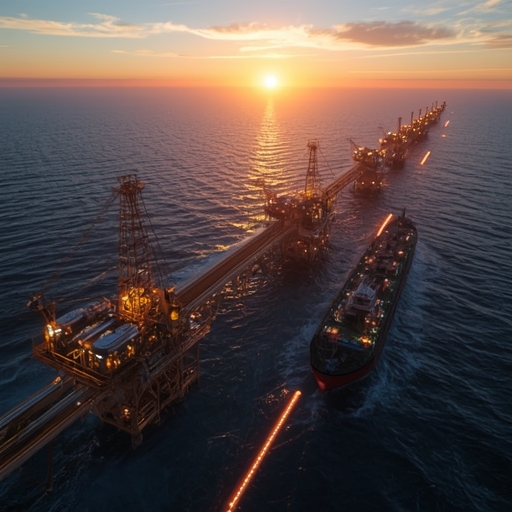
The United States has entered a defining moment in its modern energy narrative, as its exports of oil and natural gas reach levels without precedent. This extraordinary surge has unfolded at a time when the global energy system is compelled to reorganize itself in response to the ongoing closure of the Persian Gulf—a region historically regarded as the very heart of global hydrocarbon production and distribution. The consequences of this realignment have been immediate and profound, prompting a broad spectrum of markets, from Asia to Europe, to rediscover the strategic significance of American energy resources.
In the midst of this transformation, the extraordinary scale of U.S. energy exports has become more than a mere statistical achievement; it embodies a deeper shift in global power dynamics. America now occupies a position that allows it not only to supply critical energy needs during an era of geopolitical uncertainty, but also to influence the architecture of tomorrow’s energy trade. Nevertheless, a crucial question remains: can the United States translate this surge—born of wartime demand and temporary disruption—into a form of enduring strength that lasts beyond the current crisis?
Achieving such durability will require an intricate blend of economic foresight, sustained investment, and policy acumen. Decision-makers must channel immediate revenues into developing the infrastructure necessary to handle expanded export capacity more efficiently—modern ports, advanced liquefaction facilities, and resilient logistics systems capable of withstanding both market volatility and environmental stressors. Equally, policymakers must implement long-term strategies that balance short-term commercial success with the imperatives of sustainability and technological innovation, ensuring that this moment of momentum evolves into a lasting foundation for national influence.
At the same time, the international community is paying close attention. Observers view America’s ascent as both a solution to current shortages and a test of its ability to shoulder the responsibilities that accompany energy leadership. If the United States can maintain stability in global supply chains while continuing to invest in cleaner technologies and efficient distribution networks, it will not only reinforce its economic standing but also project an image of reliability that few other exporters can rival.
Thus, the current wave of record-breaking U.S. energy exports represents far more than a reaction to crisis. It stands as a vivid illustration of how strategic adaptability, resource abundance, and timely policy responses can converge to reshape the global energy order. The next chapter will determine whether America’s present dominance—derived from its ability to meet pressing international demand—will evolve into a durable era of leadership defined by innovation, resilience, and long-term vision for the energy future of the world.
Sourse: https://www.wsj.com/business/energy-oil/us-energy-exports-persian-gulf-closure-588c257e?mod=pls_whats_news_us_business_f


