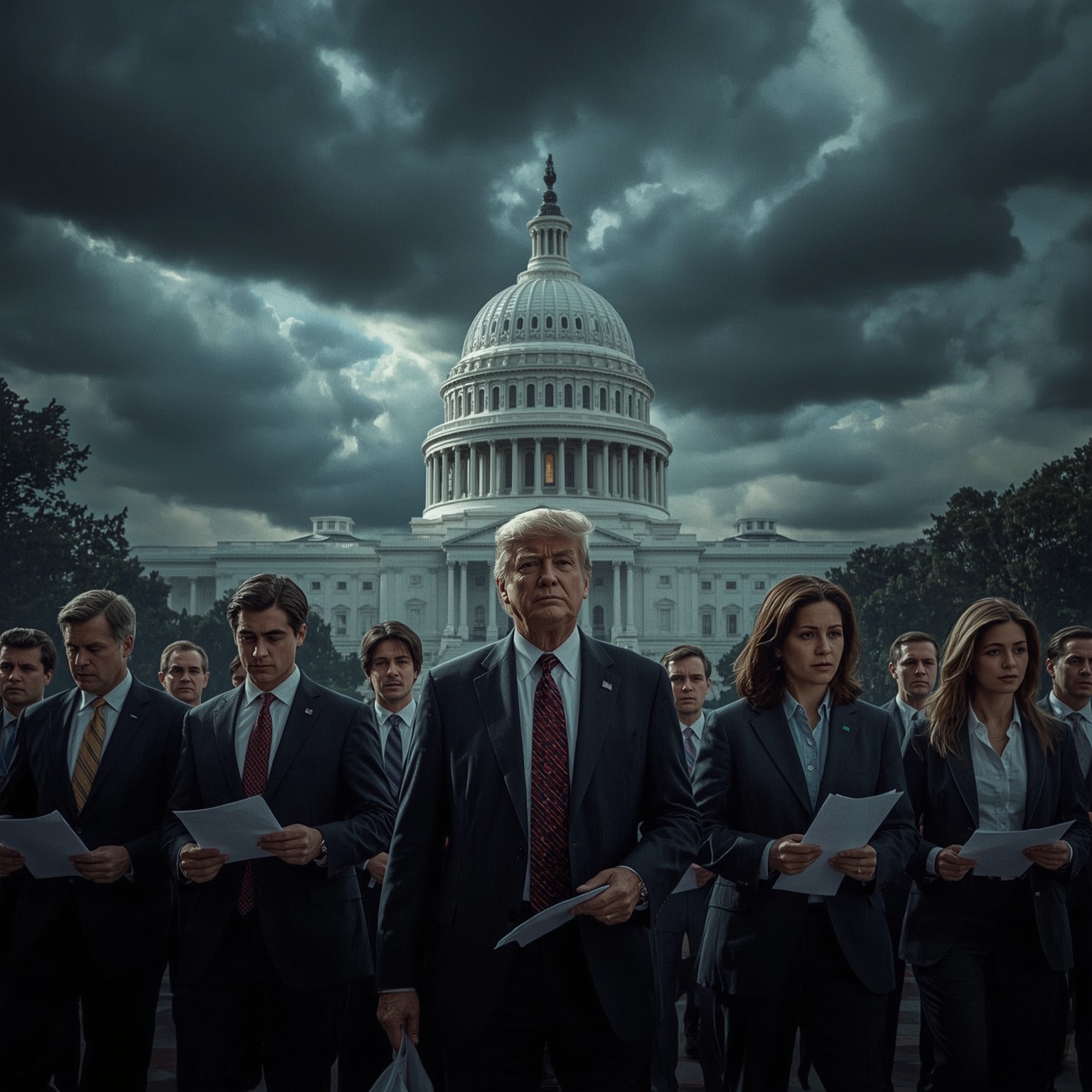
In the aftermath of the violent public killing of conservative activist Charlie Kirk, a coalition of nearly two dozen Republican lawmakers has undertaken an aggressive campaign urging congressional leadership to establish a new select committee within the House of Representatives. These legislators argue that such a body is necessary to thoroughly investigate what they describe as the extensive financial networks, influential power structures, and ideological forces underpinning what they call the “radical left’s assault on America and the rule of law.” At its core, the proposal reflects their intent to secure broad investigatory authority—including subpoena power—that would allow them to compel testimony, obtain financial records, and scrutinize individuals and organizations they suspect of fostering an adversarial environment against their political movement.
Central to this initiative is a formal letter spearheaded by Representative Chip Roy of Texas, a figure frequently vocal in conservative circles and a close ally of the party’s right flank. Addressed to Speaker of the House Mike Johnson of Louisiana, Judiciary Committee Chairman Jim Jordan of Ohio, and Oversight Committee Chairman James Comer of Kentucky, the letter implores House leadership to commit resources and legitimacy to this new investigative venture. In its language, the document emphasizes the importance of tracing financial contributions, exposing networks of non-governmental organizations, major donors, media entities, and even public officials whom they believe play a decisive role in orchestrating what the authors characterize as a coordinated campaign aimed at destabilizing the country’s social fabric and undermining constitutional order. Moreover, the lawmakers explicitly argue that the select committee should not merely consist of current members of Congress but should draw heavily upon individuals with prosecutorial or law enforcement backgrounds in order to lend weight and credibility to the investigative process.
Significantly, the letter was issued on Thursday, just before the Federal Bureau of Investigation publicly identified a suspect in Kirk’s murder. As of the following Friday afternoon, officials noted that no clear motive for the attack had been established. Despite this uncertainty, the Republican lawmakers assert that the larger pattern of social unrest and escalating violence is unmistakable. According to their analysis, these incidents are not isolated but rather constitute evidence of a persistent erosion of law and order, fueled by what they describe as a deeply entrenched ideology hostile to core American values. In their own words, they argue that “the patterns are undeniable,” suggesting that a complex and deliberate strategy lies behind repeated episodes of public disorder and violence.
The legislators express particular indignation at Kirk having previously been listed on the Southern Poverty Law Center’s widely publicized “Hate Map,” claiming that such stigmatization helped create an atmosphere of hostility in which violence could be justified or condoned. They further contend that historically, decentralized networks such as Antifa have demonstrated the ability to organize with surprising sophistication, secure funding through opaque financial channels, and deploy coordinated actions that, according to them, rise to the level of terror campaigns against law enforcement officers and urban communities. In their narrative, these groups are depicted not as spontaneous or grassroots movements but as components of a larger, orchestrated offensive against traditional American institutions.
Additionally, the letter squarely targets what they consider the malign influence of high-profile progressive donors, most notably financier George Soros. The signatories accuse Soros and aligned organizations of deliberately investing in the election of particular judges and district attorneys who, once in office, allegedly pursue lenient policies that result in the release of violent offenders back into society. To drive this point home, they reference a tragic case that occurred recently in Charlotte, North Carolina, involving Iryna Zarutska, a Ukrainian refugee fatally stabbed by a man with a known criminal history while traveling on a light rail train. For these lawmakers, such incidents exemplify their broader argument that permissive criminal justice policies represent not isolated policy failures but rather the outcomes of intentional, ideologically motivated funding strategies.
Equally, the letter links the phenomenon of rising lawlessness with broader concerns about U.S. border security, claiming that surging migration flows—what they describe as the “opening of our borders”—have contributed to deteriorating public safety and the weakening of national sovereignty. In support of this perspective, former President Donald Trump echoed similar sentiments during a Friday interview on Fox News, suggesting that Soros might even be vulnerable to a racketeering prosecution. Although Trump provided no verifiable evidence for his claims, he alleged that Soros had been channeling money into efforts to bankroll so-called professional agitators, including demonstrators who heckled Trump himself while dining in Washington, D.C.
The Republican call to action follows a wider wave of impassioned statements from party officials condemning individuals who either celebrated or trivialized Kirk’s death on social media platforms. Yet while these Republicans demand accountability, some legal scholars note that such offensive or provocative remarks are likely sheltered by protections provided under the First Amendment, making punitive actions against such speech legally fraught. Nevertheless, among the lawmakers supporting the formation of this new investigative committee, there is a strong conviction that Kirk’s death symbolizes a broader ideological confrontation. They argue that America can no longer sustain the pretense of being a unified polity bound by shared ideals when, in their view, substantial segments of society are actively working to undermine the nation’s foundational pillars.
The letter culminates in a stark and sweeping proclamation: that a “well-funded, vitriolic cadre” of both domestic groups and international interests is engaged in a campaign of ideological warfare against cherished principles such as faith in God, loyalty to the U.S. Constitution, and the enduring values of liberty, order, and Western civilization. In this context, the authors emphasize that Charlie Kirk himself exemplified one of these principles—namely the practice of free speech—and they frame his killing as a profound tragedy that underscores the urgency of their call for investigative scrutiny. Their rhetoric reflects not merely a demand for an official inquiry but also a broader struggle over cultural identity, national security, and the contested meaning of American democracy in an era of polarization.
Sourse: https://www.theverge.com/policy/777615/republicans-radical-left-select-committee