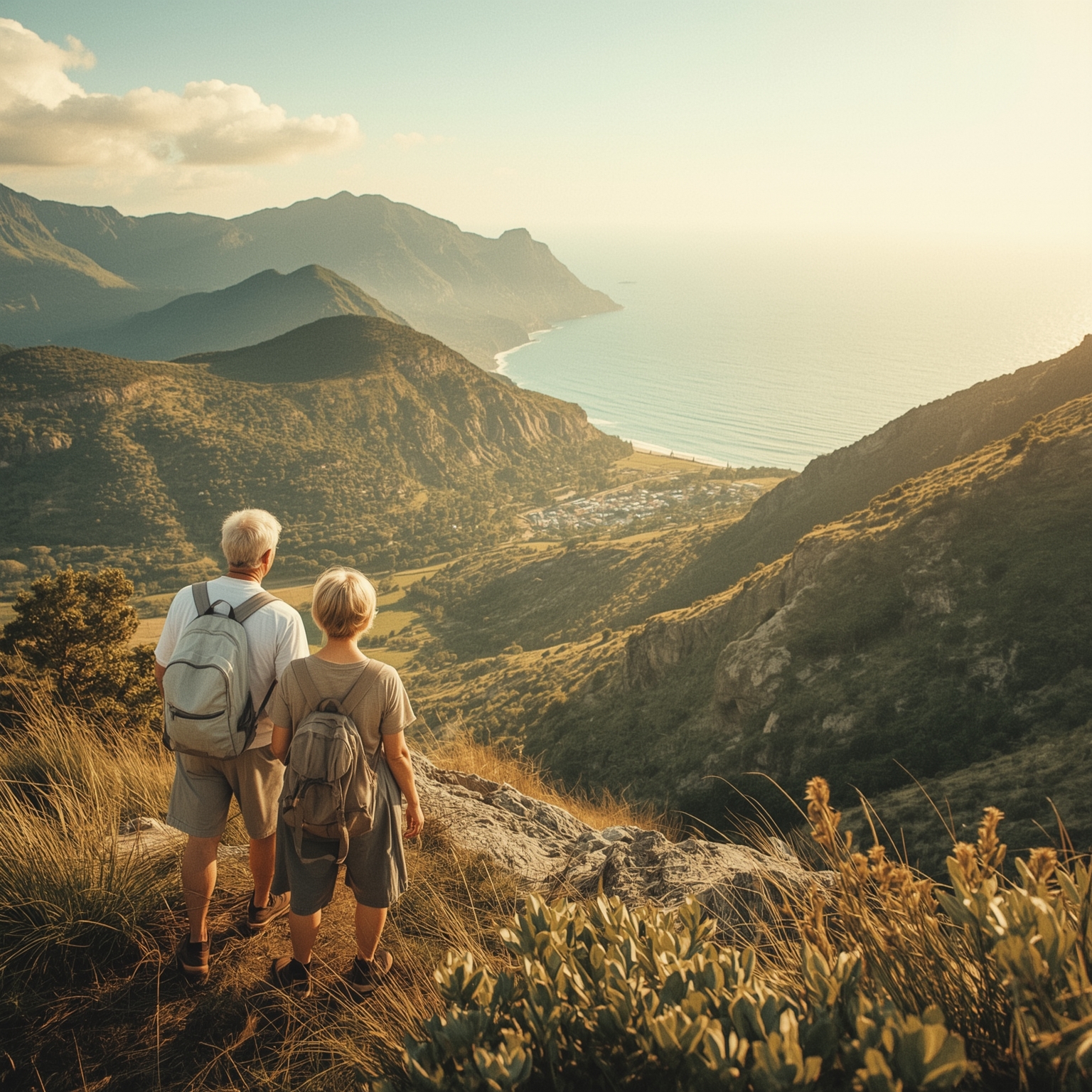
This as-told-to narrative derives from an in-depth interview with Sandra and Jeff Mayernik, a married pair of 62-year-old retired real estate professionals who, after decades working in the United States, decided in 2023 to embrace an entirely new lifestyle: full‑time international travel. The two maintain a blog called *The Mobile Retiree* where they chronicle their journeys and reflections, and at present, they reside temporarily in the lakeside city of Pogradec, Albania. Their recollections and insights, shared with honesty and humor, have been edited slightly for clarity and brevity.
Jeff explains that a few years after their relocation to central Oregon, they entered the so‑called empty-nest stage of life. The couple owned a serene five‑acre property just outside the town of Bend, complete with ample space for hobbies and the rural tranquility they had long sought. Their land supported a small collection of horses, a trusty tractor essential for maintaining the property, a few car restoration projects that served as Jeff’s pastime, and several neatly organized storage buildings housing tools and equipment. Life, as he remembers it, was comfortable and well‑ordered.
Sandra elaborates that their estate was composed of two separate dwellings. The first was a modest yet functional 1,000‑square‑foot double‑wide manufactured home that originally came with the purchase of the land. The second, their pride and joy, was a custom‑designed 1,700‑square‑foot residence featuring three bedrooms and two bathrooms. With its thoughtful layout and attention to detail, it was, as she describes, simply beautiful—an embodiment of everything they had worked for over their careers.
Jeff recalls that while their life in Oregon appeared idyllic, they began sensing growing discomfort with the sociopolitical atmosphere in the United States. The cost of living was climbing steadily, eroding much of their financial ease. Property taxes rose noticeably, and the premiums for both vehicle and homeowner’s insurance followed suit. Initially, these incremental increases—just a few percent each year—seemed manageable. However, over time those small increments compounded, and the difference became substantial. Meanwhile, their earnings failed to keep pace, producing a quiet but persistent financial pressure. Yet, finances were only one dimension of their decision-making; health and aging weighed far more heavily. Jeff had suffered multiple heart attacks and now relied on an implanted cardioverter‑defibrillator, a device that both safeguarded his wellbeing and served as a reminder that life’s duration was uncertain. Gradually, they concluded that they did not want to continue enduring stressful routines or financial tension. Even if life on the road would not make them wealthy, it promised liberation and simplicity. Their solution was bold and straightforward: to release their possessions and see the world while they still had the vitality to enjoy it.
Both had careers rooted in real estate before retirement—Jeff also brought decades of experience in commission-based sales, including a significant tenure in the retail automotive industry. Applying their practical and analytical skills, they meticulously calculated a sustainable travel budget. According to their projections, it was feasible to fund a continuous global journey for roughly $40,000 annually, a figure that would allow them comfort without extravagance.
Sandra shares that in preparation for this new phase, they undertook a decisive downsizing of their lives. Every asset was liquidated—homes, vehicles, furniture, and accumulated belongings—until all that remained were the essentials that fit within their luggage. Their living expenses now derive from their long‑cultivated savings and the proceeds from the sale of their Oregon home, which they have carefully invested for future stability until their Social Security benefits commence.
The couple departed the United States in November 2023. Fully aware that permanent residency was unattainable without verifiable income streams, they instead adopted the flexible system of traveling on tourist visas, each permitting stays of roughly 30 to 90 days, depending on the country—an arrangement available in nearly one hundred nations. Their itinerary thus far has carried them through a series of vibrant locales: Panama’s tropical coastlines, Costa Rica’s jungles, Portugal’s lively hilltop cities, and the charming villages of Spain and France, followed by the rolling countryside of England, the vast landscapes of Canada and Chile, the cultural dynamism of Mexico, and the cosmopolitan rhythms of Argentina. Presently, they are exploring Albania, where U.S. citizens may reside for up to a full year on a standard visa. They first spent two months in the coastal city of Durrës before moving inland to Pogradec on the serene shores of Lake Ohrid, and they aim next for Sarandë, a sunlit town on the Albanian Riviera.
Jeff remarks enthusiastically on Albania’s remarkable variety compressed within its modest borders. In a single journey across the country, one can encounter imposing alpine ranges, pristine beaches along the Adriatic and Ionian Seas, and fertile valleys that sustain Mediterranean agriculture. He notes that they have wandered through many nations where it took weeks to feel any sense of belonging, yet in Albania, comfort and familiarity developed within only days—a connection so immediate it surprised them both. Sandra describes the sensation as a genuine intuition, an instinctive recognition that the culture resonated with their values. Albanians, she observes, exhibit a profound communal ethos centered on mutual care and hospitality. Jeff adds that during a recent conversation with a tourism official in Pogradec, they learned a local saying describing Albania as both “the house of God and the house of guests,” a poetic expression of the nation’s reverence toward visitors. Sandra vividly illustrates that principle: soon after they rented their current apartment, small maintenance issues required attention. The landlord not only sent a handyman but also arrived accompanied by relatives bearing home‑cooked food—a gesture emblematic of heartfelt generosity.
Their lifestyle abroad naturally comes with practical advantages and trade‑offs. At present, they occupy a spacious three‑bedroom, two‑bath apartment overlooking the tranquil expanse of Lake Ohrid. It boasts a fully equipped kitchen, a washing machine, and three balconies that capture both sunrise and sunset reflections on the water. For such amenities, the cost is modest: approximately $1,100 per month, inclusive of utilities and high‑speed internet. Sandra notes that committing to a longer lease would likely reduce rent even further—a reminder of how far their dollars stretch compared to U.S. prices. Each time they settle in a new location, the first week becomes a structured orientation period devoted to mapping out essential services: finding grocery outlets, pharmacies, parks, coffeehouses, and familiar walking routes.
Jeff points out that adapting to unfamiliar currencies and languages transforms ordinary tasks into learning experiences. In the United States, he could stroll into a supermarket and instantly recognize every label, price, and brand. Overseas, an identical routine becomes unpredictable. Once, he recounts with amusement, he purchased what he believed to be sliced ham, only to discover upon opening it that it was something entirely different. Sandra adds that grocery shopping has become a multi‑stop endeavor—visiting the butcher for meats, individual farmers’ stalls for fresh produce, small specialty stores for dry goods, and local bakeries for bread. Without a car, they rely exclusively on walking; thus, large weekly grocery hauls are impractical. Instead, they buy provisions every couple of days, searching resourcefully for ingredients suitable to recreate familiar meals from home. Though enjoyable at first, the constant adaptation can be mildly exhausting over time.
When reflecting on what they miss about American life, Sandra admits that her greatest nostalgia centers around shared moments—kayak fishing excursions with her sisters and occasional family gatherings. Material comforts, however, carry little sentimental weight. Jeff confesses to the occasional craving for distinctly American flavors, such as brown gravy with mashed potatoes or his favorite brand of chunky peanut butter, but these are fleeting indulgences rather than genuine hardships.
Looking ahead, Sandra explains, they have planned a two‑month stay in Sarandë but intentionally avoid setting rigid itineraries. Beyond that, their path remains open, and neither envisions returning permanently to the United States. They appreciate the independence from car ownership, which once dominated daily routines back home. Gone are the responsibilities of oil changes, tire maintenance, insurance, and the endless mental calendar of automotive upkeep. This newfound simplicity represents not just convenience but psychological freedom.
For both, the transformation goes beyond geography. Sandra describes a dramatic shift in her priorities and overall wellbeing. Before leaving, she admits she had been consumed by work, devoted to her profession to such an extent that she arranged to continue in an administrative role after technically retiring. Yet, after several months of life on the road, she discovered that the professional attachment no longer served her happiness; the ever‑present tension of deadlines and deals simply evaporated. Her days now unfold peacefully—strolling the lakeside promenade, reading novels under Mediterranean sunlight, or quietly reflecting on the life they built together.
Jeff agrees that their retirement abroad has granted them a profoundly reduced stress level. Even practical matters such as healthcare have improved; prescription medications in Albania and many other visited countries cost less than what his insurance copay demanded in the United States. Entertainment and leisure activities are likewise more affordable, allowing them to enjoy dining out, exploring museums, or embarking on regional excursions without the financial hesitation that once accompanied similar indulgences. He acknowledges that their choice to embark on early retirement might defy conventional financial advice. Nevertheless, he is convinced they acted at precisely the right moment. They traded monetary accumulation for peace of mind, and in doing so, they rediscovered what they truly value: time, freedom, health, and an unhurried appreciation of life’s simple pleasures. In the balance between earning more and genuinely living, the Mayerniks chose the latter—and they have never looked back.
Sourse: https://www.businessinsider.com/oregon-couple-retires-early-travel-lives-off-savings-2025-10


