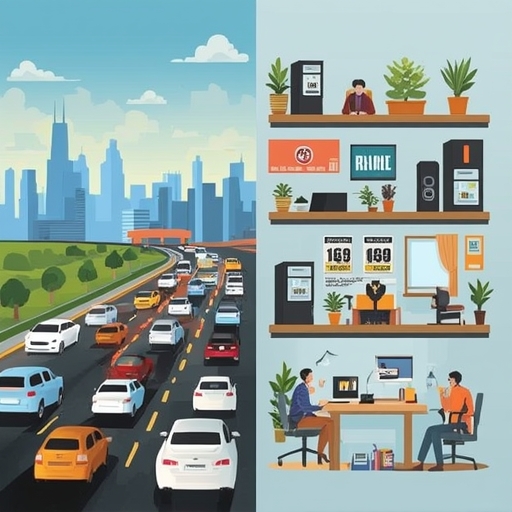
The recent escalation in global oil prices is doing far more than increasing the cost of fuel for everyday drivers — it is fundamentally reigniting one of the most pivotal discussions in modern workplace dynamics: the return-to-office debate. As the financial burden of commuting steadily intensifies, each additional dollar spent at the gas pump forces employees and employers alike to reconsider the value, necessity, and sustainability of daily in-person attendance at corporate offices.
For workers, the growing expense of travel translates directly into reduced disposable income and heightened sensitivity to cost-of-living changes. What might previously have been a manageable commute has now become a significant financial and psychological strain, especially for those who drive long distances or live in regions where public transportation remains inefficient or limited. The allure of remote work — once viewed primarily as a lifestyle preference or a post-pandemic convenience — is now emerging as an economically rational choice. Many employees increasingly perceive home-based work not as a privilege, but as a practical response to rising energy costs.
Meanwhile, organizations find themselves navigating a complex balancing act between operational productivity, team cohesion, and workforce satisfaction. The resurgence of fuel price volatility compels executives to reassess whether mandating office attendance aligns with both corporate strategy and employee well-being. The cost of attracting and retaining top talent may hinge on a company’s flexibility in adapting to these new economic realities. In such a landscape, the hybrid model, previously described as an optional perk, begins to resemble a compelling financial necessity for all involved.
Beyond the realm of corporate strategy, the phenomenon raises broader social and environmental considerations. Increased commuting contributes to higher carbon emissions, whereas remote work, though not without its own energy demands, often represents a smaller ecological footprint. Thus, the discussion around return-to-office arrangements intertwines with sustainability goals and social responsibility commitments that many organizations now hold central to their brand identity.
Ultimately, rising oil prices operate as a powerful reminder that work models are not isolated from macroeconomic forces. The marketplace, consumer behavior, and labor expectations evolve in tandem with global energy trends. As both employees and employers confront the tangible costs of mobility, the concept of where, how, and why we work becomes inseparable from broader questions of economic efficiency and environmental stewardship. The debate over commuting versus remote work has therefore transformed into something richer and more consequential — a reflection of shifting priorities in a world where every mile, and every gallon, carries new significance.
Sourse: https://www.businessinsider.com/higher-gas-prices-affect-commute-rto-debate-2026-3