Rivian CEO RJ Scaringe emphasized that if the world’s major automakers hope to remain competitive in the rapidly evolving era of artificial intelligence, they must begin producing far more of their own software rather than depending heavily on third-party providers. This shift, he argued, is not a matter of convenience but of survival in an industry increasingly defined by technological sophistication and the seamless fusion of hardware and digital intelligence.
Speaking with Stripe cofounder John Collison on Collison’s podcast, *Cheeky Pint*, Scaringe described how the automotive landscape is reaching a turning point. He noted that it is almost unimaginable to think that by the early 2030s, any large-scale car manufacturer could continue to operate successfully—or even preserve its existing market dominance—without adopting a software-defined vehicle architecture. In Scaringe’s view, software integration will no longer be an optional enhancement but a foundational prerequisite for long-term relevance and market endurance.
Currently, he explained, most well-established automakers depend on what he called “little islands of software,” isolated programs designed for particular functions such as navigation, entertainment, driver assistance, or powertrain management. The problem, according to Scaringe, is that these modules often fail to communicate effectively with one another, resulting in fragmented systems incapable of achieving true intelligence. In a world that is increasingly governed by AI, such compartmentalized software ecosystems are unsustainable and fundamentally misaligned with the need for unified, data-driven vehicle intelligence.
Scaringe elaborated that this fragmentation creates multiple abstraction layers—technical barriers that separate the core coding processes from the manufacturer’s direct control or understanding of the underlying systems. In his assessment, these layers dilute innovation and slow down progress. For automakers to compete in a world driven by artificial intelligence, he argued, they must eliminate these barriers and develop the technical infrastructure that enables a holistic, contextual comprehension of the vehicle’s operations. Only then can they deliver immersive, adaptive driving experiences that improve continuously as the software learns from user behavior and environmental inputs.
He cautioned that those manufacturers unwilling or unable to embrace this transformation are likely to face significant financial consequences in the near future. According to Scaringe, failure to make the necessary software shift will almost inevitably result in shrinking market share, while the companies that successfully adopt and deploy advanced software architectures will experience rapid growth and competitive advantage across the next decade. The message was clear: in the age of AI and automation, mastery of software will determine which automakers evolve and which ones fade from relevance.
In a moment of candid reflection, Scaringe acknowledged that his argument is not without self-interest. Rivian itself has invested heavily in developing a proprietary technology stack and recently forged a partnership with Volkswagen worth up to $5.8 billion aimed at enhancing the software capabilities of both companies. This collaboration, he said, exemplifies how automakers can pool resources and expertise to accelerate innovation in a domain where skill sets remain scarce and competition is intensifying rapidly. Outside of such alliances, he warned, traditional car manufacturers could struggle to overcome the steep technical learning curve that software engineering demands.
Expanding on that thought, Scaringe observed that every automaker faces three difficult choices regarding software: develop it internally, acquire it from external suppliers, or collaborate with technologically advanced partners like Rivian. Each path, he explained, presents its own complex challenges. Developing proprietary systems can be arduous and time-consuming, as most legacy companies were historically structured around mechanical engineering rather than digital technology. Sourcing software externally is also problematic, since suppliers often have vested interests in preserving existing models that rely on numerous independent computing units rather than consolidating them into a unified architecture. In Scaringe’s words, these suppliers are precisely the ones who least want to see their decentralized systems replaced by integrated, manufacturer-controlled platforms. Partnerships, therefore, may represent the most viable route for companies seeking rapid yet meaningful transformation.
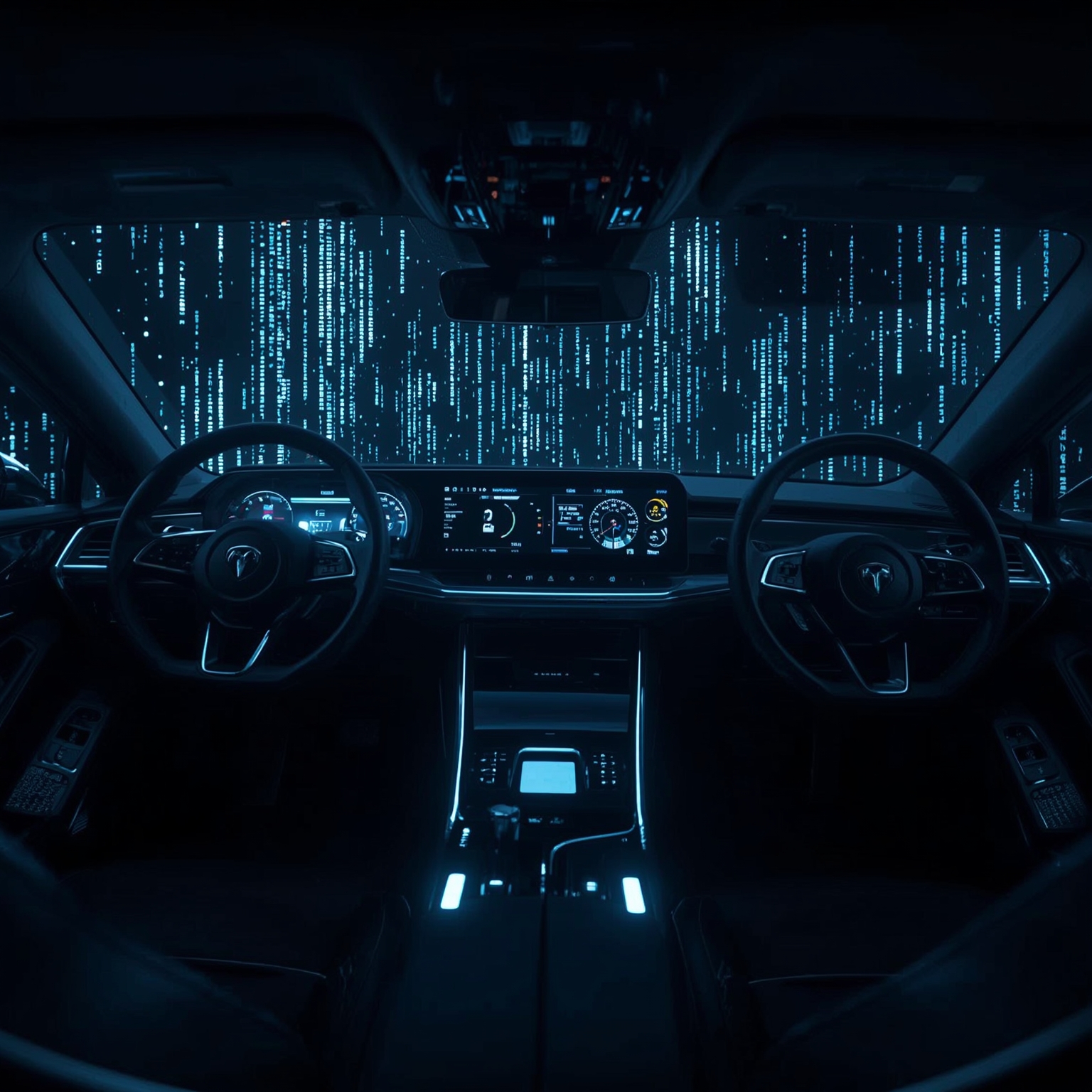
To illustrate the tangible benefits of Rivian’s approach, Scaringe pointed to the company’s creative use of over-the-air software updates, including its widely shared “Halloween mode.” This feature, introduced annually, allows vehicle owners to transform their cars through intricate combinations of lighting, sounds, and other digital effects, offering a glimpse into how a software-defined architecture empowers continuous evolution in vehicle personality and user interaction. Previous editions have paid homage to pop-culture icons, delivering experiences inspired by well-known cinematic vehicles. Scaringe described these updates as merely the beginning—“the tip of the iceberg”—in demonstrating the kind of deeply engaging, technically sophisticated vehicle modes that traditional automotive systems simply cannot support.
In conclusion, Scaringe painted a vivid picture of the automotive industry’s future, one that will increasingly be shaped not only by physical design or electric powertrains but by the intelligence and adaptability of the software running beneath the surface. For automakers, the path forward requires courage, investment, and an acknowledgment that vehicles are evolving into dynamic, data-driven platforms. Those willing to redefine themselves through software will thrive, while those clinging to outdated architectures may soon find themselves left behind in the digital fast lane.
Sourse: https://www.businessinsider.com/rivian-ai-software-development-automakers-future-2025-10