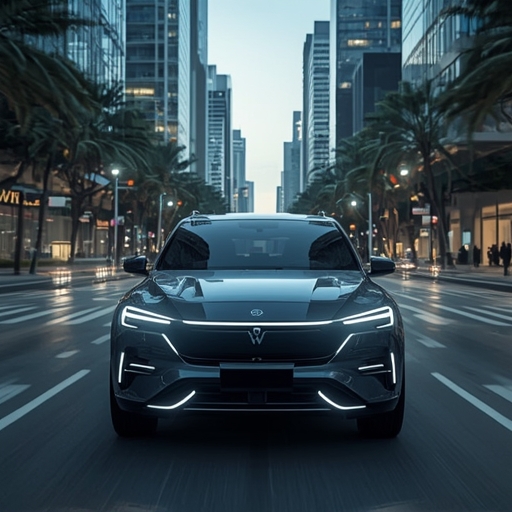
For Rivian’s chief of autonomy, incorporating lidar technology into the company’s forthcoming R2 SUV was not a matter of hesitation or debate—it was an obvious choice grounded in both practicality and technological foresight. James Philbin, who serves as Rivian’s vice president of autonomy and artificial intelligence, explained to Business Insider that the substantial decline in lidar costs over the past several years has fundamentally transformed what is feasible in the realm of commercially produced, personally owned vehicles. According to him, the once prohibitively expensive sensor technology has now reached a price point that enables its inclusion in large-scale consumer models without imposing an unreasonable financial burden.
Philbin elaborated that the evolution of lidar pricing has followed an extraordinary cost curve, one so steep that a decade ago, the thought of embedding such sensors within an ordinary passenger car would have seemed completely unrealistic. Now, however, these laser-based systems are approaching parity with radar sensors—devices that operate through radio waves and are already widespread in vehicles equipped with advanced driver-assistance systems, such as adaptive cruise control or blind-spot monitoring. This cost transformation marks a crucial developmental milestone for the broader integration of autonomy-enabling technologies into everyday transportation.
Lidar itself—short for Light Detection and Ranging—is a sophisticated sensing system that emits laser pulses to map the surrounding environment and measure distances with extreme precision. Historically, its primary applications resided in topographical mapping and other forms of geological surveying. Yet, as the automotive industry has moved toward higher levels of automation, lidar has emerged as a pivotal element in helping vehicles perceive and interpret their surroundings in real time. Its ability to produce high-resolution, three-dimensional renderings of the external world has made it invaluable in advancing self-driving technologies. One of the most notable adopters has been Waymo, whose autonomous robotaxis famously feature multiple lidar sensors, including the distinctive rotating unit mounted on the roof. Waymo has long emphasized that these systems add a vital layer of redundancy and safety to their vehicles’ artificial intelligence drivers, contributing to more reliable and predictable navigation in complex driving scenarios.
Against this backdrop, Rivian recently unveiled an ambitious roadmap aimed at achieving full vehicle autonomy. This long-term plan encompasses the development of a proprietary in-house computing chip as well as the strategic decision to integrate a lidar sensor within its upcoming R2 SUV. Philbin, leveraging his prior experience from notable roles at Zoox and Waymo, highlighted that lidar enriches an autonomous system’s robustness and accelerates the company’s progress toward its self-driving objectives. He underscored that the technology’s affordability and performance ratio are now so favorable that the decision to include lidar represents what he called a “no-brainer.” In his view, the incremental cost associated with equipping Rivian’s vehicles with additional sensory modalities—such as lidar, radar, and cameras—is negligible compared to the substantial safety benefits these systems collectively deliver.
This approach notably diverges from the philosophy embraced by one of Rivian’s most prominent electric-vehicle competitors, Tesla. Tesla’s leadership has consistently maintained that passive optical systems, namely cameras in conjunction with neural network processing, are sufficient for achieving autonomous capabilities. Elon Musk, Tesla’s CEO, has even described lidar as an unnecessary and expensive “crutch,” arguing that reliance on laser-based sensing is fundamentally misguided. By contrast, Rivian’s decision to include lidar aligns it with a camp of automotive innovators who prioritize sensor diversity as a safeguard against environmental variability and perception errors.
To appreciate the scale of technological progress, it is worth recalling that in the late 2000s—during the early stages of the Google Self-Driving Car Project, the precursor to Waymo—a single lidar unit could easily command a five-figure price tag. Today, industry experts note that equivalent systems can be acquired for merely a few hundred dollars, a dramatic example of cost compression that has helped bring previously experimental technologies into the mainstream production pipeline. While Rivian’s executives, including Philbin himself, declined to reveal the specific price that the R2’s lidar unit will command, the company made clear that the financial impact of its inclusion would be modest.
According to Rivian’s current production schedule, the initial release of the R2 SUV—planned for the early months of 2026—will reach customers without the lidar sensor installed. This first iteration will mark Rivian’s most affordable vehicle yet, with a base price starting at $45,000. A subsequent version, projected to arrive later the same year, will feature the integrated lidar system. When pressed about how much adding the sensor would alter the vehicle’s overall cost, Philbin chose not to provide a numerical comparison, reiterating instead that the expense difference was not a substantial factor in the company’s design and pricing deliberations. In essence, Rivian sees the adoption of lidar not as an extravagance, but as a rational investment in safety, precision, and the realization of its long-term vision for truly autonomous electric mobility.
Sourse: https://www.businessinsider.com/rivian-lidar-costs-affordable-autonomy-self-driving-2025-12