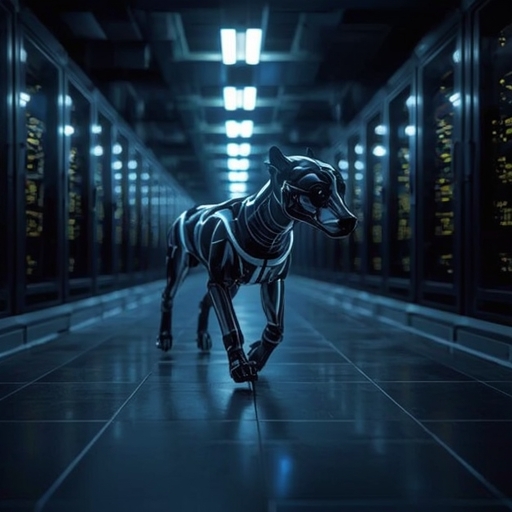
In a bold leap toward the next frontier of industrial automation, data centers around the world are beginning to integrate robotic dogs—highly advanced quadrupedal machines engineered by pioneers such as Boston Dynamics and Ghost Robotics—into their daily security protocols. These agile, artificial-intelligence-driven machines are not merely futuristic novelties; they mark a profound transformation in how critical infrastructure is protected, monitored, and maintained. Through elegant coordination of embedded sensors, cameras, and sophisticated motion algorithms, these robotic sentinels are capable of performing complex perimeter patrols, executing autonomous inspections, and identifying potential threats long before they escalate into real security incidents.
The deployment of robotic dogs represents far more than an automated replacement for traditional guard patrols. Their precision engineering allows them to navigate narrow corridors, uneven surfaces, and even hazardous environments with impressive stability. This adaptability enables data centers to minimize risk to human personnel who would otherwise need to operate in potentially unsafe conditions—areas exposed to extreme temperatures, electrical hazards, or restricted access zones. Each step taken by these digital guardians is analyzed in real time by a network of AI systems that translate raw sensor data into actionable security insights, giving facility managers unprecedented visibility and control.
Beyond the immediate advantages of safety and efficiency, the introduction of these robotic canines signals a broader paradigm shift in the philosophy of operational management. Rather than relying exclusively on static surveillance systems or manually scheduled rounds, organizations can now maintain a fluid, data-informed model of oversight, seamlessly blending human decision-making with continuous machine intelligence. Through deep learning capabilities, these robots improve over time, learning the unique geography of each facility and detecting anomalies that might escape the human eye—such as subtle vibrations, irregular heat signatures, or deviations in environmental acoustics.
This technological evolution underscores a compelling narrative about the future of data infrastructure itself. As data centers continue to expand in size and strategic importance, maintaining absolute physical security has become inseparable from ensuring the integrity of the digital assets housed within. The robotic dogs, with their ability to operate tirelessly and their capacity for constant vigilance, embody a new synthesis of artificial intelligence, mechanical design, and proactive risk management.
Ultimately, the presence of these AI-powered quadrupeds transforms the perception of security from a reactive necessity into an intelligent, predictive discipline. They stand not only as guardians of servers and circuitry but as symbols of a future where trust, precision, and advanced technology coexist harmoniously. In this emerging reality, the boundaries between human ingenuity and robotic capability are progressively dissolving, ushering in an era where innovation quite literally walks on four legs.
Sourse: https://www.businessinsider.com/robot-dogs-quadruped-data-center-security-boston-dynamics-ghost-robotics-2026-3