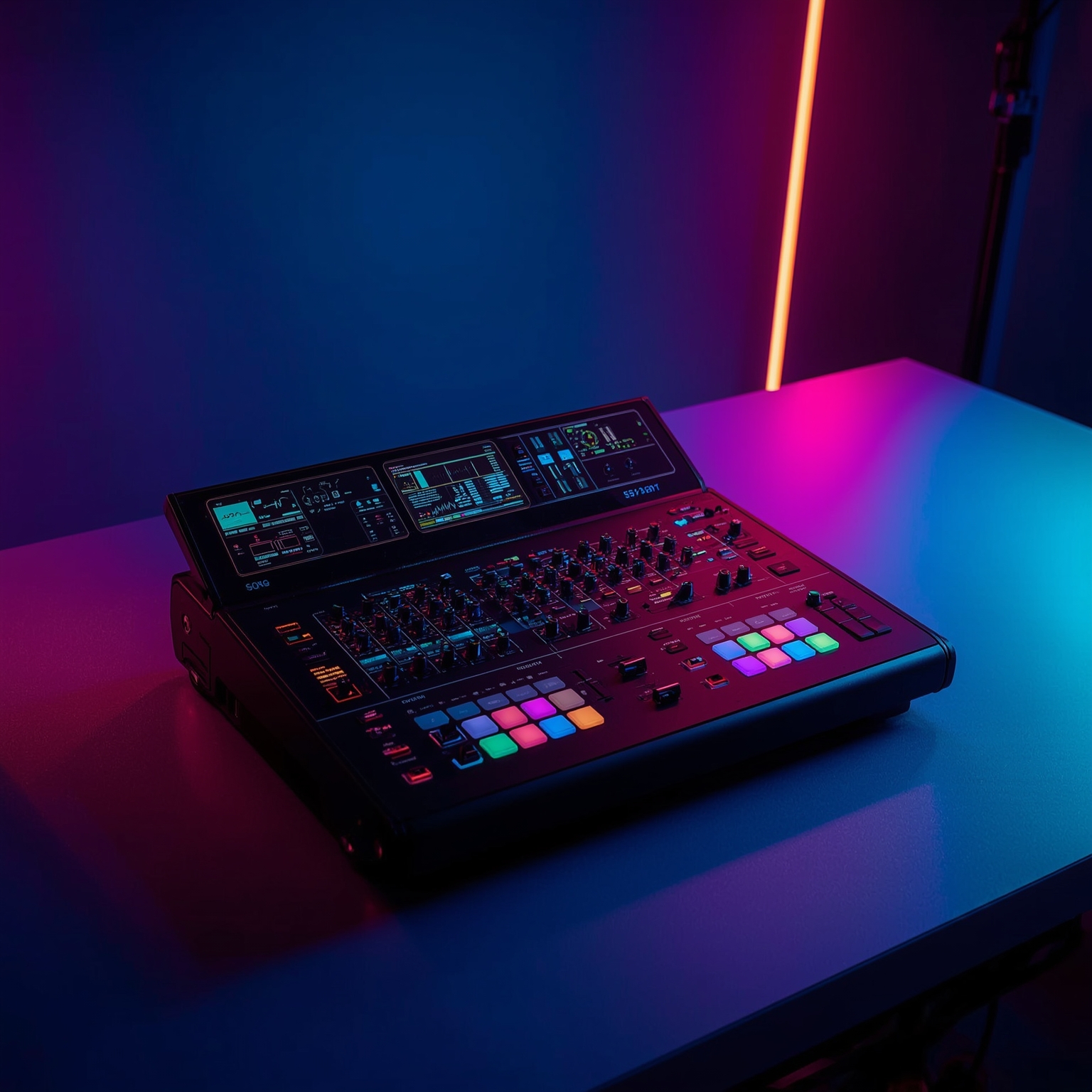
Rode has formally introduced a new addition to its growing lineup of portable production tools: the Rodecaster Video S. This fresh iteration follows the release of the original Rodecaster Video console, which debuted slightly more than a year ago. Yet, despite being a new product in the series, Rode makes it clear that the Rodecaster Video S is not intended to completely replace its predecessor. Instead, it serves as a streamlined, scaled-down, and more economically accessible version that preserves most of the core creative capabilities while improving portability and affordability.
The Rodecaster Video S continues to deliver much of the same professional versatility as the initial model—it retains functionality for mixing and switching multiple video and audio channels, as well as the ability to perform live chroma key replacements using blue or green screens. However, what distinguishes this new model is its reduced physical footprint, more compact design, and lower price point, making it appealing to creators working in smaller spaces or those prioritizing mobility. To provide context, the original Rodecaster Video launched in late September 2024 with a price of $1,199. In contrast, the new S variant can already be preordered for just $499—less than half of the original model’s cost—representing a major shift toward accessibility for a broader audience of content creators.
Given its smaller form factor, some compromises were inevitable. The Rodecaster Video S cannot simultaneously handle as many video inputs as the first version. It continues the brand’s approach of offering a mid-range alternative between consumer-level devices and high-end professional studio switchers, which are typically large, complex, and cost-prohibitive for independent creators. Nevertheless, at approximately $500, the Rodecaster Video S still occupies a niche space: while it may not be the cheapest option for casual or hobbyist streamers, it stands out as an appealing entry point for seasoned podcasters or semi-professional creators seeking to experiment with incorporating video into their established workflows. When its integrated features—like chroma keying, direct input compatibility with both professional and consumer-grade equipment, and intuitive setup—are taken into account, the overall value becomes quite compelling.
From a technical standpoint, the Rodecaster Video S is powered by the same unnamed “high-performance octa-core processor” found in the original unit, ensuring comparable computing efficiency and processing speed. Its video performance still peaks at 1080p resolution, which remains adequate for live streaming, podcasting with video, and small-scale production environments. The S model is a few inches shorter in length and nearly 400 grams lighter, granting an enhanced sense of portability and ease of transport—important for creators who rely on mobile setups. This reduction in size and weight, however, does come at a cost: some connectivity options have been trimmed. Whereas the standard Rodecaster Video offered four HDMI inputs, two HDMI outputs, and a pair of multifunction USB-C inputs capable of handling various microphones and webcams, the S version reduces these figures to three HDMI inputs, a single multifunction USB-C port used for audio and video connections, and one HDMI output.
Despite its smaller body, the Rodecaster Video S retains an impressive level of audio support. It continues to include two combination XLR/1/4-inch inputs, maintaining full compatibility with professional-grade microphones commonly used in studios, as well as providing flexibility for musicians and voice artists. Users can also connect USB microphones or utilize Rode’s Series IV wireless microphone systems—the unit conveniently houses two built-in wireless receivers to accommodate them. For personal monitoring, the console offers two 1/4-inch headphone jacks, allowing independent mix levels and monitoring preferences for multiple users. The only omission is the dedicated speaker outputs, which were available on the previous generation but were sacrificed here to achieve a smaller and lighter build.
Rode has preserved many aspects of the user interface that users of the original model appreciated. The Rodecaster Video S still incorporates a two-inch touchscreen accompanied by a dedicated rotary dial, making it possible to navigate menus, fine-tune settings, and execute precise adjustments with minimal hassle. The most evident change in the control layout lies in the number of tactile buttons—these large, backlit keys are used to switch between video sources or instantly trigger up to five programmable scene presets configured through Rode’s companion desktop software. In the S version, the number of these keys has been reduced from 14 to 10, simplifying the control surface but still leaving enough flexibility for efficient operation.
Functionally, the Rodecaster Video S preserves all the essential broadcasting and streaming capabilities that made its predecessor a strong contender in the creative hardware market. Users can still broadcast directly to popular live platforms such as YouTube, Twitch, and Facebook, or connect the console to computer-based production software for enhanced customization. In addition, there is the option to record entire sessions—including individual video and audio tracks for each source—onto an external USB storage device for later editing. This is a particularly valuable feature for creators who wish to refine their productions post-recording or repurpose content across various platforms.
Rode also designed the Rodecaster Video S with smaller production setups in mind, where a full control team might not be feasible. The device’s intelligent auto-switching capability can identify who is speaking in real time and seamlessly transition between camera angles accordingly—minimizing the need for manual operation. This thoughtful automation provides a professional polish even for solo operators or compact production crews. In essence, the Rodecaster Video S encapsulates the spirit of the original model while emphasizing efficiency, portability, and affordability, reinforcing Rode’s ongoing mission to empower independent creators and small studios with tools that bridge the gap between practicality and professional-grade performance.
Sourse: https://www.theverge.com/news/813545/rode-rodecaster-video-s-production-console-audio-switcher


