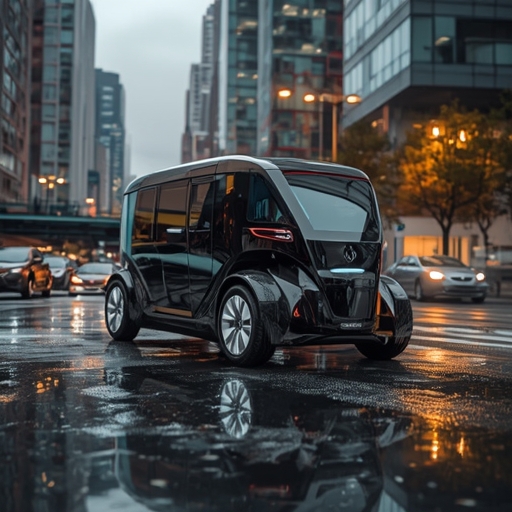
In recent days, a flurry of social media attention surrounded reports of a so-called “rogue” Waymo Zeekr van that collided with several parked cars in Los Angeles’ Echo Park neighborhood. At first glance, the vivid video footage seemed to confirm many people’s worst fears about self-driving technology gone awry — a driverless vehicle apparently operating without control or awareness. However, upon closer examination and an official statement from Waymo, the situation proved far less sensational and far more routine than early reactions suggested.
According to the company’s clarification, the vehicle involved in the incident was not functioning in autonomous mode at the time of the crash. Instead, it was being manually operated by a human driver, meaning that none of Waymo’s autonomous navigation systems were active. This distinction is not merely semantic; it underscores a vital point in how emerging technologies, particularly those involving artificial intelligence and automation, are perceived and reported. The mere presence of a brand associated with self-driving innovation often leads the public to conflate any mishap with the technology itself, even when human error remains the root cause.
Waymo’s statement serves as a timely reminder of the importance of verifying technical context before attributing blame or drawing sweeping conclusions about automation. Autonomous vehicle testing and operation follow rigorous protocols, with multiple safety redundancies designed to prevent exactly the sort of autonomous malfunction many assumed had occurred. Yet, as this case illustrates, even companies on the cutting edge of automation rely on human operators for specific driving tasks, maintenance routes, and repositioning operations — all situations in which traditional driving risks still apply.
This misunderstanding also reflects a broader societal tendency to overemphasize the role of artificial intelligence in everyday mishaps while underestimating the persistence of ordinary human error. In the rush to interpret every technological event through the lens of AI ethics or machine accountability, more conventional explanations, such as driver distraction or misjudgment, are sometimes overlooked. Accurate reporting and technical literacy therefore become essential tools for maintaining public trust in the evolving field of autonomous mobility.
Ultimately, this episode does not reveal a failure of technology but rather a breakdown in communication and framing. The viral spread of misinformation — fueled by assumptions that every Waymo vehicle is autonomously operated — highlights the need for clearer differentiation between human-driven and computer-driven actions. As the industry advances and autonomous cars become an increasingly common sight on public roads, separating human influence from automated performance will remain a cornerstone of responsible journalism and public understanding.
The Echo Park incident, then, is less a cautionary tale about artificial intelligence running amok and more a reflection of humanity’s adaptation to its own innovations. It shows how quickly narratives can drift from fact when context is missing, and how easily public perception can blur the line between technological autonomy and human agency. In the end, the so-called “rogue” Waymo van was never rogue at all — merely a regular vehicle momentarily operated by a flawed, fallible human being. The lesson is both humbling and hopeful: as our machines grow smarter, our responsibility to think critically and discern truth grows even greater.
Sourse: https://www.theverge.com/transportation/869544/a-rogue-waymo-that-crashed-into-a-parked-car-was-being-manually-driven