Romania has become the second member of NATO in less than a week to report a violation of its national airspace by a Russian drone, a development that adds to the unease already coursing through the alliance following recent incidents in Poland. For many in NATO, these repeated incursions are not isolated mistakes but potentially deliberate probes of the alliance’s vigilance and readiness to respond. Several days earlier, Polish authorities had revealed that Russian drones entered their skies, intensifying regional fears of escalation and testing NATO’s crisis management capacity.
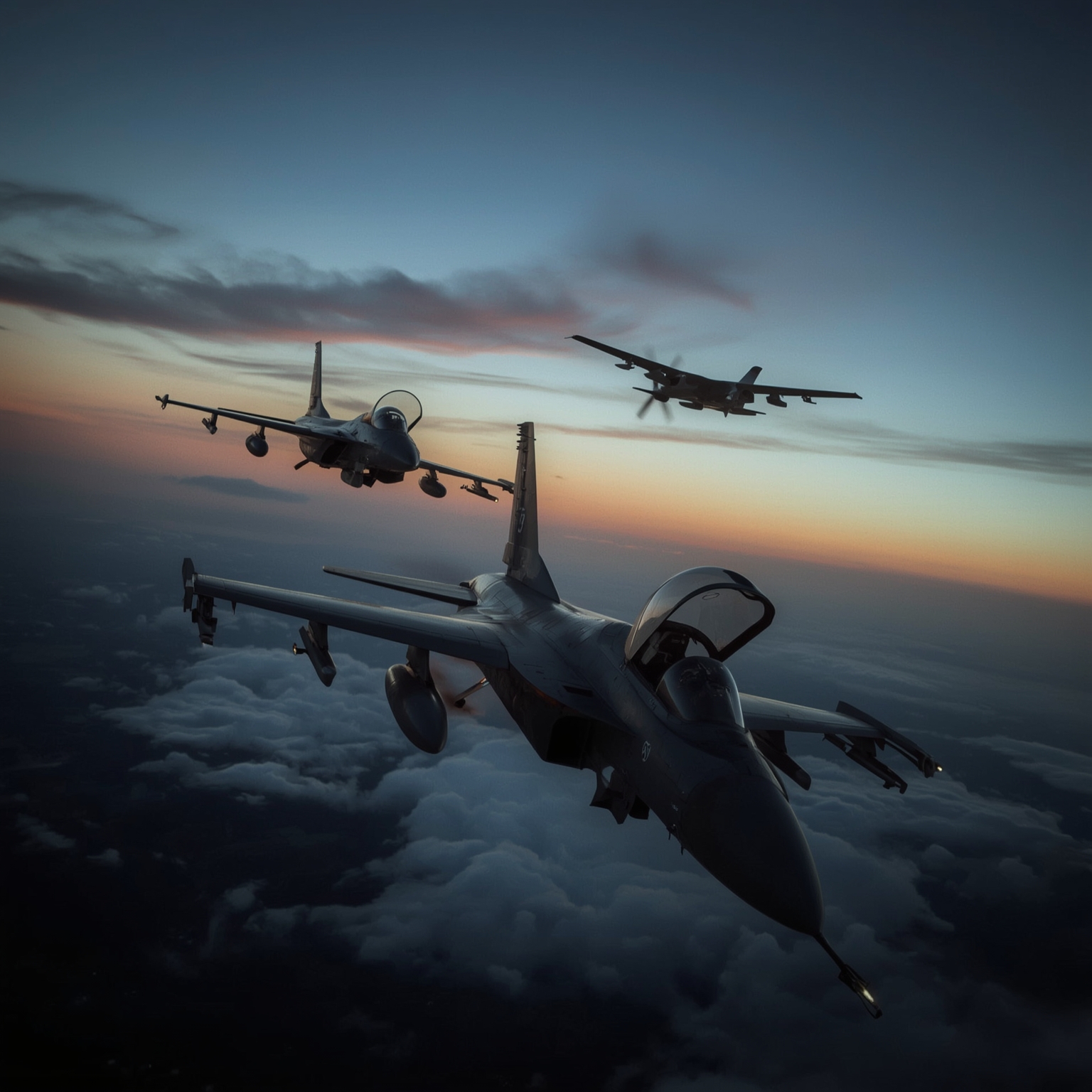
On Sunday, Romania’s defense minister, Ionut Mosteanu, released an official statement explaining that the Romanian Air Force successfully intercepted a Russian drone operating illegally inside Romanian territory. According to his account, two F-16 Fighting Falcons from the 86th Air Base were immediately scrambled to respond to the incursion. These aircraft tracked the drone as it moved across Romanian skies, monitoring it until the object eventually disappeared in the vicinity of Chilia Veche, a settlement near the country’s northeastern border. Mosteanu emphasized in his message that there was never any danger posed to local inhabitants, making clear that although the event was alarming, civilian safety was not compromised.
Later in a televised interview, the minister elaborated further, stating that the F-16 pilots were just moments away from engaging their weapons systems and eliminating the threat. The drone was flying at a relatively low altitude, which presented both a tactical challenge and an operational opportunity for response. However, because the unmanned aerial vehicle eventually crossed back out of Romanian territory, a direct confrontation was narrowly avoided. According to Mosteanu, this occurred on Saturday evening while Romanian surveillance forces were already closely monitoring movements along the northern border, coinciding with an ongoing Russian strike against Ukrainian energy and infrastructure assets located nearby.
The Ministry of National Defense provided broader details, noting that the drone remained inside Romanian airspace for approximately fifty minutes—an interval that cannot be dismissed as accidental. F-16 pilots, who initially were on a scheduled patrol and then diverted to meet the threat, were officially granted the authority to neutralize the drone if necessary. Yet the situation resolved without engagement, as the drone eventually veered back into Ukrainian territory, exiting close to the town of Pardina in the Dobruja region, which lies near the Black Sea coastline.
Minister Mosteanu issued a stern condemnation of Moscow’s conduct, describing Russia’s actions as irresponsible and destabilizing. His statement highlighted Romania’s perception that such reckless military behavior poses a direct threat not only to national security but also to the stability of southeastern Europe more broadly. Adding weight to these concerns, Ukrainian President Volodymyr Zelenskyy declared in a separate address that the drone had intruded roughly ten kilometers—six miles—into NATO’s protected airspace, further underscoring the seriousness of the breach.
These drones are believed to come from Russia’s long-range arsenal, most of which comprises the Geran model, a domestically manufactured derivative of Iran’s Shahed explosive drone, as well as the Gerbera decoy system, which is used to confuse enemy defenses. Romania has dealt with similar intrusions before, particularly since Moscow launched its large-scale invasion of Ukraine in 2022. On previous occasions, Romanian fighter jets were dispatched, and in several instances, debris from destroyed or malfunctioning drones fell inside Romanian territory.
The most recent episode occurred against a backdrop of heightened security concerns within NATO. Only days earlier, Poland had disclosed that nineteen Russian drones had penetrated its airspace during another surge of Russian attacks on Ukraine. In that case, NATO’s collective defense systems were activated, with Dutch F-35s and Polish F-16s responding to the aerial threats. Allied pilots succeeded in destroying at least three drones, a demonstration of both readiness and restraint in an increasingly volatile context. Although the Kremlin has formally denied intentionally directing drones into Polish skies, it has offered no clear acknowledgment regarding whether such violations of NATO territory indeed occurred.
As for Romania’s case, Moscow attempted to dismiss Bucharest’s protest. Russia’s ambassador to Romania, Vladimir Lipayev, characterized the incident as nothing more than a staged provocation orchestrated by what he described as the Kyiv regime. He went further, asserting through Russian state media that as there was no “objective confirmation” of the drone’s national origin, the complaint was baseless and unworthy of recognition. Nonetheless, this official rebuttal did little to ease tension, as many European leaders expressed unwavering support for Romania. Kaja Kallas, the European Union’s leading diplomat for foreign and security policy, issued a statement denouncing the reported airspace breach as a reckless act of escalation by Moscow and condemned it as a direct violation of Romanian sovereignty and, by extension, of that of the European Union.
Romania has recently fortified its legal and military framework in response to the growing frequency of such incidents. In February, lawmakers passed legislation authorizing the immediate downing or destruction of any Russian drones illegally crossing into Romanian skies. This measure reflects the increasing determination of NATO’s eastern flank members to protect their sovereignty against encroachment and to signal clearly to Moscow that any further provocations will be met with decisive defensive action.
Together, these events illustrate both the precariousness of the regional security environment and the fine margin that separates deterrence from escalation. For NATO, each drone that crosses into allied territory demands not only a tactical decision in the moment but also a strategic calculation about how to maintain unity while avoiding steps that could trigger a broader conflict. Romania’s near-engagement with a Russian drone represents one of the clearest demonstrations yet of how quickly situations along NATO’s borders with Ukraine can shift from routine air patrols to the risk of direct confrontation.
Sourse: https://www.businessinsider.com/romania-nato-country-f16-russian-drone-very-close-2025-9