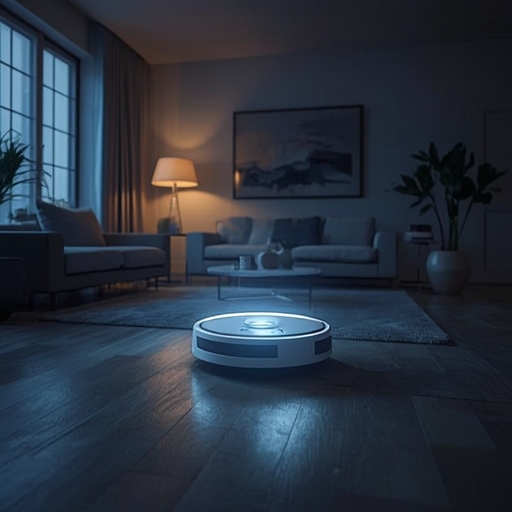
The parent corporation behind the renowned Roomba brand, which has sold millions of automated home-cleaning devices across the globe, has entered a critical financial juncture after decades of innovation in the field of consumer robotics. On Sunday, after thirty-five years of continuous operation, the company announced that it had formally filed for Chapter 11 bankruptcy protection, a legal move intended to facilitate financial reorganization while allowing the business to continue its essential operations under judicial oversight.
In a detailed press release issued the same day, iRobot—a robotics enterprise headquartered in Massachusetts and widely recognized as one of the earliest pioneers in commercial household automation—confirmed that it had sought bankruptcy protection in the U.S. Bankruptcy Court for the District of Delaware. This procedural step gives iRobot an opportunity to restructure its obligations, protect its assets, and negotiate with creditors while maintaining a degree of institutional stability amid severe fiscal strain.
Concurrent with the filing, iRobot announced a sweeping agreement that will result in the complete acquisition of the firm by its primary manufacturing partner and largest lender, Shenzhen PICEA. PICEA, a distinguished vacuum cleaner producer with advanced industrial and research facilities in both China and Vietnam, will assume full ownership of iRobot upon completion of the transaction. According to the company’s statement, this deal is conceived as a strategic lifeline: it will provide the financial and operational continuity required for iRobot to sustain its day-to-day functions, pursue the development of new technologies and product lines, ensure timely and consistent payments to vendors and creditors, and uphold commitments to its global workforce. Essentially, under this arrangement, iRobot will transition from a publicly traded corporation to a privately held subsidiary under PICEA’s control, with its shares permanently delisted from public stock exchanges.
Founded in 1990 by three visionary roboticists from the Massachusetts Institute of Technology, iRobot quickly became a household name in technological innovation. The company’s reputation was firmly established in 2002 with the release of the Roomba—an iconic, disc-shaped robotic vacuum cleaner that revolutionized the domestic appliance sector and introduced mainstream consumers to the practical potential of autonomous home robotics.
The current bankruptcy decision comes on the heels of a series of disheartening financial quarters marked by weak consumer demand, declining sales, and escalating cash shortages. The company’s third-quarter earnings statements highlighted the severity of its liquidity crisis. As of September 27, reported cash reserves had dwindled to $24.8 million, a stark decline from the $40.6 million recorded just three months earlier on June 28. To sustain operations, iRobot disclosed that it withdrew $5 million in restricted cash on September 27, effectively exhausting all remaining sources of capital and leaving no further avenues through which additional funds could be secured.
During that same period, the company’s revenue performance continued to deteriorate. Third-quarter revenues totaled $145.8 million—a sharp year-over-year reduction of approximately twenty-five percent. The U.S. market, which historically represented iRobot’s largest customer base, experienced an even steeper downturn, with domestic sales falling by roughly one-third compared to the previous year. Such financial contractions seriously undermined the firm’s capacity to invest in product development, marketing, and supply chain maintenance.
Only a month ago, iRobot issued a warning to investors indicating that the last potential buyer interested in acquiring the company had officially withdrawn, making a bankruptcy filing all but inevitable. This outcome followed an already-profound setback: the collapse of a highly publicized acquisition attempt by Amazon. In 2022, Amazon had declared its intention to purchase iRobot in a deal valued at approximately $1.7 billion, anticipating that the merger would expand its portfolio of smart-home technologies and complement its existing ecosystem of connected devices. However, in January 2024, Amazon formally abandoned the acquisition effort, citing persistent and insurmountable regulatory challenges across both U.S. and European markets.
The abrupt termination of that merger proved devastating for iRobot. On the very same day that Amazon announced it was pulling out, iRobot revealed a sweeping internal restructuring plan that included laying off nearly one-third—31 percent—of its global workforce. Furthermore, the firm’s long-standing chief executive officer, Colin Angle, chose to step down following the announcement, marking the end of an era in the company’s leadership. Both decisions reflected a desperate effort to cut costs and stabilize operations in the face of rapidly shrinking capital.
Over the past five years, the decline in iRobot’s market valuation has been equally dramatic. The company’s stock price has fallen by more than fifty percent over the course of the last twelve months and has suffered an overall loss exceeding ninety percent since 2019. This sustained erosion in investor confidence underscores the profound challenges that even celebrated technology pioneers can encounter when market trends shift, competition intensifies, and external economic pressures converge.
Despite the somber nature of the bankruptcy filing, the agreement with Shenzhen PICEA may offer a limited but meaningful path toward recovery. With stronger manufacturing infrastructure and access to more consistent funding sources, iRobot is expected to continue designing, producing, and servicing its line of robotic cleaning products under a new corporate structure. If successful, this transformation could allow the company to rebuild operational resilience, protect its workforce, and preserve its reputation as a key innovator in automated home solutions while closing an eventful chapter in its long and influential corporate history.
Sourse: https://www.businessinsider.com/irobot-roomba-parent-company-bankruptcy-chapter-11-new-owner-picea-2025-12