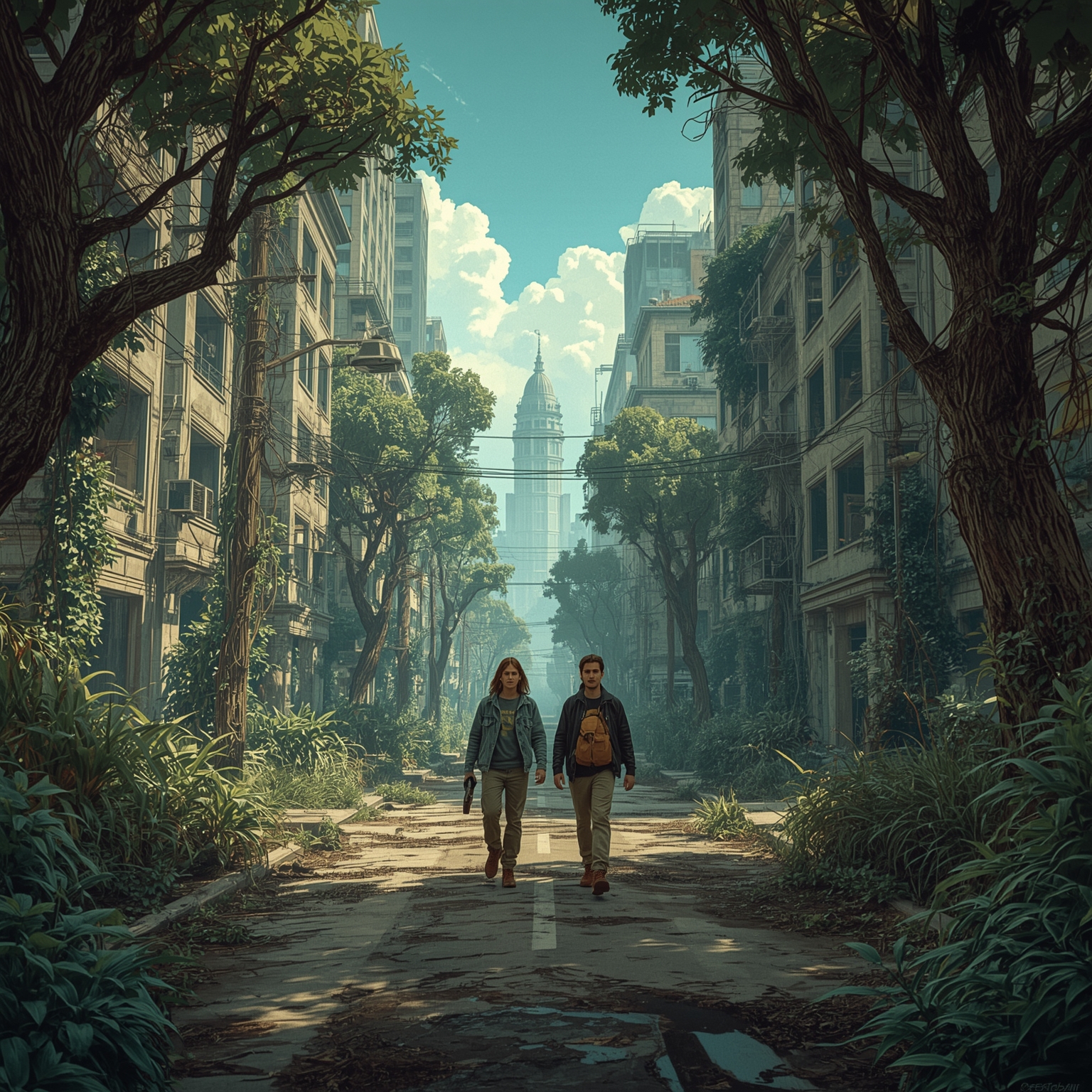
Released in 2009, *Zombieland* emerged during the height of popular culture’s fascination with post-apocalyptic stories, a period when the world seemed eager for grim humor and undead chaos. The film quickly carved out its place in that landscape, becoming both a comedic and cultural touchstone. It not only introduced audiences to the eccentric and self-aware world of zombie survival but also elevated the careers of its principal cast—most notably Emma Stone and Jesse Eisenberg—who soon grew into household names within Hollywood. The film’s success likewise marked a turning point for its director, Ruben Fleischer, who used the momentum of his first feature to establish himself as a filmmaker capable of blending high-energy action with sharp wit. Since *Zombieland,* Fleischer has gone on to direct several ambitious projects, including *Venom*, *Uncharted*, and—premiering as of this weekend—*Now You See Me: Now You Don’t*, demonstrating his consistent affinity for fast-paced narratives woven with comedic energy.
In a reflective conversation with *Deadline*, Fleischer looked back on the film that launched his career. He shared candid memories about how *Zombieland* came to be and how its initial concept struck him. At first, he admitted, the screenplay did not immediately grab his attention. However, his perception shifted dramatically when he recognized its deeper structure as a hybrid genre piece—essentially a road-trip adventure in the spirit of *National Lampoon’s Vacation*, but reimagined through a zombie-infested lens. That revelation allowed him to approach the material with renewed enthusiasm, realizing that the absurdity of the premise could serve as a springboard for both humor and heartfelt storytelling. As his first experience directing a feature film, however, Fleischer also confessed to feeling completely unprepared for the magnitude of the task before him. “I truly had no idea what I was doing,” he recalled, a statement of humility that now, in hindsight, feels both honest and endearing.
Yet paradoxically, that uncertainty turned into one of his greatest strengths. Fleischer reflected on how his openness about his lack of experience fostered an environment of collaboration and trust on set. Instead of pretending to have all the answers, he relied on the wisdom of those around him—his first assistant director, the director of photography, and even veteran actor Woody Harrelson—each of whom responded generously with patience and guidance. This willingness to admit vulnerability, he said, contrasted sharply with the attitude many novice directors adopt in an effort to appear authoritative. In his view, embracing that humility became an unexpected leadership advantage: it gave others permission to contribute freely and made the creative process genuinely collective rather than dictatorial. “A lot of young directors feel the need to project total confidence,” Fleischer reflected, “but I was happy to say, ‘I don’t know, and I need help.’” That self-awareness, coupled with teamwork, helped shape *Zombieland* into the distinctive and charming film audiences still love.
Revisiting the movie years later, Fleischer remains proud of the finished product. He recently rewatched it and found himself pleasantly surprised by how well it holds up both technically and tonally. With a mixture of humor and modest pride, he admitted that even though it might sound self-congratulatory, he is still quite impressed by the film’s enduring quality. The combination of witty writing, strong performances, and inventive direction, he said, gives *Zombieland* a kind of timeless comedic resilience that allows it to stand apart from the typical zombie fare of its time.
As Fleischer brings *Now You See Me* back into cinematic circulation, questions naturally arise about the fate of the *Zombieland* franchise. Addressing those, Fleischer revealed that conversations are now taking place regarding a potential *Zombieland 3*, with early discussions happening between him and Sony Pictures. If the plans materialize as hoped, fans might expect the long-awaited third film to arrive in 2029—a date that feels appropriate, considering the cast jokingly concluded *Zombieland: Double Tap* by promising to reconvene in ten years. That decade mark, as Fleischer pointed out, is quickly approaching, prompting him and his collaborators to begin exploring what the next chapter might look like. Although no official confirmation has been made, and while he has several other creative projects competing for his attention—including a “classic Western” featuring a vampire protagonist described as something akin to *Unforgiven* with a supernatural twist—Fleischer appears genuinely enthusiastic about the possibility of rallying his zombie-hunting crew for one final, thrilling adventure.
For viewers still enamored with the irreverent humor, makeshift family dynamics, and satirical edge that defined *Zombieland*, Fleischer’s reflections are both nostalgic and promising. They suggest a filmmaker who, even after years of broadening his creative range, continues to hold affection for the project that started it all. And perhaps, in the not‑too‑distant future, fans might once again return to that world of chaos, survival, and laughter that made *Zombieland* a modern classic. For those eager to stay connected to the wider entertainment landscape, it is an exciting time: new chapters are unfolding across major cinematic universes, from *Marvel* and *Star Wars* to *Star Trek* and the ever-evolving *DC Universe*, with *Doctor Who* also charting bold new directions. Amid all that, Fleischer’s ongoing commitment to his undead comedy serves as a reminder that in Hollywood, certain creations—like zombies themselves—never truly die, but simply wait for the right moment to rise again.
Sourse: https://gizmodo.com/ruben-fleischer-still-loves-what-zombieland-became-2000686627


