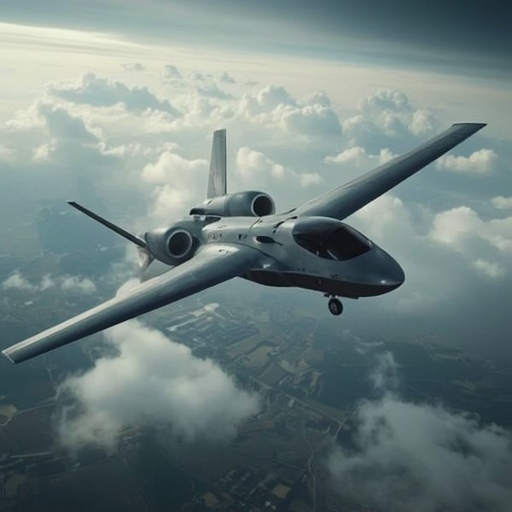
Ukraine has recently announced an important and potentially transformative observation regarding Russia’s latest generation of unmanned aerial vehicles. According to Ukrainian defense sources, this new model—identified as the ‘Geran‑5’—is reportedly equipped with a Chinese‑manufactured jet engine that drastically enhances its operational power in comparison to the existing drone systems already in use. This advancement, if confirmed, could signify that the aircraft possesses sufficient thrust not only for extended range and higher speed but also, perhaps, for the future integration of missile‑carrying capabilities.
Such a development marks a significant escalation in the evolution of aerial warfare technology. It effectively moves the conversation from relatively slow, propeller‑driven loitering munitions toward a new generation of jet‑powered combat drones, capable of closing the gap between cruise missiles and traditional bombers. Analysts point out that technological parallels can already be seen with Iran’s Karrar UAV, another jet‑propelled platform capable of performing reconnaissance and attack missions. This resemblance might imply a growing nexus of technical cooperation or shared influence among countries seeking to redefine cost‑efficient yet strategically sophisticated strike systems.
The existence of a Chinese propulsion system in a Russian platform further adds an intricate geopolitical dimension. It highlights the subtle interdependence and technological cross‑pollination within the global defense sector, even between nations publicly maintaining strategic ambiguity about their level of collaboration. Beyond the immediate battlefield implications, this potential partnership underscores a broader shift toward multipolar innovation in defense manufacturing—a domain where conventional boundaries of alliances and industrial supply chains are increasingly blurred.
For defense analysts, policymakers, and technology investors alike, understanding the full ramifications of this drone’s design is essential. The ‘Geran‑5’ could represent not merely another upgrade in a long line of remotely piloted aircraft, but rather the early emblem of a new era in which jet‑powered unmanned vehicles become standard instruments of state power projection. As international observers continue to monitor its performance and deployment, the global community will need to reassess established doctrines of air defense, deterrence, and technological sovereignty.
#DefenseTechnology #DroneWarfare #AerospaceEngineering #Geopolitics #MilitaryInnovation
Sourse: https://www.businessinsider.com/russia-geran-5-drone-karrar-iran-chinese-turbojet-engine-ukraine-2026-1