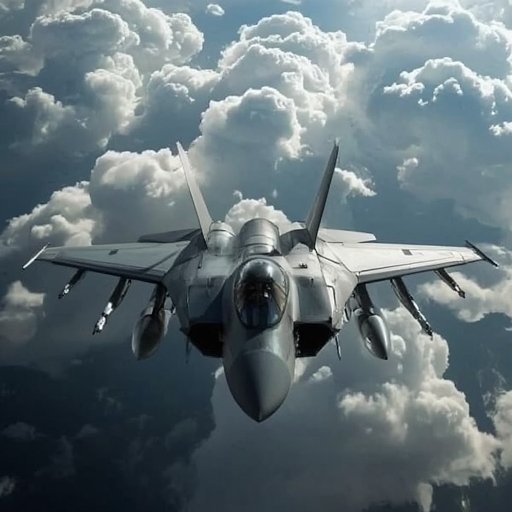
Russia has recently undertaken a notable advancement in its aerial warfare capabilities by equipping its Su-35 fighter jets with state-of-the-art long-range missiles. This enhancement marks a substantial evolution in both the aircraft’s operational reach and the broader framework of global strategic defense. With these longer-range missiles, the Su-35 is now capable of engaging enemy targets from significantly greater distances, reducing exposure to counter-fire and expanding its effectiveness in high-threat environments.
This development not only extends the physical reach of Russia’s airfleet but also reshapes the balance of power in regional and international security spheres. Analysts emphasize that the introduction of such long-range weapons signifies a calculated progression in Russia’s pursuit of air superiority. The Su-35, already recognized for its agility, powerful radar systems, and formidable payload flexibility, becomes an even more dominant force when armed with missiles capable of traversing extended combat ranges.
Strategically, this modification signals a deliberate shift in Russia’s aerial warfare doctrine toward stand-off engagement tactics. It underscores the country’s intent to secure a technological edge within contested airspaces, particularly in regions where NATO and allied airpower pose a formidable challenge. For other nations, this upgrade compels a reassessment of defensive readiness and intercept capabilities, as adversary aircraft may now strike from beyond traditional radar detection and interception zones.
From an industrial and policy standpoint, the enhancement of Su-35 armament reflects a broader acceleration within the defense technology sector. It invites defense planners and aerospace engineers worldwide to consider adaptive strategies, as the line between offensive reach and defensive stability becomes increasingly blurred. The dynamic evolution of missile range, precision guidance, and integrated targeting systems continues to redefine contemporary aerial combat—not merely as a contest of machines, but as a complex interplay of innovation, deterrence, and geopolitical signaling.
Ultimately, the Su-35’s integration of longer-range missiles represents more than a technical milestone. It embodies the ongoing transformation of modern warfare, where distance no longer guarantees safety and where air dominance depends as much on advanced engineering as on strategic foresight. #Defense #Aerospace #GlobalSecurity #MilitaryInnovation
Sourse: https://www.businessinsider.com/russia-key-fighter-jet-missiles-threat-2026-2