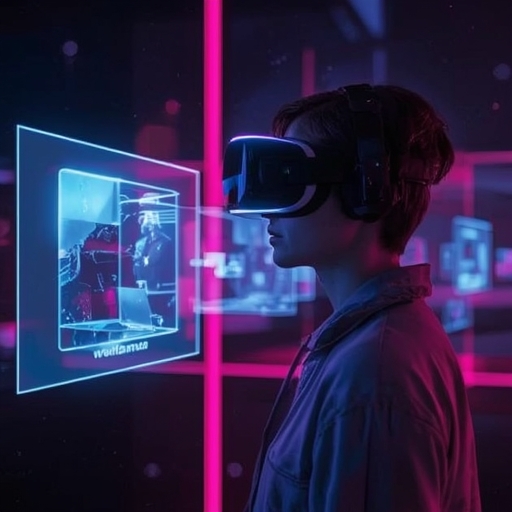
Samsung’s Galaxy XR marks a defining moment in the evolution of extended reality, introducing a seamless bridge between the flat, familiar realm of two-dimensional digital interaction and the dynamic depth of immersive 3D environments. Through the power of Google’s newest innovation in Android XR—known as auto-spatialization—ordinary 2D interfaces such as applications, web pages, photographs, and videos are intelligently transformed into spatially aware, three-dimensional formats. This process gives users a heightened sense of presence and tangibility, turning simple screens into vast digital landscapes that can be explored from every angle.\n\nThe significance of this advancement reaches far beyond visual novelty. By automatically converting 2D elements into layered, volumetric experiences, auto-spatialization reduces the traditional barrier between users and the virtual world. Instead of passively viewing content, individuals now inhabit it—navigating images as if they were physical spaces or stepping through videos that unfold around them. Such sensory depth redefines engagement, offering an experience that feels intuitive and almost lifelike.\n\nOn Samsung’s Galaxy XR platform, this technology demonstrates the convergence of hardware sophistication and software intelligence. The headset’s high-resolution optics, spatial audio, and motion tracking capabilities synergize with Android XR’s processing power to reinterpret conventional media dynamically. Imagine opening a social app where posts float in dimensional layers around you, or revisiting a favorite photograph and discovering that it now has depth, texture, and perspective. Every swipe, glance, and gesture becomes an act of exploration rather than a simple tap or click.\n\nFor developers, auto-spatialization represents a groundbreaking simplification of what previously required complex modeling and rendering. It democratizes immersive design—allowing even those unfamiliar with 3D creation tools to see their work inhabit volumetric space automatically. For users, it brings a renewed sense of wonder to routine digital behavior: watching a video becomes stepping into a story, while browsing a website feels like strolling through a gallery of interactive, spatially arranged information.\n\nThis collaboration between Samsung and Google signals a profound shift toward mainstream spatial computing. What once belonged exclusively to niche gaming or specialized industry applications now extends to everyday life. With the Galaxy XR and Android XR working in harmony, the digital future grows more tangible, adaptive, and accessible. The boundary separating the physical and virtual dissolves further, inviting users to experience their simplest apps and memories as living, breathing worlds that both surround and respond to them.\n\nIn essence, Samsung’s Galaxy XR is not merely an evolutionary upgrade—it is a transformative leap. It reimagines how we view, interpret, and interact with digital content, ushering in an era where reality expands, creativity multiplies, and immersion becomes second nature.
Sourse: https://www.theverge.com/tech/908268/android-xr-samsung-galaxy-auto-spatialization-2d-3d