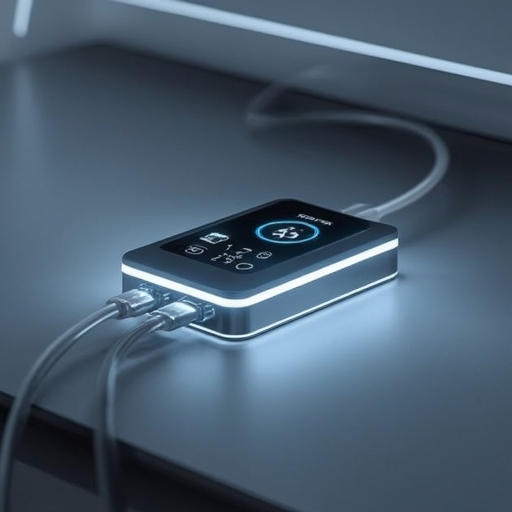
ZDNET’s comprehensive evaluation of the Treedix Multifunction USB Cable Tester highlights the practicality and precision of this compact diagnostic tool. Retailing for approximately $45 on Amazon, this device is designed for individuals who frequently handle a range of USB cables—whether for personal use, professional repair work, or sheer organizational efficiency. While its appeal might be somewhat specialized—given that not every consumer needs such a tester—it offers significant value to anyone who deals with USB connectivity issues, charging inconsistencies, or data-transfer uncertainties.
For technology enthusiasts, technicians, or simply those with an ever-growing tangle of cords, the Treedix tester offers an elegant solution. Many of us have boxes or drawers filled with miscellaneous cables whose functionality remains uncertain. Sorting through this assortment can be tedious and time-consuming, particularly when cables differ in type, purpose, or condition. The Treedix tester aims to eliminate guesswork by providing a quick, accurate, and visual means of evaluating each cable’s performance and compatibility. Instead of relying on random trial and error, this compact device empowers users to instantly identify faulty, slow, or incompatible cables.
Physically, the Treedix Multifunction USB Cable Tester is impressively small, measuring just 2.9 by 2.5 by 0.5 inches—a size that makes it easy to slip into a pocket, toolbag, or desk drawer. Despite its modest proportions, it features an abundance of connection options: two output ports (USB-C and USB-A) and a comprehensive set of input interfaces, including USB-C, Lightning, miniUSB, microUSB 2.0, and microUSB 3.0. This extensive lineup ensures compatibility with virtually any modern or legacy cable, allowing users to test devices across generations of hardware. Each port is carefully labeled and positioned for intuitive use, minimizing setup time and reducing the likelihood of misplaced connections.
The tester derives power from a single AAA battery, a convenient and portable solution for fieldwork or on-the-go diagnostics. Users also have the option of powering the device through its USB-C input, which can be beneficial when working in a static environment or when conserving battery life. A simple physical switch activates the unit, while a function-selection button allows users to toggle between various display modes and test types. The battery’s longevity is notable—lasting potentially many months or even years—though periodic checks are advisable to prevent leakage or corrosion.
Central to the tester’s interface is a vibrant 2.4-inch IPS color display, which serves as the visual hub for all test results. The screen’s clarity and brightness make it particularly effective for reading fine details and visual maps, even in well-lit environments. Through this interface, users can view pinouts, voltage flow, current capacity, and data transmission capabilities at a glance. This immediacy transforms what would otherwise be a lengthy troubleshooting process into a five-second analysis.
Functionally, the Treedix tester is equipped to perform an array of diagnostic evaluations. It can confirm whether a given cable transmits both power and data, or merely functions as a charging lead. It can display the active pin connections, reveal resistance values that might affect efficiency, and identify embedded eMarker chips. By cycling through the on-screen menus via the function button, users can move seamlessly between these testing modes, obtaining both quick summaries and technical specifics. For professionals involved in device maintenance or cable manufacturing, this level of scrutiny can be indispensable.
One of the tester’s standout capabilities is its eMarker chip analysis. Many high-quality USB-C cables contain such a chip, which stores detailed information about the cable’s electrical parameters and specifications. The Treedix unit can extract and display data including the maximum supported current and voltage, the rated data transfer speed, cable category, and approximate length. For example, it can confirm whether a particular cable supports up to 240 watts of power delivery or a particular gigabit rate of data throughput. It can even measure latency and estimate length in meters, offering insights rarely seen outside of professional-grade laboratory equipment.
Operation could not be simpler: insert the cable into the appropriate ports, power on the device, and within moments, the display fills with diagnostic information. Users can confirm instantly whether a cable is functioning properly, if it supports both data and charging, or if it should be recycled. For instance, a data-blocking cable will immediately appear as incapable of transferring information, enabling the user to categorize it accordingly.
In summary, ZDNET’s recommendation underscores that while this tester is not a universal necessity, it is exceptionally useful for those who value efficiency, organization, and a deeper understanding of their tools. At a modest price point of $45, the Treedix Multifunction USB Cable Tester earns its place in any professional’s toolkit—or indeed, anyone’s home tech drawer. It transforms a tedious task into a streamlined process, replaces uncertainty with clarity, and offers a level of insight into USB cable performance that few other gadgets can match.
Sourse: https://www.zdnet.com/article/treedix-usb-cable-tester-review/