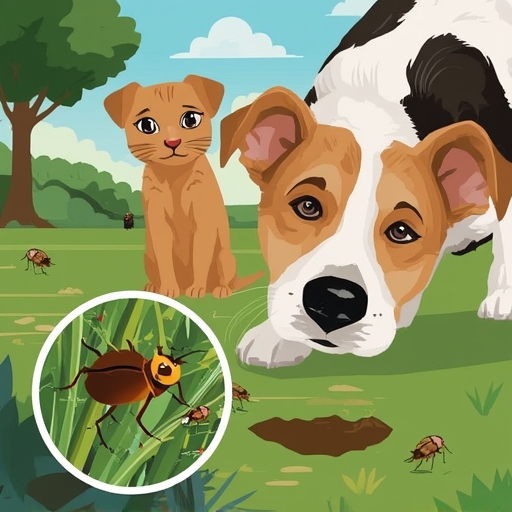
Recent scientific investigations have brought to light an unexpected environmental concern: traces of antiparasitic medications, routinely prescribed to household pets, appear to persist far longer in their excrement than previously assumed. This finding implies that after an animal has been treated with these commonly used drugs, the residual compounds do not immediately degrade once excreted but instead remain chemically active in the fecal matter for an extended duration. As a consequence, when such waste remains in natural settings—parks, gardens, or even urban green spaces—it becomes a conduit for introducing these potent pharmaceutical agents into local ecosystems.
The lingering presence of these substances poses a subtle yet potentially harmful threat to numerous invertebrate species, particularly insects such as dung beetles and other decomposers that rely on organic waste as a source of nourishment and habitat. These organisms play a crucial ecological role: by breaking down and recycling animal waste, they enrich soil fertility, aid in nutrient turnover, and contribute to the delicate equilibrium of local biodiversity. When antiparasitic compounds interfere with their biological activity, the repercussions ripple through the environment—affecting not only insect populations but also the broader ecological processes that depend upon them.
Researchers emphasize that this issue underscores the interconnectedness of veterinary care and environmental stewardship. While the administration of antiparasitic medications is essential to maintaining animal health and preventing parasitic infections, responsible handling of the resulting waste is equally critical to safeguarding natural habitats. Pet owners and caretakers are therefore encouraged to adopt conscientious disposal practices—such as promptly collecting and properly discarding pet feces—to minimize the transfer of these pharmaceutical residues into surrounding ecosystems.
The study further serves as a reminder that small, everyday actions undertaken by conscientious pet owners can collectively influence the health of the planet. Increased awareness of how routine veterinary treatments intersect with environmental dynamics can inspire sustainable choices that protect both beloved companion animals and the wildlife communities silently sustaining ecological balance. In essence, properly managing pet waste becomes more than a matter of cleanliness or civic duty—it evolves into an act of environmental responsibility and compassion for the interconnected web of life that thrives alongside us.
Sourse: https://gizmodo.com/scientists-found-something-unexpected-in-pet-poop-and-its-not-good-2000709819