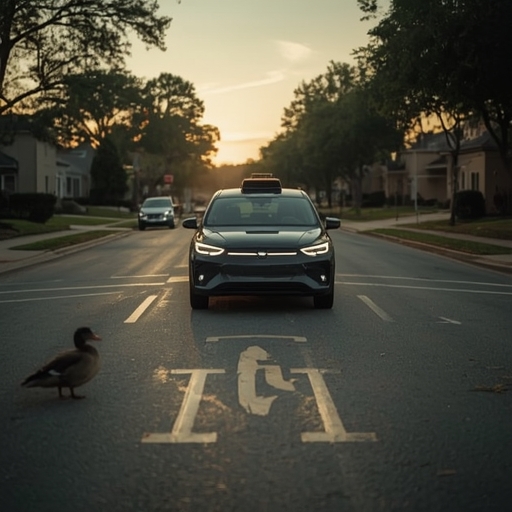
In a quiet residential area of Texas, a tragic and emotionally charged incident occurred when an Avride self-driving vehicle, operating autonomously under controlled conditions, struck and fatally injured a mother duck that was crossing the road with her ducklings. Although, on the surface, this might appear to be a small and unfortunate accident, the event has resonated far beyond the local community. It has reignited a serious and wide-ranging discussion on the ethical dimensions of artificial intelligence, the technological maturity of autonomous vehicles, and the readiness of current systems to engage safely with the unpredictable realities of the natural and human world.
The community’s reaction was immediate and deeply emotional — residents expressed sorrow, anger, and unease about the notion that a machine, rather than a human driver, could make a decision resulting in harm to a living creature. For many, this incident has become emblematic of the broader anxieties surrounding the integration of AI-driven technology into everyday life. It underscores the persistent concern that while machines may follow programmed logic flawlessly, they often lack the moral sensitivity, situational empathy, and instinctive caution that human judgment can provide, even in split-second scenarios.
From a technological standpoint, the episode raises crucial questions for engineers and policymakers alike. How should self-driving systems be designed to interpret and respond to small, unpredictable movements — whether a child suddenly entering the street, an animal crossing in low visibility, or debris appearing out of nowhere? While AI algorithms are trained on vast datasets meant to simulate the diversity of real-world conditions, such data cannot fully replicate the infinite variability of nature and the complexity of human decision-making. The tragedy of the duck has therefore become a symbolic reminder that no matter how advanced our systems become, artificial intelligence remains fundamentally reactive; it can process probabilities but cannot yet embody compassion, moral judgment, or an understanding of the sanctity of life.
Moreover, this local event has reignited a national conversation about accountability. When an autonomous car causes harm — even unintentionally — who bears moral and legal responsibility? Is it the manufacturer, the programmers, the company operating the fleet, or society at large for embracing technological change faster than ethical frameworks can evolve? These are not merely academic inquiries; they have tangible policy implications that will shape the future of public safety regulations, corporate responsibility, and AI governance.
Equally important is the question of public trust. Communities that once viewed autonomous vehicles as marvels of convenience and progress are now grappling with the unsettling realization that automation, despite its promise, can also lead to emotionally devastating consequences. For innovation to sustain itself ethically, developers, legislators, and citizens must collaborate more transparently to ensure that technological progress is guided not only by efficiency and innovation but also by empathy, foresight, and a shared moral compass.
Ultimately, the loss of a mother duck in a Texas neighborhood may seem like a minor event within the grand narrative of technological evolution. Yet, its emotional resonance has transformed it into a poignant parable — a small but powerful reminder that humanity’s pursuit of progress should never outpace its capacity for compassion. As the world continues to test the limits of artificial intelligence and self-driving technology, this incident compels us to ask a difficult but necessary question: How can we ensure that the innovation shaping our future also reflects the values that define our humanity?
Sourse: https://techcrunch.com/2026/04/08/avride-self-driving-car-austin-kills-duck-mueller/