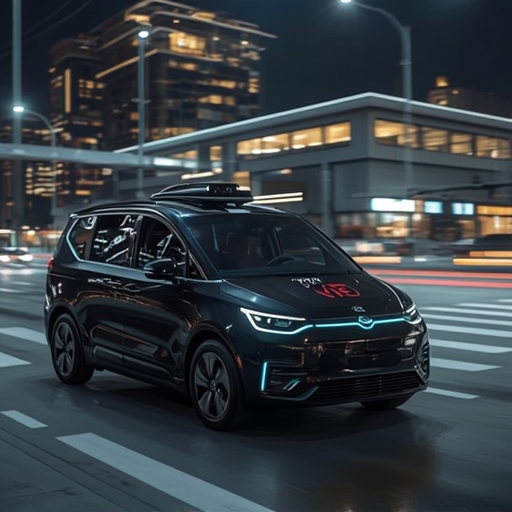
In a recent high‑profile Senate hearing, the complex and often contentious topic of self‑driving vehicles — particularly robotaxis — took center stage, as lawmakers sought concrete answers from leading industry figures. Executives from Waymo and Tesla were called upon to address an intricate web of issues encompassing public safety, liability in the event of accidents, the ethics of remote operations, and broader geopolitical implications, particularly regarding China’s role in the technological ecosystem. This session did not merely serve as a checkpoint for progress but was an urgent exploration of how rapidly evolving innovation collides with the slower machinery of government oversight.\n\nThroughout the hearing, senators emphasized repeatedly that while technological advancements in autonomous vehicles hold transformative potential — promising reduced human error, increased mobility access, and major environmental benefits — these developments also expose society to new and uncertain risks. Lawmakers pressed for clarity about accountability frameworks: when a driverless car makes an error, who bears responsibility — the manufacturer, the software engineers, or an absent driver? Such questions highlight the need for a comprehensive regulatory infrastructure capable of adapting to AI‑driven mobility without stifling innovation.\n\nWaymo and Tesla, representing distinct approaches to self‑driving technology, defended their respective safety records and data‑driven methodologies. Their testimonies underscored a mutual objective: proving that autonomous systems can surpass human safety standards. However, senators remained cautious, pointing to incidents and ongoing investigations as reminders that the transition from experimental autonomy to broad adoption must proceed with transparency, rigorous testing, and public confidence.\n\nA key point of tension involved the global dimension of the industry. Concerns about data sharing, foreign supply chains, and international competition — particularly with Chinese firms investing heavily in AI and smart transportation — led to nuanced discussions about national security and technological sovereignty. Lawmakers sought reassurance that domestic innovation would not become dependent on or compromised by external influences. These exchanges reinforced how the robotaxi debate extends far beyond convenience or consumer technology; it touches directly on matters of economic strategy and geopolitical positioning.\n\nBeyond the specifics of policy and competition, the hearing became an emblem of a larger truth: regulation must evolve at a pace that matches scientific and industrial progress. Senators from both parties acknowledged that innovation outpaces current legislative tools, leaving gaps that could jeopardize public safety and erode public trust. Without a transparent and enforceable legal framework, even the most promising technology risks being undermined by skepticism or mismanagement.\n\nIn conclusion, the Senate’s scrutiny of Waymo and Tesla offered more than a routine review of emerging automotive trends — it encapsulated a fundamental moment in the relationship between human governance and machine intelligence. The future of transportation is being shaped not just by engineers, but by the interplay of ethics, law, and global economics. Until clear standards, accountability mechanisms, and public‑oriented safeguards are fully enacted, the dream of seamless autonomous mobility will remain aspirational — a work in progress on the road toward societal acceptance and long‑term safety assurance.
Sourse: https://www.theverge.com/transportation/873891/senate-hearing-autonomous-vehicles-robotaxi-waymo-tesla-legislation