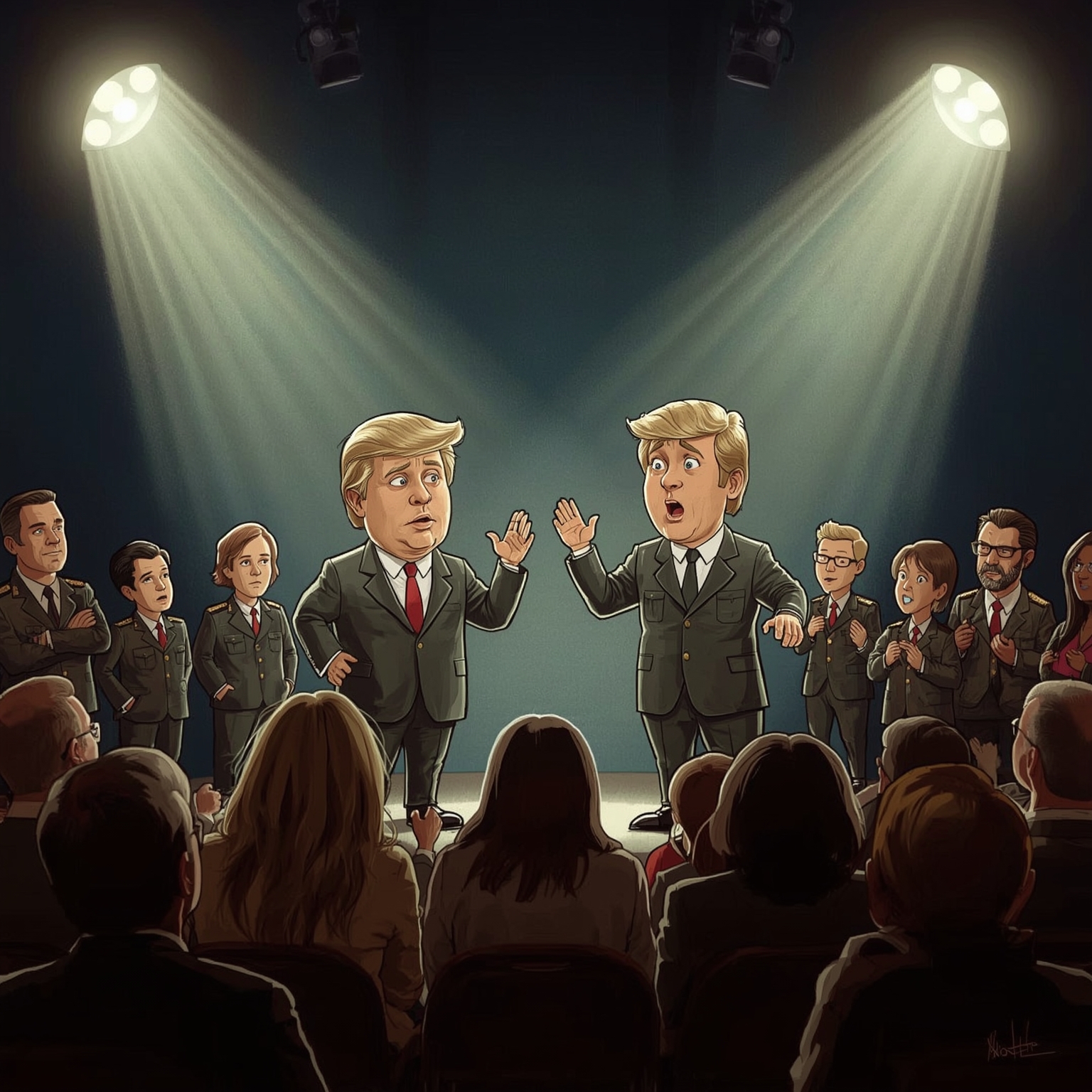
“Saturday Night Live” made a much-anticipated return to television screens this weekend, inaugurating its landmark fifty-first season with the kind of audacious, politically charged humor that has defined the show for decades. The episode opened with a characteristic blend of wit and satire, launching a biting commentary aimed squarely at the Trump administration while simultaneously acknowledging the recent controversies surrounding increased scrutiny and regulatory pressure on the late-night television landscape. The creative decision to fuse current political tensions with the show’s long-standing tradition of fearless parody underscored SNL’s continued relevance as both a cultural barometer and a platform for comedic dissent.
Serving as the evening’s host was global music sensation Bad Bunny, whose multifaceted charisma contributed to the episode’s dynamic tone. The show commenced its cold open with Colin Jost portraying Secretary of Defense Pete Hegseth, presenting a searing impression that encapsulated the public persona of the real-life political figure. In the sketch, Jost’s Hegseth chastised a group of U.S. military leaders for their physical appearance—a satirical allusion to a recent speech Hegseth had delivered in which similar criticisms were made. His impassioned declaration, “This is serious. We are facing the greatest threat to freedom and democracy the world has ever known,” set the stage for the show’s signature interplay between solemn political satire and absurdist humor.
The tension of the moment was swiftly punctured by James Austin Johnson, reprising his much-acclaimed impersonation of former President Donald Trump. Interrupting with impeccable comedic timing, Johnson’s Trump corrected the tone of gravity by exclaiming, “Late-night TV,” thereby reframing the skit’s focus from global politics to the ongoing feud between conservative figures and late-night hosts. From that point onward, Johnson’s portrayal dominated the sketch with his characteristically rambling braggadocio and his trademark self-awareness—or, more accurately, lack thereof. He humorously warned viewers that he would personally monitor “SNL” to ensure that it did not “do anything too mean” about him. With mock menace, he added that he could unleash his “attack dog at the FCC,” mistakenly referring to the chairman as “Brandon Carr.”
Mikey Day then entered the scene, stepping into the role of Federal Communications Commission Chairman Brendan Carr. To the delight of the audience, Day performed an exaggerated, tongue-in-cheek dance number to the unmistakable tune of Rockwell’s “Somebody’s Watching Me,” wittily reinforcing the sketch’s theme of surveillance and censorship. Staying true to the comedic absurdity, Day’s Carr corrected Trump’s misstatement, clarifying, “It’s Brendan, not Brandon,” while continuing his theatrical routine. Johnson’s Trump, unfazed as ever, dismissed the correction with the line, “It’s crazy you’d think I’d care,” encapsulating the show’s satirical portrayal of a man impervious to logic or accuracy. The cold open reached its conclusion with Trump delivering a simultaneously humorous and chilling warning to the audience: “Remember, daddy’s watching.” This closing note encapsulated both the sketch’s playfulness and its underlying critique of authoritarian control and media monitoring.
Beyond the opening segment, the episode arrived amid heightened sensitivity in the late-night industry. A recent controversy had disrupted the community when “Jimmy Kimmel Live!” was temporarily suspended following remarks Kimmel made after the assassination of conservative activist Charlie Kirk. The suspension, reportedly prompted by threats from FCC Chair Carr, raised serious concerns over artistic freedom and the possibility of increased censorship in politically charged comedy. Fans of “SNL,” ever attuned to the show’s bold tradition of lampooning those in power, had speculated whether this environment might pressure the writers and performers to temper their satire. Saturday’s episode, however, made it immediately apparent that the production had no intention of softening its critical edge.
Elsewhere in the broadcast, host Bad Bunny fully embraced his comedic role with enthusiasm and charm, displaying both self-awareness and a willingness to poke fun at himself. In one particularly memorable moment, he addressed public reactions to the recent announcement that he would headline the upcoming Super Bowl halftime show at Levi’s Stadium in California. With a playful grin, he stated, “You might not know this, but I’m doing the Super Bowl halftime show,” adding that he was “very happy, and I think everyone is happy about it. Even Fox News.” The quip neatly encapsulated his ability to fuse humor and humility, subtly acknowledging the polarized landscape in which even entertainment announcements can ignite political debate.
Through its fifty-first season premiere, “Saturday Night Live” once again demonstrated why it remains a unique institution in American entertainment. Balancing fearless political parody with showmanship and wit, the program reaffirmed its standing as both a mirror reflecting contemporary anxieties and a release valve for them. The episode’s strategic blend of satire, improvisation, and cultural commentary suggested that, despite growing concerns about censorship and regulatory interference, the spirit of unrestrained comedy at 30 Rock remains as irreverent and resilient as ever.
Sourse: https://www.businessinsider.com/snl-returns-51st-season-cast-mock-trump-administration-2025-10