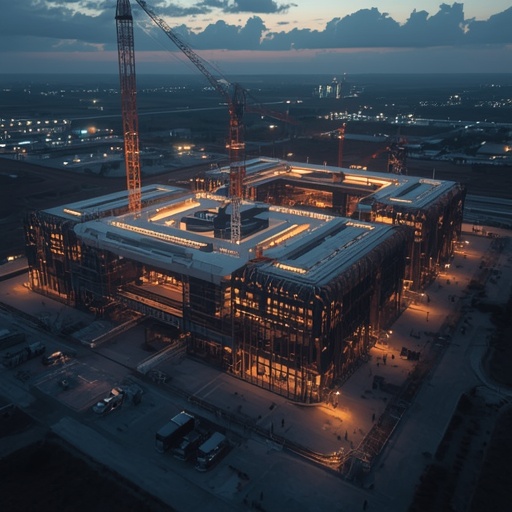
SpaceX’s ambitious new Terafab chip factory in Texas represents one of the most audacious industrial undertakings in modern American technological history. Reports suggest that its projected construction expenditures could soar to an unprecedented $119 billion—a figure that not only surpasses initial analyst forecasts but also dwarfs most historical comparisons within the semiconductor industry. This staggering cost projection illustrates both the immense technological complexity of the project and the scale of SpaceX’s commitment to redefining what domestic chip manufacturing can achieve.
The Terafab facility is designed to become a central pillar in the next wave of advanced manufacturing, focusing on the production of high-performance semiconductors that will power everything from aerospace systems to artificial intelligence infrastructure. By situating this vast enterprise in Texas, SpaceX continues to reinforce the state’s growing reputation as a critical hub for technological innovation and industrial expansion. Texas offers both the physical space and logistical connectivity necessary for an undertaking of this magnitude, granting the company access to skilled labor, abundant energy resources, and a supportive regulatory environment.
Beyond its monumental budget, the factory signals something even more transformative: the reassertion of U.S. manufacturing ambition on a global scale. In an era of fierce international competition for microchip supremacy, the Terafab initiative embodies a decisive strategic move to strengthen domestic production capacity and reduce dependence on overseas supply chains. The facility’s advanced technological ecosystem—likely to include cutting-edge automation, precision robotics, and environmentally optimized design—will not only contribute to SpaceX’s own industrial goals but could also set a new benchmark for sustainability and efficiency across the sector.
Moreover, the projected $119 billion cost underscores how the future of technological infrastructure increasingly depends on bold, high-capital ventures. While critics may question the enormity of the investment, proponents argue that such scale is a prerequisite for remaining competitive in the global semiconductor arms race. The factory’s impact will extend beyond simple output: it has the potential to generate thousands of specialized jobs, stimulate local economies, and catalyze an entire ecosystem of suppliers, researchers, and subsidiary technology firms.
Ultimately, SpaceX’s Terafab chip factory is far more than an industrial complex—it is a statement of vision. It demonstrates how determination, innovation, and resource commitment converge to build the frameworks upon which the future of computing and automation will rest. As construction progresses, the project is poised to transform not only Texas’s industrial landscape but the broader narrative of American technological self-sufficiency and global influence. 🚀
Sourse: https://www.businessinsider.com/spacex-terafab-project-cost-texas-elon-musk-2026-5


