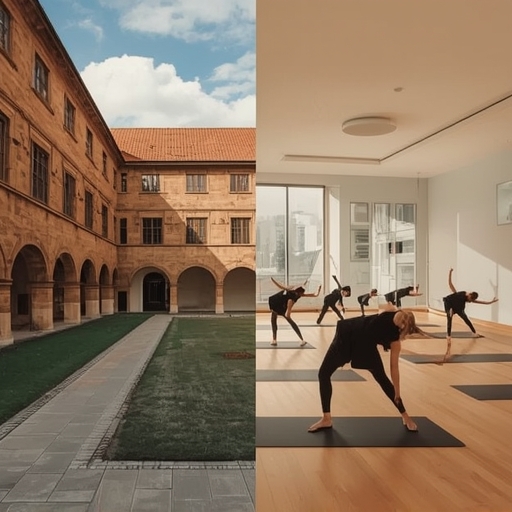
In the year 1914, amid the unprecedented turbulence of the First World War, a man named Joseph Pilates sat confined within the walls of an internment camp. Around him, the stark environment and human despondency painted a portrait of physical and emotional deterioration among his fellow inmates. Many of these men, once vigorous and full of life, were visibly wasting away, deprived of movement, purpose, and hope. Yet, as Pilates observed the meager courtyard where they were allowed to gather, one curious detail captured his imagination and quietly changed the course of history: the camp’s cats. Despite enduring the same scarcity of food and harsh conditions, these sinewy creatures remained agile and resilient. They stretched, twisted, and lengthened their bodies daily, maintaining a kind of primal vitality amid their hunger and captivity. The sight prompted a revolutionary question in Pilates’ mind — could his fellow internees, too, preserve their strength and flexibility through deliberate, disciplined movement, even within the confines of imprisonment?
Out of that inspired moment emerged what would later be formalized as his enduring legacy: the Pilates method. What began as a simple attempt to safeguard the body from decay transformed into an intricately structured regimen of conscious, repetitive exercises emphasizing control, precision, and balance. Using minimal equipment — often improvised from items available in the camp — Pilates taught men to engage their muscles through mindful breath, resistance, and flow. In essence, it was movement born from necessity, from the will to reclaim health within restriction, a practice that would, decades later, evolve into a multimillion-dollar industry. Ironically, what began in a cage became synonymous with freedom of movement. Before it adorned luxury studios and streaming workout channels, Pilates was an act of survival, a blueprint for resilience carved out by confinement.
Since those humble origins, the Pilates practice has undergone a remarkable transformation. In the last few years, it has surged from a niche form of rehabilitative exercise into a cultural phenomenon. According to recent industry analysis, Pilates has become the fastest-growing exercise modality in the world, its popularity amplified by the subscription economy of fitness platforms such as ClassPass, which crowned it the most attended class type of 2024. As the practice proliferated, its meaning expanded — no longer just a method for personal balance and strength, it evolved into a social marker of taste, affluence, and aspiration. Much like yoga’s drift from its spiritual roots into the wellness mainstream of the 2010s, Pilates has acquired a layered reputation: to some, a symbol of mindful embodiment; to others, a showcase of conspicuous leisure.
Nowhere is this duality more visible than on social media platforms such as TikTok, which have transformed Pilates into a performative lifestyle. Videos under the #pilates tag follow a nearly formulaic aesthetic. Influencers, often clad in immaculate monochromatic activewear, film themselves in mirrored studios filled with minimalist décor, their sessions underscored by algorithmically curated pop soundtracks. These carefully edited vignettes depict slim bodies glistening with effort, conveying both discipline and desirability. Thus, Pilates today simultaneously represents movement and a kind of cultural choreography — a visual shorthand for the “ideal” life marked by serenity, self-care, and abundance. Within this digital narrative, matcha lattes, designer yoga mats, and the gleam of AirPods Max have become props in a wider tableau of aspirational wellness.
Such is the curious trajectory of a practice that originated from deprivation and discipline but has found new life amid the glamour and commerce of contemporary culture. What began as a personal experiment in human endurance now inhabits glossy feeds and influencer campaigns, its simplicity folded into a marketplace of luxury and lifestyle. Yet beneath the aesthetic sheen lies the same core impulse that guided its creator over a century ago — the human instinct to move, to adapt, and to resist decay, whether behind barbed wire or before a studio mirror. Pilates, born literally in a cage, continues to remind us that even in the most confined spaces, the body seeks freedom, and that disciplined motion can be both survival and art.
Sourse: https://www.theverge.com/cs/features/836456/influencers-tiktok-debt-shopaganda