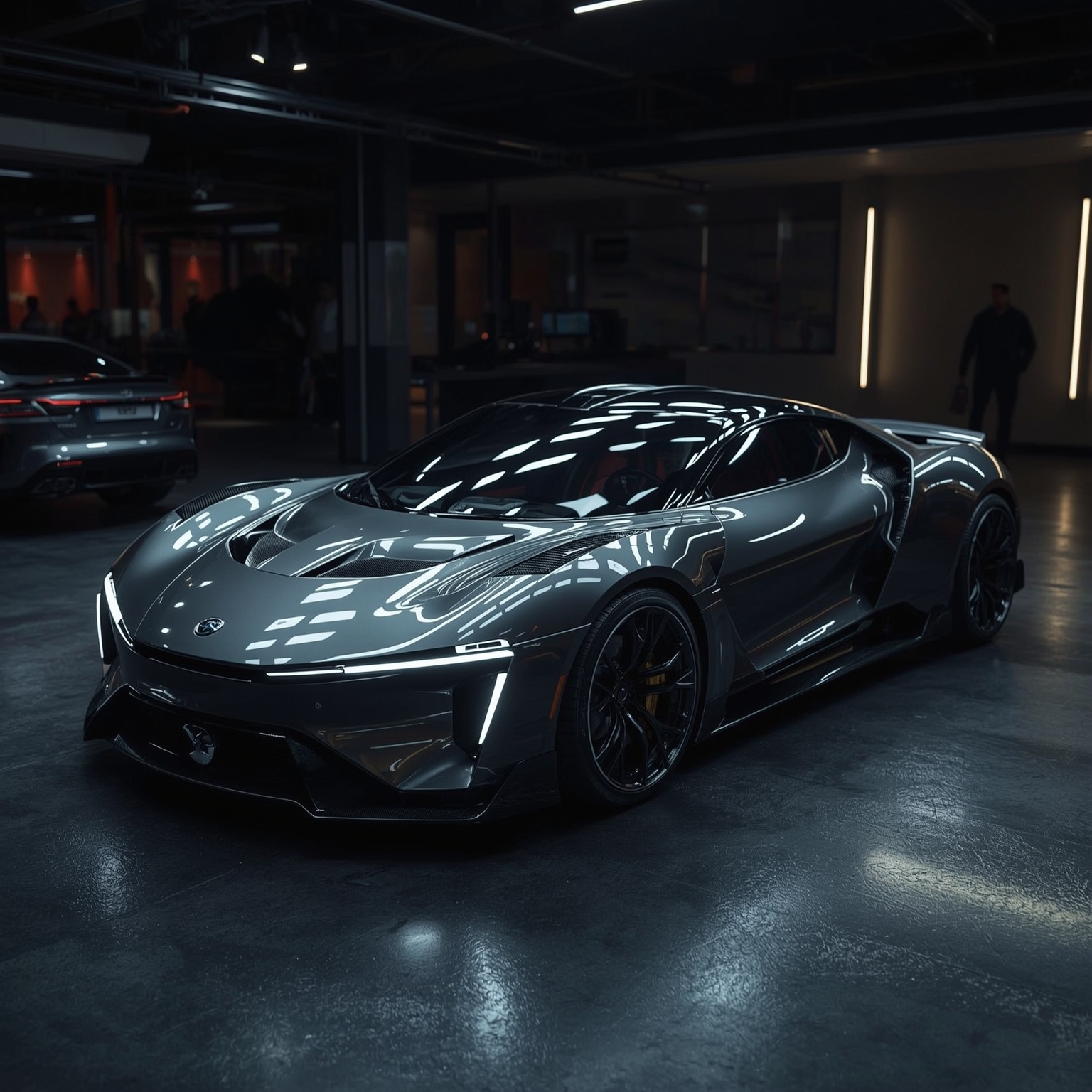
Elon Musk has recently been signaling that Tesla is preparing to reveal a significant and long-anticipated advancement in the development of its next-generation Roadster. According to information obtained by Business Insider, these hints are not mere speculation: behind the scenes, Tesla has substantially intensified its engineering and design work on the electric sports car in recent months, particularly over the summer season. This renewed activity represents the first meaningful progress on the program in more than a year, according to several individuals familiar with Tesla’s internal operations.
Contemporary design iterations reviewed by insiders earlier this year depict the sleek vehicle as a refined two-seater equipped with dramatic butterfly doors—a notable stylistic departure from the four-seat prototype that Musk famously introduced to the public in 2017. That earlier concept, by contrast, featured a more conventional sports car silhouette and standard doors, reflecting Tesla’s design language at the time. The updated configuration suggests a bolder, more performance-oriented vision that blends elegance with futurism. Despite this progress, one insider emphasized that the company remains at least two to three years away from achieving full-scale production. The creation of a new vehicle design at Tesla, they explained, is inherently dynamic and iterative, often shifting in response to technological opportunities, testing outcomes, and design refinement cycles. It remains unclear, therefore, how faithfully current design drafts will reflect the final production model.
Tesla’s design department, long known for its experimental approach, reportedly continues to explore a diverse range of structural and aerodynamic possibilities for the Roadster. Evidence of intensified work also comes from LinkedIn data reviewed by Business Insider, which shows that between June and August, Tesla hired no fewer than five engineers in California specifically tasked with developing and evaluating “aerodynamic prototypes.” The company’s representative, however, declined to provide public comments regarding these developments, maintaining Tesla’s typical discretion about projects still in progress.
Insiders further revealed that Tesla had largely paused most Roadster-related work following the company’s layoffs in April 2024. In July of that same year, David Zhang—then the program’s manager—departed Tesla, as confirmed by his LinkedIn profile. Months later, during an October 2024 earnings call, Musk reignited optimism, noting, “We’d all love to work on the Tesla Roadster soon. We are working on it, but it has to come behind the things that have a more serious impact on the good of the world.” His remark underlined Tesla’s prioritization of its mass-market electric vehicles and sustainable energy initiatives over niche performance models, even while reassuring enthusiasts that the Roadster remains an active project. Musk also expressed gratitude toward Tesla’s “long-suffering deposit-holders,” many of whom have been waiting years for updates. Notably, prominent figures such as Sam Altman, CEO of OpenAI, and technology influencer Marques Brownlee have recently disclosed that they canceled their reservations and requested refunds for their $50,000 deposits. According to Musk, Altman’s deposit was returned within twenty-four hours.
The Roadster holds an iconic place in Tesla’s history. The original model—built atop the lightweight chassis of a Lotus Elise—was introduced in 2008 as Tesla’s first-ever production vehicle, marking the company’s dramatic entrance into the automotive industry. A decade later, in 2017, Musk announced the ambitious second-generation Roadster, initially committing to a 2020 release date. Yet that timeline has repeatedly slipped, as Tesla’s priorities and resources have been realigned toward other high-impact projects such as the Model Y, Cybertruck, and advancements in autonomous driving.
More recently, Tesla and Musk have been strategically cultivating anticipation for the vehicle’s ultimate comeback. Over the past several months, subtle public remarks and scattered technical updates have kept interest alive. During a high-profile conversation on Joe Rogan’s podcast, Musk described the forthcoming Roadster as a product unveiling that “has a shot at being the most memorable ever.” He added that Tesla hopes to publicly demonstrate the new model before the end of the year, setting the stage for one of the most eagerly awaited reveals in the company’s history. Musk has previously teased bold technical capabilities for the sports car, claiming it would emerge from a collaboration with SpaceX and suggesting that the car might accelerate from zero to sixty miles per hour in under one second—an extraordinary goal that borders on aerospace-level engineering. He has even hinted, half-jokingly yet dreamily, at the prospect of a “flying car.” During his recent conversation with Rogan, Musk revisited that concept, playfully remarking that his friend Peter Thiel once observed that the future was supposed to have flying cars, and if Thiel still desired one, he should indeed have the option to purchase it.
In alignment with these remarks, Tesla’s chief designer Franz von Holzhausen confirmed last month that preparations for a Roadster demonstration remain on schedule for later in 2025. Reinforcing that timeline, Tesla also posted a job listing for a specialized position based in California focused on advanced manufacturing processes tied to the vehicle’s production. Further supporting the program’s momentum, records indicate that in August, Tesla secured a patent for an aerodynamic control system intended to improve vehicular stability at high speeds by enhancing road adhesion through sophisticated airflow manipulation. While the technology could theoretically be implemented across multiple Tesla models, Professor Jae Wook Kim—an expert in aerodynamics and aeroacoustics at the University of Southampton—remarked that the relatively high cost associated with such a mechanism makes it far more suitable for premium, high-performance vehicles like the Roadster rather than for Tesla’s mainstream lineup.
Corporate earnings presentations dating back to January 2020 have continuously listed the Roadster as being in the “design development” stage, a phrase that reflects Tesla’s methodical approach and ongoing refinements rather than stagnation. Despite the extended timeline, the evolving Roadster project continues to capture the imagination of electric vehicle enthusiasts and industry analysts alike, representing not merely a next-generation sports car but a statement of Tesla’s aspiration to redefine the limits of electric performance, technological integration, and visionary design.
For individuals with inside knowledge or firsthand experience of Tesla’s current Roadster initiatives, the Business Insider report invites contact via email at gkay@businessinsider.com or through Signal at 248-894-6012. Prospective sources are encouraged to use personal email addresses, personal devices, and nonwork Wi-Fi connections, following the publication’s official guidelines for secure information sharing.
Sourse: https://www.businessinsider.com/tesla-roadster-elon-musk-development-updates-2025-11


