Tesla is committing wholeheartedly to the development and deployment of its groundbreaking ‘Robotaxi’ program, signaling a decisive move toward the widespread commercialization of autonomous ride-hailing. To bring this ambitious vision to life, the electric vehicle manufacturer is mobilizing its internal human capital — notably factory employees and retail sales representatives — by inviting them to step directly into the drivers’ seats of its pilot fleet. This strategic pivot reflects not only a bold investment in innovation but also a creative integration of its existing workforce into the company’s rapidly evolving business model.
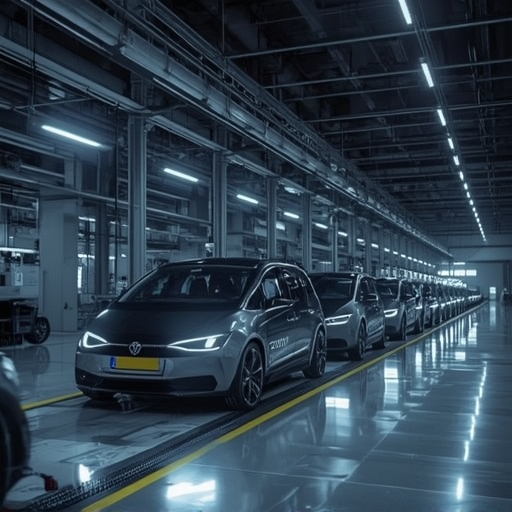
In a series of recruiting campaigns launched across its California manufacturing plants earlier this month, Tesla began encouraging production associates, line workers, and material handlers to transition temporarily from their typical assembly-line roles to positions now being referred to as ‘AI operators.’ According to internal posters distributed at multiple sites, the company is offering these workers additional compensation and overtime pay to assume these responsibilities. The newly created AI operator role sits at the intersection of human oversight and machine intelligence: workers occupy the driver’s seat, closely observing the car’s behavior while Tesla’s Full Self-Driving (FSD) software governs navigation. These operators are responsible for intervening whenever autonomous functions require human correction, ensuring the continued safety and stability of testing operations. Tesla’s long-term objective, however, extends beyond this intermediate hybrid phase — the company ultimately intends to transform the system into a fully autonomous, driverless service once its algorithms have undergone sufficient validation.
The immediate reason for expanding the number of AI operators, according to the internal materials, is to broaden availability of Tesla’s ride-hailing network throughout the San Francisco Bay Area. Posters also revealed an incentive component designed to accelerate staffing: employees are eligible to receive a $500 referral bonus for recommending friends or acquaintances who successfully join the initiative. Notably, similar recruitment efforts are under way at several engineering centers, indicating a company-wide mobilization. In parallel, several Tesla sales and service employees from Nevada and Arizona have reportedly transferred into comparable operator positions in cities such as Las Vegas and Phoenix, as confirmed through an analysis of public LinkedIn data last month.
This strategic increase in personnel could play a central role in reducing passenger wait times and streamlining operations. When Tesla first released its Robotaxi app to the public in September, demand for rides exceeded capacity almost immediately. Users took to social media to report prolonged delays — in some cases up to forty minutes — and a shortage of available vehicles. Recent accounts from Business Insider journalist Alistair Barr indicate that current wait times in the Bay Area have moderated to approximately ten minutes on average, although at peak commuting periods the app occasionally communicates an inability to fulfill requests, citing high service demand. Tesla did not respond to inquiries for official comment on these service patterns, maintaining its characteristic silence on early operational metrics.
In regulatory terms, Tesla has taken important procedural steps toward legal operation in multiple regions but has yet to achieve full commercial authorization everywhere. The company recently completed a self-certification process for both Nevada and Arizona, which represents a preliminary compliance requirement. According to spokespeople from both states’ transportation authorities, Tesla has obtained commercial operation permits from Arizona’s Department of Transportation but has not yet filed the requisite licensing application with the Nevada Transportation Authority. Consequently, although Tesla’s presence has been legally recognized in these jurisdictions, it has not commenced offering paid Robotaxi rides in either state.
By contrast, Tesla formally introduced its Bay Area ride-hailing service in August. However, due to California’s particularly stringent regulations concerning autonomous vehicles, Tesla operates in this market with a human operator behind the wheel. While many U.S. states employ self-policing mechanisms that allow companies to certify their own vehicles, California maintains a more robust oversight structure. Tesla’s service thus functions as a standard, human-supervised transportation model rather than a purely autonomous operation. The California Public Utilities Commission (CPUC) has granted Tesla a permit enabling the company to provide rides to employees and select members of the public, but the regulator explicitly prohibits the use of fully driverless vehicles for public transport under this authorization.
According to a CPUC spokesperson, Tesla currently has 1,655 vehicles and 798 registered drivers participating in its ride-hailing program within California. The company must periodically update the agency when new vehicles join the authorized fleet, though it is not required to immediately report adjustments in driver numbers. This figure reflects the upper limit of vehicles authorized for service rather than the actual number in daily circulation. Additional documentation reveals that last December Tesla also registered more than 220 test drivers and approximately 100 vehicles with the California Department of Motor Vehicles (DMV) under a permit permitting autonomous software testing with human supervision. However, the DMV clarified that Tesla has yet to apply for a driverless testing permit, which would be essential before it could lawfully offer rides in fully autonomous mode to the public.
Tesla’s operational ambitions extend beyond California and the Southwest. The company is also running a ride-hailing service in Austin, Texas, where vehicles currently operate with safety observers positioned in the passenger seat. During a recent xAI event, Elon Musk asserted that the Austin service would transition to fully driverless mode by year’s end, emphasizing that technical barriers have been largely overcome and that the company is now focused primarily on final validation and safety assurance. Nevertheless, a spokesperson from the Austin Transportation Department confirmed that Tesla has not yet provided the city with an official timeline for this transition, although the company has historically communicated forthcoming changes in advance as a matter of professional courtesy rather than legal obligation.
Job listings on Tesla’s official careers website reveal that the company is recruiting AI operators on a nationwide scale, with openings across states including Illinois, Massachusetts, Colorado, and Texas. The positions require employees to work rotating shifts throughout the day and night, operate vehicles equipped with FSD software, engage courteously with passengers, and compile comprehensive data logs on system performance and driving behavior. Some assignments may involve travel between different testing locations across the country. Compensation typically ranges between twenty-five and thirty dollars per hour. Applicants must complete a supervised FSD evaluation drive, hold a valid driver’s license, and pass both background and drug screening assessments before being hired.
Looking ahead, Musk stated in October that Tesla plans to extend its Robotaxi operations into eight to ten metropolitan markets by the close of the year, reflecting an aggressive geographic expansion strategy. The company is already conducting exploratory tests in various American cities to refine system performance and establish the infrastructure necessary for broader deployment. Those with firsthand insights or insider information about Tesla’s internal initiatives are encouraged to reach out confidentially to the investigating reporter via email or secure communication channels.
In summary, Tesla’s intensified focus on its Robotaxi initiative represents a pivotal moment in the company’s evolutionary trajectory. By merging human oversight with advanced automation, it is simultaneously addressing immediate logistical challenges and paving the way for a future in which autonomous mobility could become as routine as today’s carpool or ride-share — an audacious yet characteristically Tesla move that exemplifies its enduring ambition to redefine the boundaries of modern transportation.
Sourse: https://www.businessinsider.com/tesla-robotaxi-recruiting-factory-workers-sales-staffers-2025-12