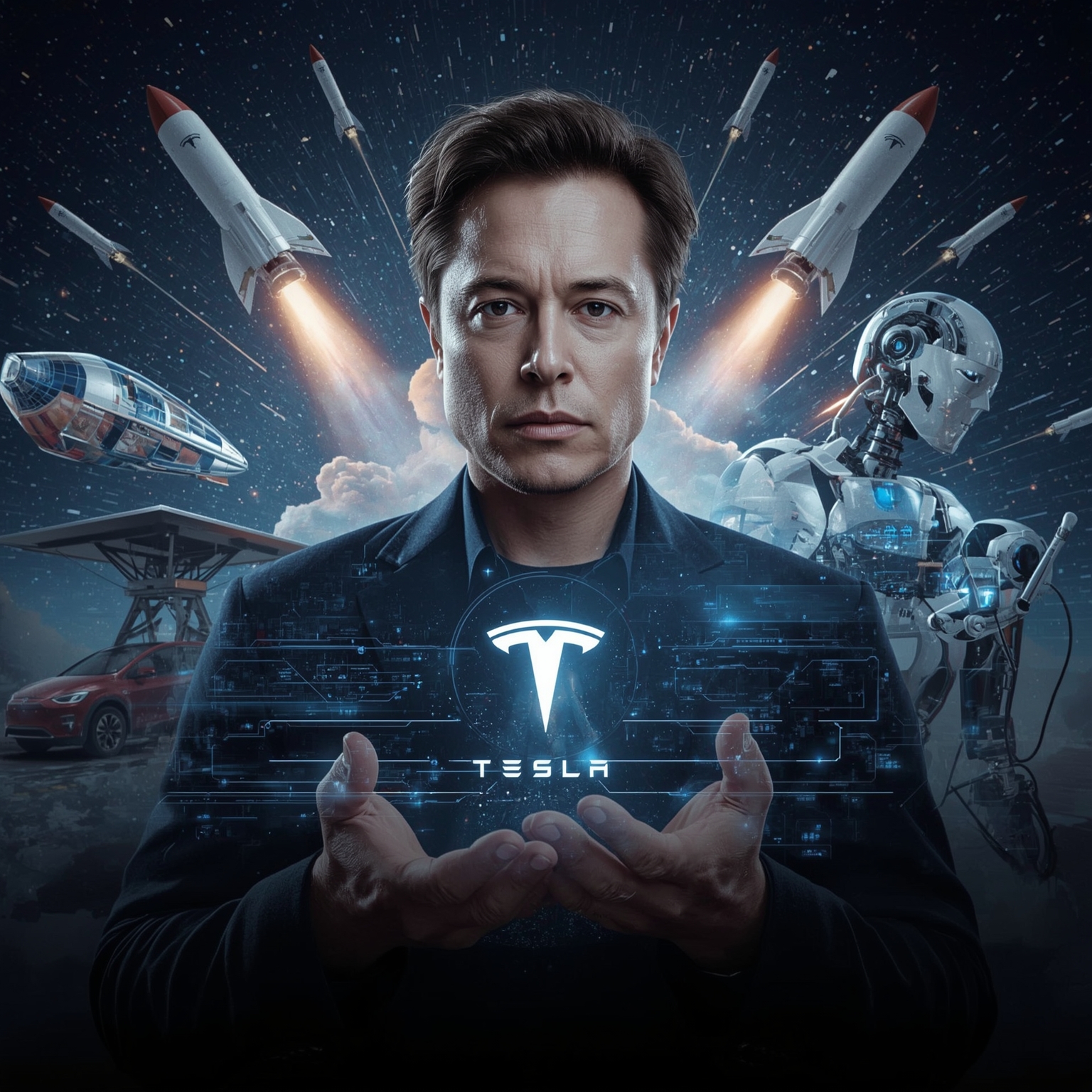
At Tesla, it appears that cultivating a broad spectrum of extracurricular ventures can yield substantial rewards. During an interview on the program *Bloomberg Talks* on Friday, Robyn Denholm, who serves as the chair of Tesla’s board, elaborated on the reasoning behind the company’s recently proposed $1 trillion compensation package for CEO Elon Musk. According to Denholm, this ambitious package is strategically crafted not merely as a financial reward but as a strong motivational framework. It aims to encourage Musk to achieve twelve highly challenging operational milestones, each designed to substantially transform Tesla’s scale and trajectory. These objectives include propelling Tesla’s valuation to an extraordinary $8.5 trillion, delivering approximately twelve million vehicles across the globe within the coming decade, and deploying one million autonomous robotaxis for commercial use on public roads.
While the eye-popping financial incentives form the centerpiece of this plan, Denholm offered a perspective that extended beyond mere monetary considerations. She emphasized that Musk’s involvement in a wide array of ventures outside Tesla does not fragment his attention in a detrimental way; rather, it stimulates his creative drive and sustains his capacity to innovate on behalf of Tesla. As she explained, some observers may find this counterintuitive, even paradoxical. However, through her more than eleven years of direct collaboration with Musk, she has become convinced that his external projects, whether aligned with Tesla’s mission statement or not, ultimately generate tangible benefits for the company. These gains manifest both in intangible aspects such as motivation and vision, as well as in tangible resources, insights, and technological spillovers derived from his broader pursuits.
Musk’s external commitments are extensive and profoundly influential across industries. Beyond his responsibilities at Tesla, he leads SpaceX, the private aerospace firm redefining access to space; directs Neuralink, an enterprise pioneering brain–computer interface technology; oversees xAI, the company behind Grok, which focuses on advancing artificial intelligence; plays a central role in the management of the social media platform X (formerly known as Twitter); and sustains his philanthropic activities through the Musk Foundation, which is committed to supporting sustainability and renewable energy initiatives. Rather than depleting his focus, Denholm argued, these pursuits operate as creative outlets that indirectly enrich Tesla’s innovation culture.
There is, however, one area of Musk’s external engagements where Tesla’s board has expressed measured unease: politics. In a recent proxy filing submitted to the U.S. Securities and Exchange Commission, Tesla’s board members made clear that while they value Musk’s entrepreneurial range, they have sought explicit commitments that his active involvement in the political sphere would gradually diminish. They emphasized the importance of ensuring that such engagements do not overshadow his obligations to Tesla or create potential distractions from the company’s growth trajectory.
Denholm clarified her position by acknowledging that Musk, like any private citizen, is fully entitled to political expression within a democratic system. She noted that he has in fact already completed a period of formal association with the government, having served as a special government employee in the past. That chapter, she stressed, is now behind him. At present, Musk’s central responsibility—and the locus of his daily attention—is firmly back within Tesla’s leadership. What he chooses to pursue at a personal level, especially concerning political affiliations or commentary, remains his prerogative and does not alter his corporate role.
Her measured comments stand in contrast to the sentiments of several vocal investors and observers, many of whom argue that Musk’s far-reaching focus is not always in Tesla’s best interests. Certain critics have gone so far as to contend that if Musk cannot narrow his focus more exclusively to Tesla, then the company would be better served under a different chief executive. For instance, Dan Ives, a prominent Wall Street analyst at Wedbush Securities well known for his generally optimistic stance on Tesla, remarked publicly in July via X that the company’s board must establish clear “ground rules” for Musk, particularly after his announcement of intentions to form a new political entity called the America Party.
Similarly, Ross Gerber, one of Tesla’s early supporters, voiced his displeasure in April by asserting that Musk’s political activities and broader distractions have crossed a line. In Gerber’s view, Tesla requires a leader—possibly any experienced CEO—who can serve as a steady and effective communicator. He argued that such a figure could redirect market and public attention back to Tesla’s fundamental identity: developing groundbreaking electric vehicles and advancing sustainable energy solutions. Gerber underscored his view by noting that he has consistently maintained for several years that Tesla should aspire to stand on its own merit as an organization, distinct from its charismatic and often controversial leader.
When asked for further elaboration on these matters, Tesla did not immediately issue a response to *Business Insider*. As the debate continues between those who see Musk’s extracurricular pursuits as an asset and those who consider them a liability, one thing is clear: his unorthodox leadership style continues to spark both admiration and skepticism, leaving investors, employees, and observers to grapple with the implications of having such a multifaceted figure at the helm of one of the most innovative companies of the twenty-first century.
Sourse: https://www.businessinsider.com/tesla-chair-musks-outside-work-actually-helps-tesla-2025-9