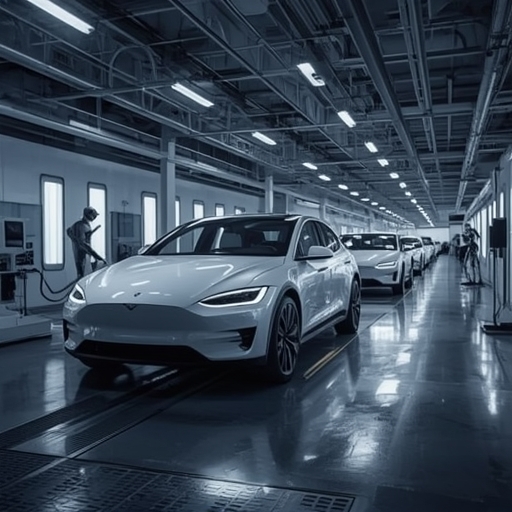
Tesla is preparing for one of the most transformative chapters in its history. The company has officially announced that production of its premium electric vehicles — the Model S and Model X — will come to an end in 2026. This decision, though bold and somewhat symbolic, is part of a larger strategic realignment that reflects Tesla’s rapidly evolving vision for the future of technology, automation, and artificial intelligence.
Elon Musk revealed that retiring these long-standing flagship models will open up precious space within Tesla’s manufacturing ecosystem for the next monumental project — the Optimus humanoid robot. By reallocating resources and factory capacity away from vehicle production toward robotics, Tesla is signaling a decisive intention to extend its influence far beyond the automotive sector. In essence, this move illustrates the company’s transition from being primarily an electric vehicle manufacturer to becoming a pioneering force in advanced robotics and AI-driven automation.
The implications of this shift are vast. The Optimus project, first unveiled as a conceptual leap in artificial intelligence and mechanical sophistication, now stands as a tangible representation of Tesla’s future ambitions. Instead of merely reinventing transportation, Tesla appears poised to redefine labor and industrial productivity entirely. One could imagine Tesla’s next-generation factories not only assembling vehicles for human drivers but also manufacturing humanoid robots capable of working alongside or even replacing human labor in repetitive or hazardous tasks.
This change also represents a broader narrative about technological evolution. The Model S and Model X were revolutionary when they debuted — symbols of electric luxury, speed, and innovation that reshaped the global perception of EVs. Yet, technology never stands still. What once was the pinnacle of progress now makes way for construction of something potentially even more world-changing. By making this adjustment, Tesla reinforces its identity as a disruptor that refuses to stagnate, always pushing the limits of what machines can achieve in service of human progress.
From a practical perspective, this strategic reallocation of focus could also lead to deeper integration of AI systems across Tesla’s entire product lineup. The same intelligence and hardware advancements that give rise to the Optimus robot may, in turn, enhance Tesla’s vehicles, energy systems, and software infrastructure. In other words, this is not an abandonment of automotive innovation but an expansion of it — an evolution from the world of mobility into the broader domain of intelligent autonomy.
As we approach 2026, Tesla’s forthcoming transition will likely stand as a turning point, not just for the company but for the manufacturing world at large. The notion of a “future factory” may soon transcend traditional assembly lines, becoming an ecosystem where machines build the machines that power civilization. For Tesla, this marks the beginning of a new technological era — one in which robots may no longer just assist production but could become a central product themselves, embodying the very innovation that the brand has long symbolized.
In essence, Tesla’s decision to retire the Model S and Model X is not the end of an era but the dawn of a more ambitious vision — a future where intelligent machines, designed and built by other intelligent machines, redefine both the concept of work and the reach of human ingenuity.
Sourse: https://www.theverge.com/transportation/869872/tesla-model-s-model-x-discontinue-optimus-robot-factory