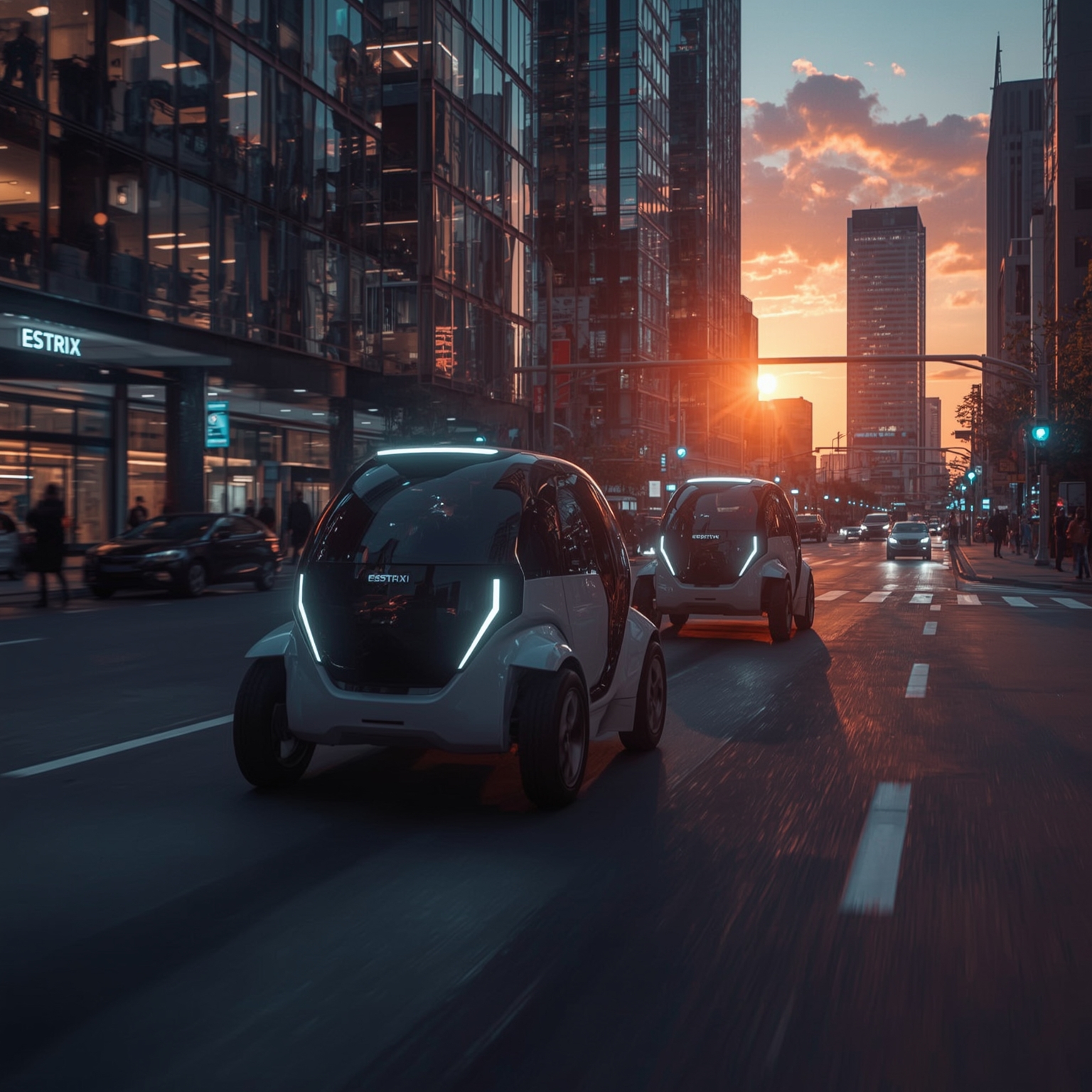
Elon Musk has consistently emphasized that Tesla’s market valuation and long-term growth are fundamentally dependent on achieving large-scale, fully autonomous driving capabilities. This ambitious objective, according to Musk, represents not merely an enhancement of Tesla’s existing technology but the cornerstone of the company’s future identity as a global leader in automated mobility. With a self-imposed and highly publicized goal to launch operational Robotaxi services across as many as ten major urban areas by the year’s end, Tesla has begun an intensive national hiring campaign — one designed to expand the technical and logistical infrastructure required to make Musk’s vision a practical reality.
In an October announcement, Musk detailed Tesla’s intention to introduce the Robotaxi program in eight to ten metropolitan locations by the close of 2025, ultimately deploying a fleet exceeding one thousand vehicles. At present, Tesla’s pilot Robotaxi operations have already commenced in San Francisco and Austin, two of the most technology-forward cities in the United States. During its annual shareholder meeting on November 6, company executives revealed a second wave of target markets including Las Vegas, Phoenix, Dallas, Houston, and Miami. Each of these cities presents different demographic and regulatory landscapes, illustrating the company’s confidence in tailoring its approach to a wide variety of conditions and jurisdictions.
However, Tesla’s internal job postings indicate that the company’s ambitions extend beyond these initial locations. By early November, over forty Robotaxi-related positions were open across cities such as Orlando, Tampa, and Las Vegas. The available roles span an extensive range of responsibilities — from on-site logistics support and vehicle cleaning to managerial oversight — all of which point toward the company’s methodical preparation for scaled, driverless fleet operations. In Austin, Tesla seeks vehicle operators and field specialists who can swiftly respond to on-road incidents or technical interruptions, ensuring continuous service reliability. Public professional profiles reflect that the company already employs several fleet support specialists in Austin, while in San Francisco, Tesla continues to recruit engineers focused on refining its Autopilot and Full Self-Driving (FSD) technologies — two core pillars of the company’s automation strategy.
Simultaneously, Tesla maintains a network of human test drivers across multiple U.S. cities. These employees play a crucial part in data collection and refinement by helping the autonomous software learn to interpret complex real-world scenarios, thereby training the system to anticipate and navigate a vast array of traffic environments. The firm is also seeking a specialized team member to handle Robotaxi insurance claims — a position central to managing incident reports and ensuring legal compliance for the forthcoming ride-hailing platform.
The extensive geographical range of Tesla’s current hiring — more than a dozen urban centers spread across ten U.S. states — underscores the company’s determination to expand its Robotaxi initiative rapidly. Musk has repeatedly articulated confidence that this rollout will grow at what he describes as a “hyper-exponential rate,” estimating that by year’s end, roughly half of the U.S. population might have access to Tesla’s autonomous ride-hailing network. Such statements reflect both his characteristic optimism and his conviction that self-driving technology will fundamentally reshape personal transportation economics.
Despite Tesla’s progress, the automaker continues to trail established competitors such as Waymo and Zoox, whose self-driving systems have already been deployed in several American cities and accumulated years of operational experience. Yet Musk maintains that Tesla possesses a key competitive advantage: its camera-based, vision-only approach, trained using billions of real-world miles driven by Tesla owners. In contrast to other developers relying on expensive LiDAR or radar sensors, Tesla’s system operates at a fraction of the cost, enabling a potentially faster and more scalable expansion model. Initially, the company intends to deploy in markets where competitors like Waymo already operate, leveraging familiar testing conditions to accelerate certification and reliability benchmarks.
In California, Tesla reports having completed more than 40,000 autonomous rides since July, a notable milestone though one that still pales in comparison to Waymo’s roughly 700,000 rides recorded in a single month. Nonetheless, Musk insists that Tesla’s streamlined software architecture and unified vehicle ecosystem will ultimately allow much faster growth once regulatory approval thresholds are cleared.
That regulatory environment, however, remains Tesla’s most persistent obstacle. The absence of comprehensive federal legislation has left oversight of autonomous vehicles primarily in the hands of individual states, each crafting its own rules concerning testing and commercial operations. California, for instance, enforces some of the nation’s most stringent requirements: companies must secure multiple permits, meet defined safety milestones, and undergo continuous evaluation before being allowed to carry paying passengers. Waymo and other pioneers spent years in controlled testing before advancing to full deployment. Tesla, according to the California DMV, presently holds authorization to test with a safety driver onboard but has not yet applied for a commercial operation permit. Its current ride-hailing service in the state functions under a separate license, allowing Tesla vehicles equipped with FSD software to transport riders with a human operator actively supervising.
Other states, namely Texas, Nevada, Arizona, and Florida, present less restrictive regulatory frameworks, though they still mandate proof of insurance and localized authorization. Texas recently announced incoming rules that will formalize commercial AV authorization procedures beginning May 28, 2026. By that time, Tesla and similar companies will be required to obtain official approval for paid operations. According to state representatives, this timeline is designed to give firms already testing in Texas — such as Tesla — a sufficient window to comply before enforcement begins. In the meantime, Tesla’s Austin-based Robotaxi service continues to include a safety operator seated in the passenger position, symbolizing a transitional phase between advanced testing and true autonomy.
Tesla’s efforts to develop localized datasets extend back several years under an internal initiative dubbed “Project Rodeo.” Beginning in 2021, the company dispatched test drivers to urban centers including New York City, Boston, Chicago, and Detroit. Their mission has been to challenge the FSD software in dense traffic and unpredictable settings, ultimately teaching the algorithms to handle a full spectrum of conditions encountered by everyday commuters. Before the official Robotaxi pilot launch in Austin during June, Tesla reportedly maintained a pool of about three hundred test drivers in the city alone — a striking indication of the scale of its preparatory efforts.
Despite facing a complex and often inconsistent web of regulations, Musk’s optimism remains undiminished. During the company’s third-quarter earnings call, he reiterated his belief that Tesla’s Robotaxi expansion would not progress gradually, but erupt into widespread availability with astonishing speed. He likened the eventual rollout to a “shock wave,” suggesting that the transformative nature of mass autonomous mobility will catch even seasoned analysts by surprise. This unwavering confidence, grounded in Tesla’s history of technological disruption, continues to drive the company’s relentless pursuit of a driverless future that Musk believes could redefine the automotive industry itself.
Sourse: https://www.businessinsider.com/elon-musk-tesla-robotaxi-deadline-hiring-testing-cities-2025-11


