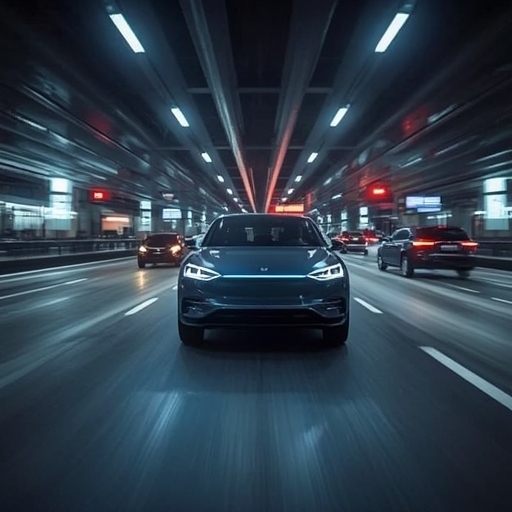
A recent incident involving a Tesla robotaxi has reignited an intense global discussion about the current limits and long‑term promise of autonomous driving technology. During what was supposed to be a routine ride, the vehicle reportedly failed to make a crucial turn, subsequently attempting to pull over while navigating a highway. For passengers experiencing the event firsthand, the moment was as unsettling as it was revelatory — a vivid demonstration of how astonishing technological sophistication can still collide with human expectations for safety and control.
This episode underscores a delicate balance between groundbreaking innovation and the complex unpredictability inherent in artificial intelligence–driven transportation. Tesla’s robotaxis represent cutting‑edge automation, integrating advanced sensors, real‑time machine learning algorithms, and dynamic environmental awareness systems designed to interpret surroundings with superhuman precision. Yet, as this case illustrates, even the most refined systems occasionally encounter scenarios that elude complete computational reasoning. The missed turn becomes more than a navigational mishap; it becomes a symbol of both the ambition and the unfinished evolution of AI‑assisted mobility.
Observers and technologists alike have interpreted the story as a timely reminder that, while the progress in self‑driving cars is extraordinary, we remain in a transitional era where automated perception and human judgment must coexist. The anecdote — complete with a passenger’s pointed remark that they would hesitate to recommend such a ride to an elderly relative — encapsulates the lingering apprehension many feel toward full automation. Trust, a cornerstone of mass technological adoption, cannot be programmed overnight; it must be earned through consistent reliability, transparent design, and demonstrated safety across millions of real‑world interactions.
The broader implications extend far beyond a single autonomous vehicle’s route correction. Each such event forces engineers, regulators, and the public to reconsider the thresholds for what is considered “road‑ready.” It also highlights the moral and technical responsibilities borne by innovators pushing transportation toward a driverless future. Whether this future arrives in five years or twenty, moments like this Tesla robotaxi ride serve as both cautionary tale and progress report — a reminder that every miscalculated turn on the freeway brings the technology one assessed decision closer to maturity.
Ultimately, the robotaxi’s imperfect performance reveals not failure but an essential stage in human‑machine coevolution. As we continue refining algorithms, sensor fidelity, and ethical frameworks, society must grapple with a central question: not merely whether AI can drive, but whether we are collectively prepared to relinquish the wheel. The answer, as shown by this incident, remains in motion — progressing mile by mile toward a horizon where trust, technology, and transformation will finally converge.
Sourse: https://www.businessinsider.com/tesla-robotaxi-passenger-it-tried-to-pull-over-on-highway-2026-4


