After enduring years marked by ambitious claims, postponed deadlines, and public skepticism, Tesla appears to be crossing an important threshold in its pursuit of fully autonomous driving. Over the past weekend, several of the company’s vehicles were observed navigating public streets in Austin, Texas, entirely under their own control—operating without any human safety monitors present inside. This development, which represents a tangible move toward the company’s long-stated vision of driverless transportation, suggests that Tesla may finally be translating its futuristic promises into real-world performance.
For many months leading up to this event, Tesla’s experimental robotaxi fleets in both Austin and San Francisco have been operating under a carefully supervised testing framework. Each vehicle was previously required to have a human safety monitor on board—an individual equipped with a so-called “kill switch” or emergency stop mechanism, intended to override the system should the autonomous functions behave unpredictably. This conservative arrangement, while demonstrating Tesla’s acknowledgement of ongoing safety challenges, highlighted a clear contrast with competitor Waymo, which has successfully deployed a commercially viable robotaxi service that operates without such human fallback systems. Interestingly, Tesla’s configuration of the safety monitor varied by location: in Austin, the monitor typically occupied the passenger seat, while in San Francisco, the individual was seated behind the steering wheel. Despite their operational advances, both test services have remained inaccessible to the general public, functioning instead through limited waitlists that control user participation.
Elon Musk has repeatedly explained that the presence of these monitors does not signify any deficiency in the underlying technology. Rather, he has characterized their inclusion as a reflection of what he calls Tesla’s “paranoia about safety”—a deliberate excess of caution meant to ensure public confidence while the company refines its full self-driving capabilities. Notably, Musk had also assured investors and fans alike that these human overseers would be phased out by the end of 2025, once Tesla’s systems achieved a level of reliability sufficient to allow for completely unsupervised operation. Judging by recent developments, Musk appears intent on fulfilling this commitment ahead of schedule.
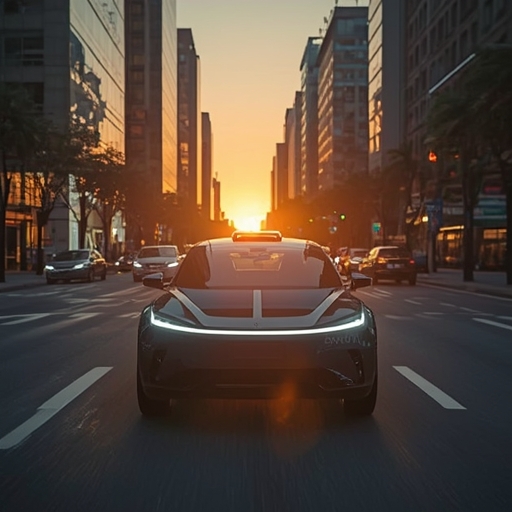
Evidence supporting that claim surfaced on social media over the weekend when two separate videos circulated on X (the platform formerly known as Twitter). Each showed a Tesla vehicle traveling through Austin streets with empty front seats, its steering wheel turning seemingly under computerized control alone. Shortly thereafter, Musk confirmed that autonomous testing without human occupants had officially begun in Austin, signaling a major milestone in Tesla’s broader plan to transform its consumer cars into an integrated, self-operating fleet.
This advancement arrives amid intensifying competition within the autonomous mobility sector. Waymo, the Alphabet-owned pioneer in commercial robotaxi deployment, recently announced that it had provided more than fourteen million paid rides in 2025, alongside ambitious plans to extend its footprint to twenty additional cities in the coming year. Even so, Musk continues to maintain that Tesla maintains a strategic upper hand, grounded not in paid rides but in scale—namely, the company’s vast global vehicle fleet, which he envisions being upgraded en masse into autonomous robotaxis through software updates. However, this optimistic projection overlooks one crucial limitation: the majority of Teslas currently on the road still lack the hardware and sensor suites necessary to support fully autonomous driving, a reality that undermines portions of his stated timeline.
To Tesla’s credit, the company does appear to be achieving visible progress toward its goal of unsupervised vehicles driving safely without human assistance. If Musk’s predictions hold true, such milestones could reshape public perceptions of autonomy before the year’s end. Nonetheless, critical pieces of the public evidence remain absent. As of now, Tesla has yet to place paying riders inside these driverless cars, and it has not released any comprehensive safety data comparing its system’s performance to that of human drivers or competing autonomous platforms. The information currently circulating online consists mainly of anecdotal accounts—testimonials from enthusiastic supporters, many of whom are self-identified pro-Tesla influencers. While such narratives provide colorful glimpses into early user experiences, they do not amount to robust, independent verification. Until Tesla discloses empirical safety metrics and standardized performance evaluations, the broader claims of technological parity or superiority remain unsubstantiated.
In essence, these recent sightings in Austin represent a moment of both promise and ambiguity for Tesla and for the self-driving industry at large. The company’s vehicles appear to be operating more autonomously than ever before, proving that at least some of the lofty aspirations that once seemed out of reach are now taking shape. Yet genuine validation—through transparency, data, and public accountability—will ultimately determine whether Tesla’s latest advancements signal a sustainable transformation in transportation or mark another interim step on a long, uncertain road toward true autonomy.
Sourse: https://www.theverge.com/news/844616/tesla-robotaxis-spotted-on-public-roads-without-safety-monitors