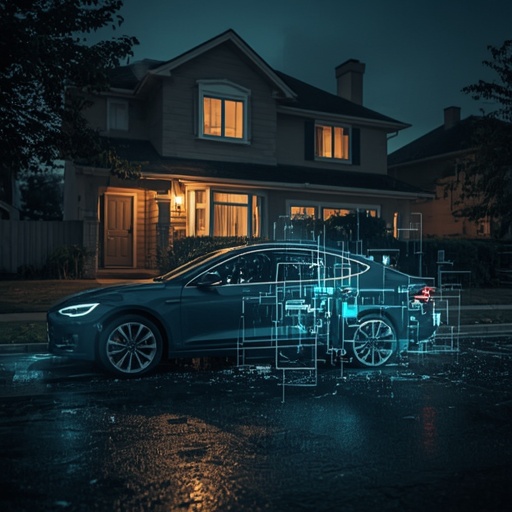
Tesla has issued a detailed response to the controversy surrounding a devastating fatal crash that occurred in Texas involving one of its vehicles equipped with the Full Self-Driving and Autopilot technologies. According to the company’s official statement, initial investigations suggest that the driver personally intervened and intentionally overrode the automated driving functions by forcefully pressing the accelerator pedal to its maximum extent. In other words, Tesla contends that the vehicle did not act autonomously at the moment of the collision but was under direct human control because the driver’s manual input temporarily disabled the car’s automated systems.
This clarification has reignited an already complex and emotionally charged debate about accountability in the era of semi-autonomous and evolving self-driving technologies. On one side, some experts argue that the widespread misconception surrounding the term “Full Self-Driving” may encourage overreliance on vehicle automation, leading users to underestimate the importance of active supervision. Others maintain that Tesla’s systems clearly warn drivers to remain fully alert and ready to assume control at any time, thereby placing the ultimate responsibility on the human operator behind the wheel.
The incident underscores a broader societal and regulatory challenge: defining the boundaries between human error and technological limitation. As autonomous capabilities gradually progress from assisted features toward greater independence, every such event refines the conversation about innovation, ethics, and safety. Tesla’s statement appears intended not only to correct possible misunderstandings about its Autopilot system but also to remind the public and policymakers that the technology is still in an intermediary stage. Despite its sophisticated sensors, adaptive algorithms, and machine learning responses, human oversight remains indispensable.
In the aftermath of the Texas tragedy, analysts and safety advocates foresee increased scrutiny from transportation authorities who are now urged to refine both testing protocols and user education standards. The ongoing discourse reveals the delicate balance that automakers must maintain when marketing advanced driver-assistance systems—highlighting progress in artificial intelligence while avoiding overpromising autonomy that is not yet fully realized. Consequently, this incident stands as a somber yet pivotal reminder of the shared responsibility between human drivers, engineers, and regulatory bodies in shaping the next generation of intelligent mobility.
In summary, Tesla’s assertion that the driver deliberately overrode the vehicle’s self-driving function serves as a central point in a much larger dialogue regarding trust, technology, and human judgment. It may ultimately influence how future innovations, public expectations, and safety guidelines evolve as society continues its journey toward a truly autonomous transportation landscape.
Sourse: https://www.theverge.com/transportation/955153/tesla-full-self-driving-texas-crash