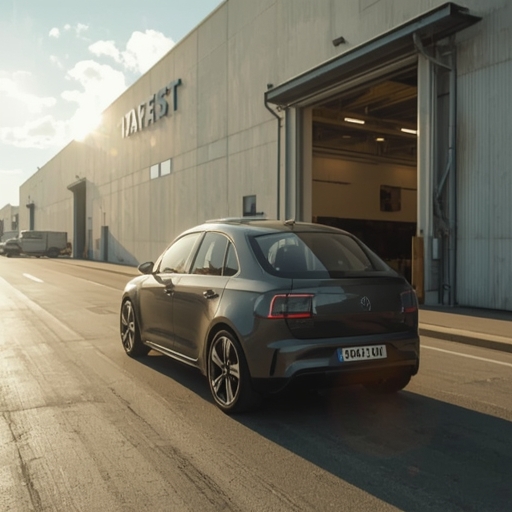
Tesla has officially initiated production of its long-anticipated Cybercab at Gigafactory Austin, a monumental step that signals the dawn of a new phase in both autonomous mobility and the broader evolution of the electric vehicle sector. This project, which has circulated in speculation and conceptual design for years, has now materialized into an operational product line that pushes the boundaries of automotive innovation. However, rather than embracing a tone of unrestrained enthusiasm, Elon Musk is adopting a noticeably tempered approach regarding the Cybercab’s rollout. His comments—measured, strategic, and tinged with prudence—suggest that Tesla is prioritizing stability, safety validation, and long-term scalability over rapid saturation of the market.
At first glance, this moderation might seem uncharacteristic of Tesla’s typically bold trajectory, defined by aggressive market entries and disruptive acceleration timelines. Yet, this calculated restraint could embody a deeper strategic philosophy: acknowledging that the success of fully autonomous systems depends not merely on technological supremacy but also on societal readiness, regulatory frameworks, and infrastructural maturity. Musk’s language signals an understanding that while production may have reached its operational milestone, deployment requires a multilayered calibration of trust, performance evidence, and user acceptance.
Industry observers interpret this as Tesla’s recognition of an inflection point — one where the company must balance innovation with accountability. In contrast to early rollouts of vehicles like the Model 3 or Model Y, the Cybercab introduces not just a new form factor but an entirely different paradigm of mobility: a vehicle designed without a steering wheel, steering human passengers not only through city streets but also into a new psychological space of relinquished control. For Tesla, easing “off the pedal,” to use Musk’s own metaphor, does not signify hesitation; rather, it reflects an evolution toward a maturity phase in its technological ethos.
The Cybercab’s debut also provokes speculation across the mobility ecosystem. Will a cautious rollout reinforce consumer confidence by underscoring Tesla’s commitment to safety and rigorous testing protocols? Or will it test investor patience, as the company trades short-term momentum for a more deliberate, sustainable growth pattern? Regardless of perspective, one cannot deny the magnitude of what Austin’s Gigafactory now represents: the physical manifestation of years of research in artificial intelligence, sensor fusion, and the hardware–software symbiosis that defines Tesla’s approach to autonomy.
Beyond the factory gates, the implications are transformative. Autonomous ride-hailing has long been heralded as the next frontier in transportation, promising reduced congestion, optimized energy use, and democratized access to mobility. Tesla’s entry into this domain, through the production of the Cybercab, places it at the forefront of a global race that includes legacy automakers, Silicon Valley startups, and AI-driven mobility labs worldwide. Yet what truly distinguishes Tesla’s position is its vertical integration — a self-reliant ecosystem that unites energy generation, battery innovation, vehicle hardware, and self-driving algorithms under one corporate architecture.
Seen through this lens, Musk’s caution appears less as a retreat and more as a disciplined recalibration. Rather than succumbing to market pressures that demand immediate scale, Tesla seems poised to perfect its operational model — optimizing fleet behavior, gathering terabytes of real-world data, and refining software in live conditions before inviting mass consumer adoption. In the long arc of innovation, restraint can be as revolutionary as speed. And perhaps this is the calm, deliberate breath before the next surge—the momentary stillness that precedes the most definitive leap in the evolution of autonomous electric transport.
Sourse: https://www.theverge.com/transportation/918106/tesla-cybercab-production-robotaxi-elon-musk-earnings


