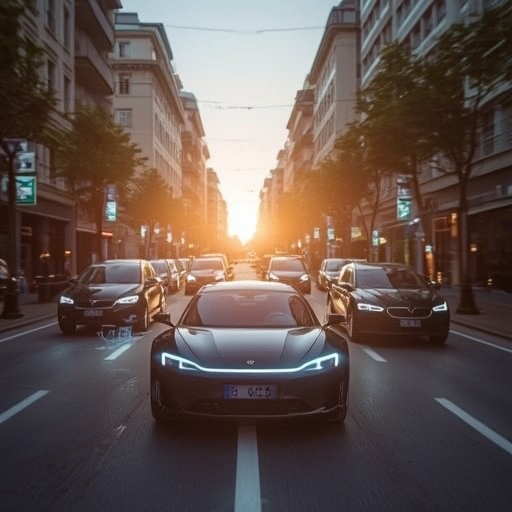
Europe has officially entered a transformative stage in the evolution of mobility. The recent authorization by the Dutch regulatory authority to permit Tesla’s Full Self-Driving (FSD) technology marks an advancement of monumental significance for the entire continent. Under this newly granted approval, Tesla vehicles are now legally empowered to traverse virtually any type of roadway environment while maintaining the prudent safeguard of human supervision. This combination of remarkable autonomy and responsible oversight underscores a careful balance between innovation and safety.
Tesla owners across Europe are expressing profound enthusiasm about this development, many referring to the experience as nothing short of ‘life-changing.’ To them, this technological milestone represents more than an enhancement in convenience—it symbolizes the dawn of a radically new relationship between human beings and the machines that serve them. Whereas traditional driving once demanded constant concentration and reaction from the driver, FSD allows individuals to delegate the complex tasks of navigation, hazard anticipation, and real-time control to a highly advanced algorithmic system. The driver remains ultimately accountable, yet the cognitive load is vastly reduced, enabling a more comfortable, efficient, and stress-free driving experience.
For Europe as a whole, this regulatory approval acts as a beacon guiding other nations toward a harmonized future for intelligent transportation systems. It reflects the growing trust that governmental bodies are placing in the potential of artificial intelligence when deployed responsibly within the framework of existing safety standards. Such trust does not arise lightly; it is built on years of iterative engineering, rigorous testing, and ethical evaluation that collectively ensure autonomous technologies can coexist seamlessly with human-driven mobility.
This decision by the Dutch authorities also represents a critical moment in the broader narrative of sustainable innovation. As electric vehicles already symbolize a cleaner and more environmentally conscious mode of transportation, the integration of self-driving capabilities further elevates their utility and appeal. Imagine urban landscapes where electrified vehicles move harmoniously through intersections, optimizing energy consumption and minimizing congestion through predictive navigation—FSD moves that vision closer to reality.
Ultimately, the approval of Tesla’s Full Self-Driving system in Europe stands as both a technological and cultural milestone. It signifies that society is edging toward an era in which automation complements human intelligence rather than replacing it entirely. While human judgment and supervision remain indispensable, this convergence of advanced software, machine learning, and mechanical precision allows for a safer, smarter, and more sustainable way of traveling. For countless Tesla owners, it is not merely a software update—it is the redefinition of mobility itself, the threshold of a future where driving becomes an act of collaboration between human intuition and artificial intelligence.
Sourse: https://www.businessinsider.com/tesla-owners-fsd-europe-full-self-driving-netherlands-2026-4