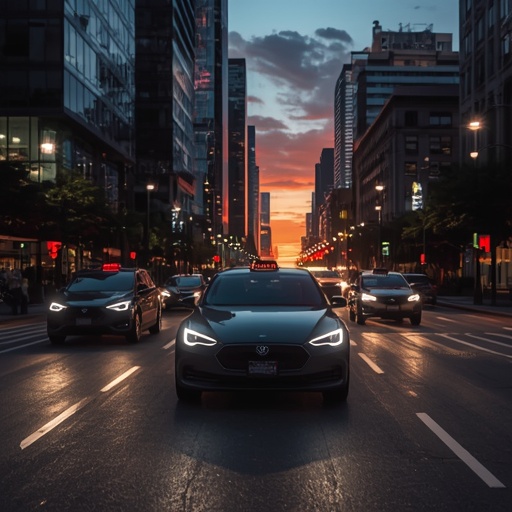
Tesla’s ambitious pursuit of fully autonomous transportation is reaching a crucial testing ground in the heart of Texas. In Austin, the company has begun deploying a limited number of robotaxis that operate without any human drivers, marking a bold step toward its long-promised vision of self-driving mobility. This development represents a significant technical and regulatory milestone for Tesla, but the road ahead remains steep and intensely competitive.
Although Tesla’s vehicles can now navigate certain routes independently, the company still lags behind Waymo—Alphabet’s autonomous driving subsidiary—in terms of both operational sophistication and deployment scale. Waymo’s fleet, for instance, has already achieved extensive driverless service coverage across multiple U.S. cities, and it continues to expand at a pace that underscores its technological maturity. Tesla, by contrast, is still refining its system’s capacity to handle diverse real-world complexities, from unpredictable pedestrian behavior to dynamic traffic conditions.
The unfolding race between these two mobility giants illuminates not only the technological innovation that defines this industry but also the interplay of safety verification, public perception, and regulatory scrutiny. For Tesla, Austin’s pilot program serves as both experiment and statement—a demonstration of confidence in its vision of an autonomous future. Yet, questions remain about reliability and public acceptance, particularly given the challenges associated with data-driven learning on open roads without traditional human oversight.
Waymo’s methodical and safety-oriented approach contrasts sharply with Tesla’s more rapid and iterative deployment model. Waymo prioritizes controlled testing environments and incremental expansion, while Tesla leans heavily on its real-time data network, derived from millions of vehicles already in consumer use. As a result, each company embodies a distinct philosophy of innovation—one focused on caution and certification, the other on agility and scale.
Ultimately, the Texas initiative could become a defining moment for Tesla’s evolution from an electric car manufacturer into a leader in artificial intelligence and autonomous systems. Whether the company can bridge the performance gap with Waymo will depend not only on software sophistication and technological breakthroughs but also on how regulators, riders, and the public at large respond to a world where the steering wheel may soon become little more than a relic of the past. The competition unfolding on Austin’s streets offers a glimpse of that future—a contest where progress, perception, and precision will determine who truly drives the next revolution in mobility.
Sourse: https://www.businessinsider.com/tesla-robotaxi-fleet-texas-smaller-waymo-autonomous-vehicle-2026-5