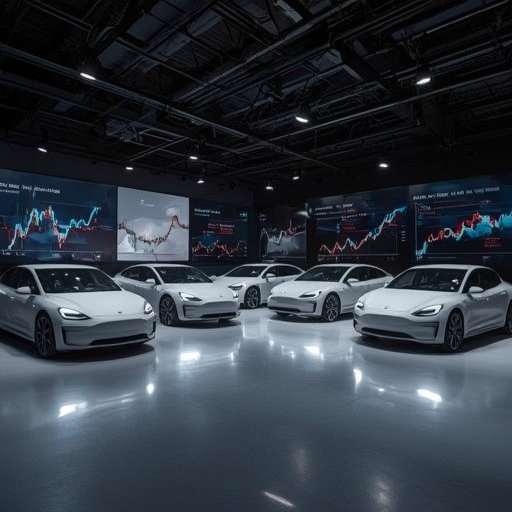
Tesla’s most recent quarterly performance reveals a modest yet notable 6% growth in sales—a figure that at first glance seems to signal a gradual recovery for the electric vehicle giant. However, industry analysts and market observers quickly point out that this seemingly positive outcome conceals a range of complex and potentially troubling undercurrents within both the company and the broader EV landscape.
While incremental growth can often be interpreted as a sign of renewed stability, Tesla’s situation appears more nuanced. The current rise comes amid an increasingly competitive market environment in which electric vehicle manufacturers are grappling with fluctuating demand patterns, shifting consumer priorities, and a crowded field of emerging players. Many analysts suggest that the modest increase may represent less a surge in sustained consumer enthusiasm and more a temporary stabilization following quarters of volatility and public scrutiny.
The challenges extend beyond simple sales figures. Broader macroeconomic factors—ranging from inflationary pressures to the evolving cost of raw materials used in battery production—continue to complicate profitability and operational efficiency across the EV industry. Simultaneously, global markets are experiencing a plateau in the rapid adoption curve that once defined the sector’s early years, leading to heightened competition for a shrinking pool of new buyers.
Brand perception presents another layer of complexity. Tesla’s identity as both an innovator and polarizing corporate persona has cultivated extraordinary loyalty among its core supporters but increasing skepticism among general consumers and investors. Public controversies, executive behavior, and product quality concerns have occasionally overshadowed the technological triumphs that once placed Tesla at the forefront of the clean energy transition.
In this context, the 6% sales improvement, while welcome, stands as a small bright spot against a backdrop of volatility and uncertainty. The true test for Tesla lies not merely in achieving incremental quarterly gains, but in sustaining long-term resilience: reinforcing trust, deepening innovation, and adapting to a marketplace that no longer guarantees endless expansion. The months ahead will likely determine whether the company can transition from reactive recovery to proactive reinvention, redefining its trajectory amid a maturing and increasingly unforgiving electric vehicle ecosystem.
Sourse: https://www.theverge.com/transportation/905811/tesla-q1-2026-sales-deliveries-elon-musk